




HIPAA-Compliant Hospice CRM
Built for hospice and palliative care
Streamline the workflows around every referral and patient interaction with LeadSquared’s HIPAA-compliant Hospice CRM.

Managing referrals through manual processes: Hospice referrals may involve paper forms, copied medical records, phone calls, and information sent between organizations. A hospice quality-improvement study found that referral forms were often inadequately completed because of this and that expected phone calls did not always occur. The researchers found that this made information transfer erratic, unreliable, and incomplete.
Entering and transferring referral information manually: Manual referral processes can require staff to collect information from incoming documents and enter it into another system. In a case study of Samaritan’s hospice referral process, staff were spending around 20 minutes manually entering referral information before the organization digitized the process. The organization also identified pending-referral follow-up as a time-consuming manual task.
Keeping information accessible across care teams: Hospice care involves coordination between hospice staff and external organizations such as pharmacies, equipment vendors, and social service agencies. When information is stored across paper records and other disconnected documentation, staff may have to search across multiple sources to find the information they need.
Keeping documentation consistent and easy to follow: Hospice research has identified variation in documentation practices and noted that informal communication through voicemail, phone calls, and other conversations can leave important information undocumented. In a study of 16 hospices, researchers found variation in documentation practices and emphasized the importance of efficient, accessible documentation for communication and collaboration among hospice team members.
Respond to referrals with greater speed. Give teams a clear view of incoming referrals and the actions they need to take. Automated assignments and follow-ups help reduce delays between referral and admission.
Build stronger referral partnerships. Understand which organizations and providers send referrals and how those relationships develop over time. Give business development teams the context they need to nurture valuable referral sources.
Keep teams aligned around every referral. Give staff access to the same referral history and communication context. This reduces the need to chase information across emails, spreadsheets, and separate records.
Improve visibility into operational performance. Track referral activity, admissions, team performance, and acquisition sources from one place. Leaders can use this information to identify bottlenecks and make better-informed decisions.
Reduce administrative workload. Automate repetitive follow-ups, assignments, reminders, and workflow tasks. Staff can spend less time keeping processes moving manually and more time supporting patients, families, and referral partners.
Powering 250,000 unique experiences (and counting)




Built for the way hospice and palliative care centers work

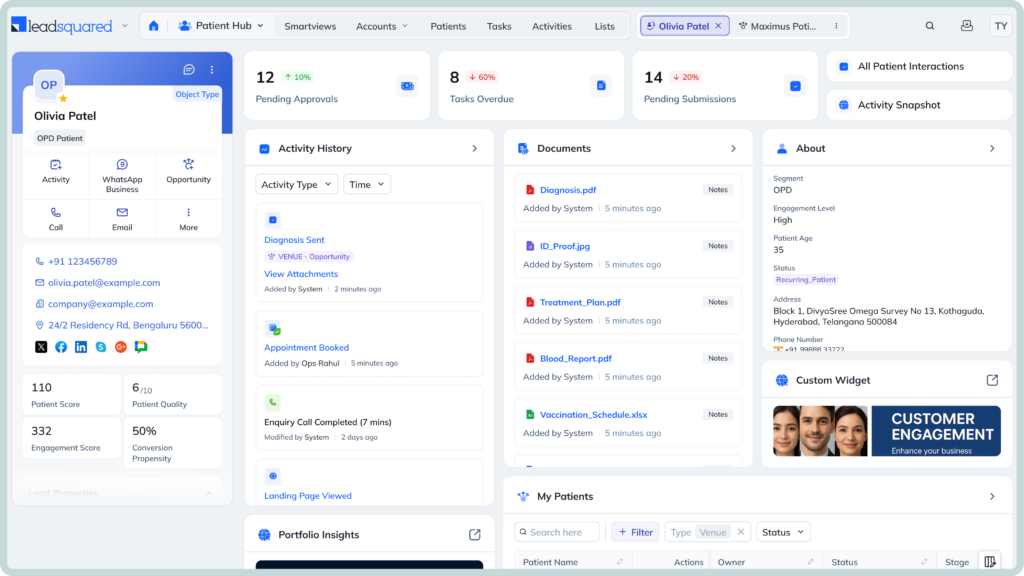
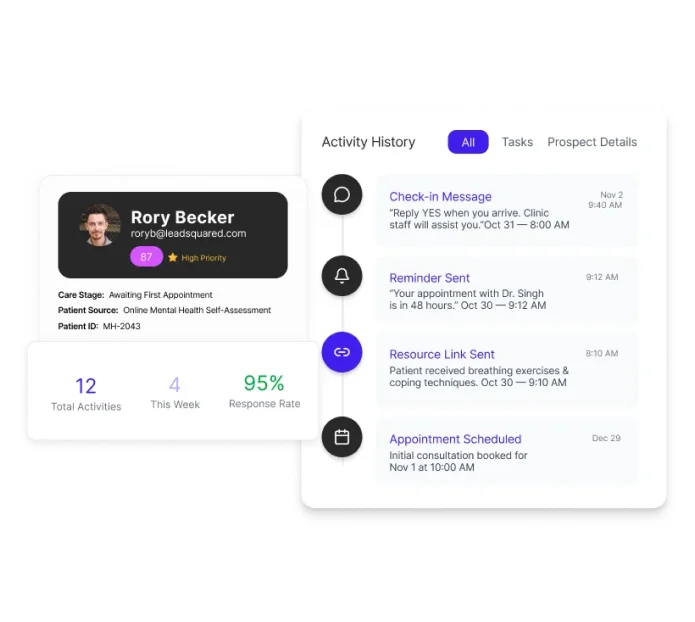
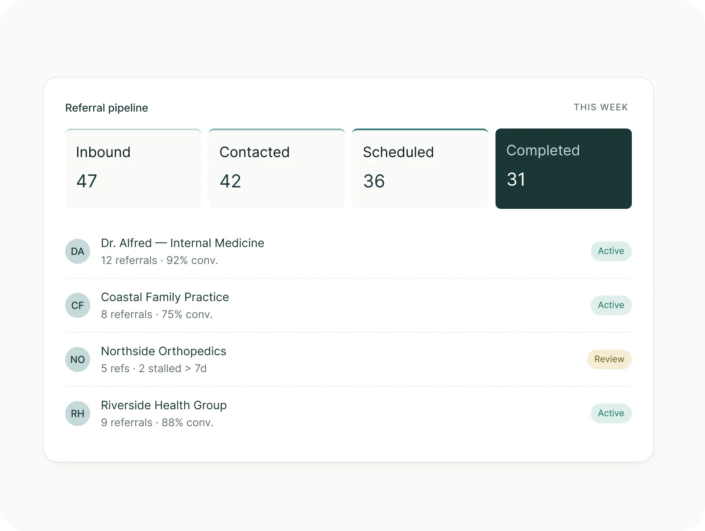
Capture referrals from hospitals, physicians, facilities, websites, calls, and other sources in LeadSquared’s Hospice CRM. Our system gives each referral a clear record and route it to the right team based on your workflow. You can track every referral activity from the first inquiry for the convenience of your staff. Keep your referral information organized in one place instead of relying on scattered emails, spreadsheets, and manual handoffs.
Help patients move from inquiry to appointment with FloStack, LeadSquared’s scheduling and lead engagement tool. Automatically qualify and route inquiries based on your rules, then direct patients to the right scheduling experience and available slots. Let them book or reschedule appointments while your team gets the appointment activity and lead context in the CRM.
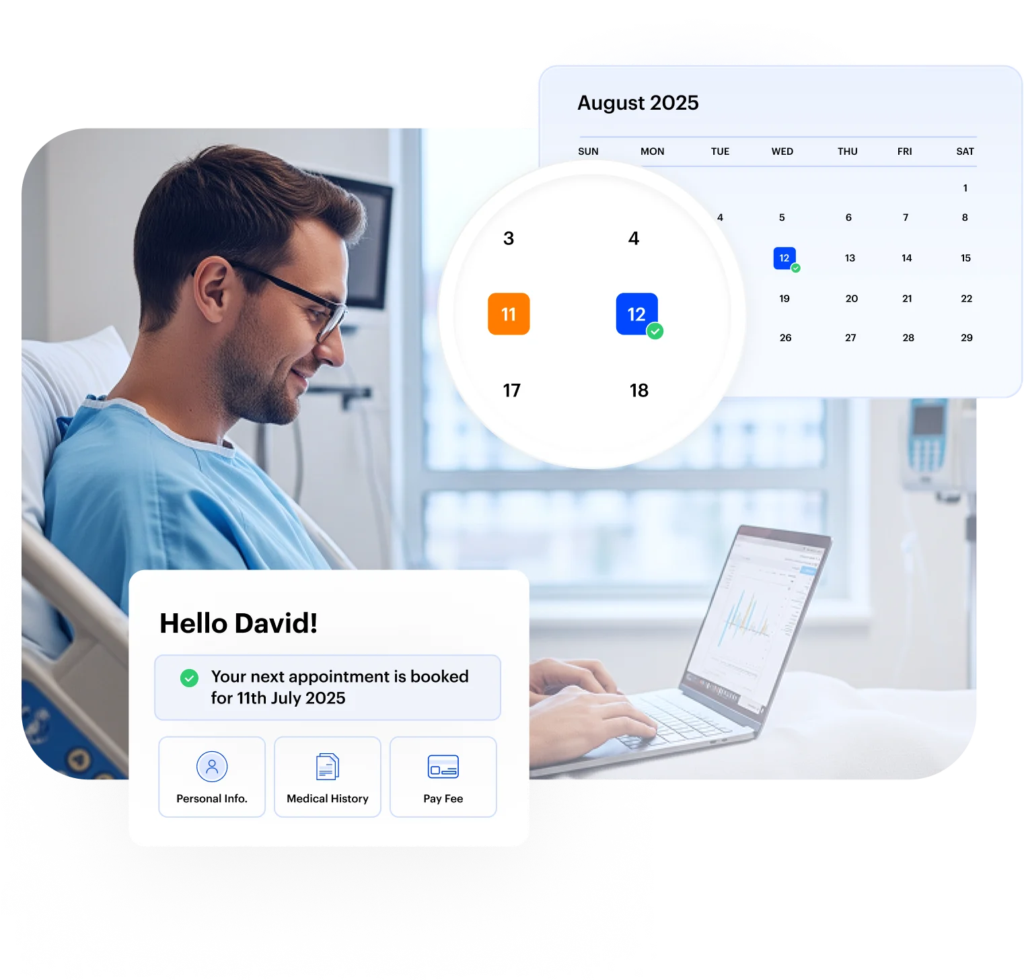

Collect patient and referral information through digital forms and connect each submission to the appropriate CRM workflow. You can track completed and incomplete forms for your team to follow up when information is missing. Keep intake activity alongside the relevant referral or patient record instead of searching across separate systems. LeadSquared’s Hospice CRM gives your team a clearer view of intake progress and reduces repetitive administrative work.
Bring your calls, emails, SMS, and other communication channels into LeadSquared and connect and use them within the CRM. Give authorized team members the communication history they need before responding to a patient, family member, or referral partner. Your interactions visible across the relevant team so conversations do not depend on one person’s inbox or notes.
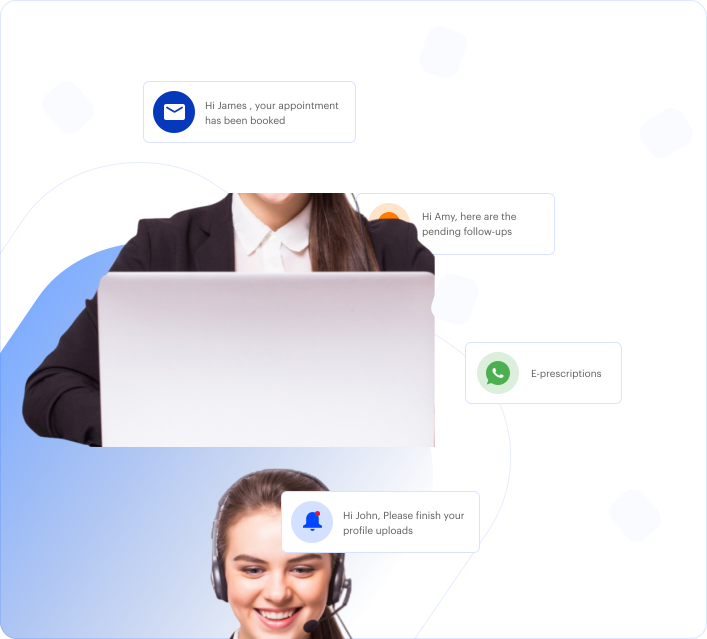
Let LeadSquared’s Invorto AI handle common inquiries when your team is unavailable or busy. You can configure it to answer questions, collect inquiry details, qualify conversations, and route people to the appropriate team. Invorto captures relevant conversation information in LeadSquared’s Hospice CRM so staff can follow up with context.
Keep physicians, hospitals, skilled nursing facilities, assisted living facilities, and other referral partners organized in LeadSquared. Record interactions and referral activity so your team can understand the history behind each relationship. Segment referral sources and create targeted outreach based on their relationship with your organization. Give your business development team the context they need to build more consistent referral partnerships.
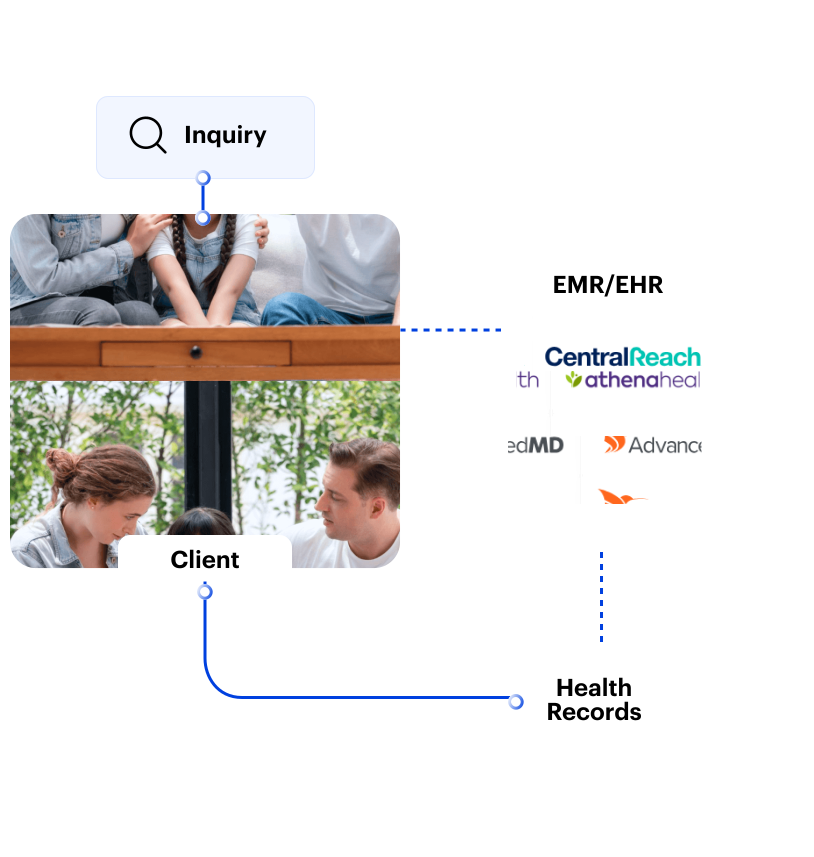
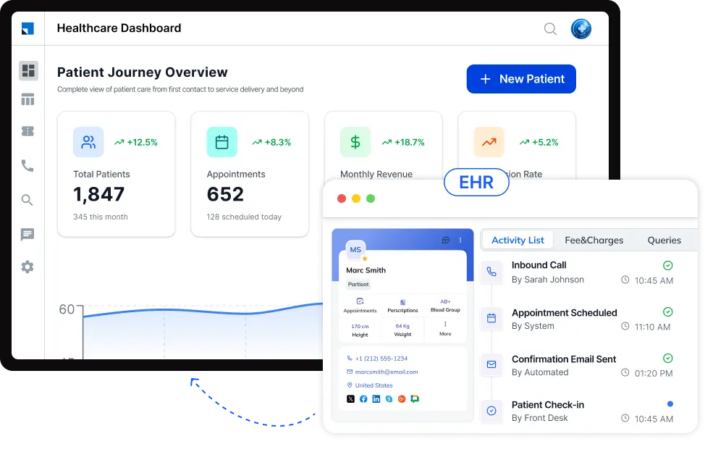
Connect LeadSquared’s Hospice CRM with your EHR/EMR or other healthcare software systems your organization already uses. Allow relevant information to move across systems to reduce repetitive and manual data entry. This allows for a more connected operational workflow without replacing the technology your hospice or palliative care organization depends on.
Confirmed healthcare integrations include platforms such as:
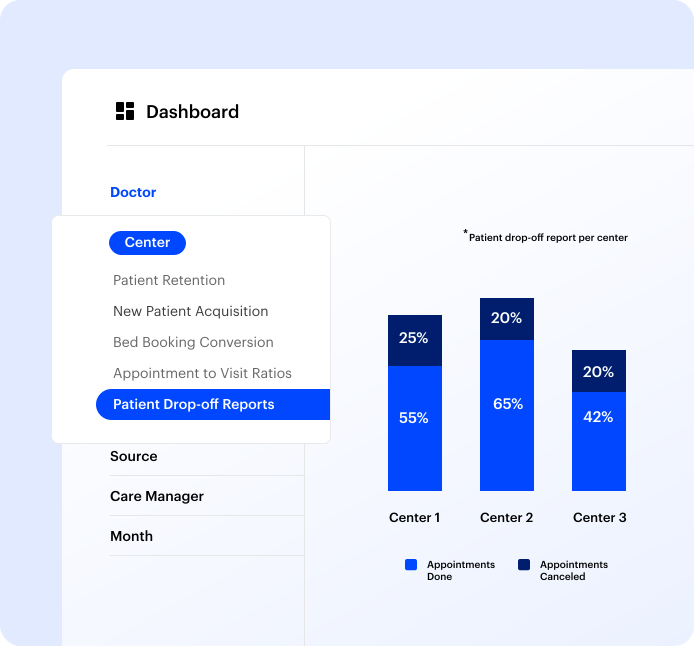
Bring acquisition, referral, team activity, and workflow data into one view with LeadSquared’s dashboards and reports. Track how inquiries and referrals move through your pipeline and identify where opportunities progress or stall. Compare performance across sources, teams, locations, and campaigns to understand what is contributing to growth. Give hospice and palliative care leaders the visibility they need to make informed decisions and improve operational performance.
| Capability | LeadSquared’s Hospice CRM | Generic CRM |
| Hospice and palliative care workflows | Supports healthcare workflows for referrals, intake, follow-ups, communication, and patient acquisition. | Designed for general sales and relationship management. Hospice-specific workflows depend on the platform’s capabilities and configuration. |
| Referral management | Captures referrals, routes them to the appropriate team, tracks referral progress, and automates follow-ups. | May support general lead tracking, but referral-specific workflows vary by platform. |
| Intake and admissions | Supports digital intake and workflows that help teams manage referrals through the intake and admission process. | Capabilities vary. Hospice-specific intake and admission workflows may require additional configuration or integrations. |
| Communication and follow-up | Supports calls, messages, and automated follow-ups while keeping interactions across channels connected to the relevant record. | Communication and automation capabilities vary and may require additional tools or integrations. |
| Performance and referral analytics | Provides dashboards and reports for referral activity, team performance, pipeline progress, sources, and outcomes. | Reporting capabilities vary and may require configuration around hospice workflows. |
| AI for patient inquiries | Invorto AI can handle patient conversations, answer common questions, collect information, qualify inquiries, and route people to the appropriate team. | AI capabilities vary significantly and may not support healthcare-specific inquiry workflows. |
| Healthcare integrations | Supports integrations with EHR/EMR and other healthcare systems through available integration methods. | Integration options vary by platform and the systems being connected. |
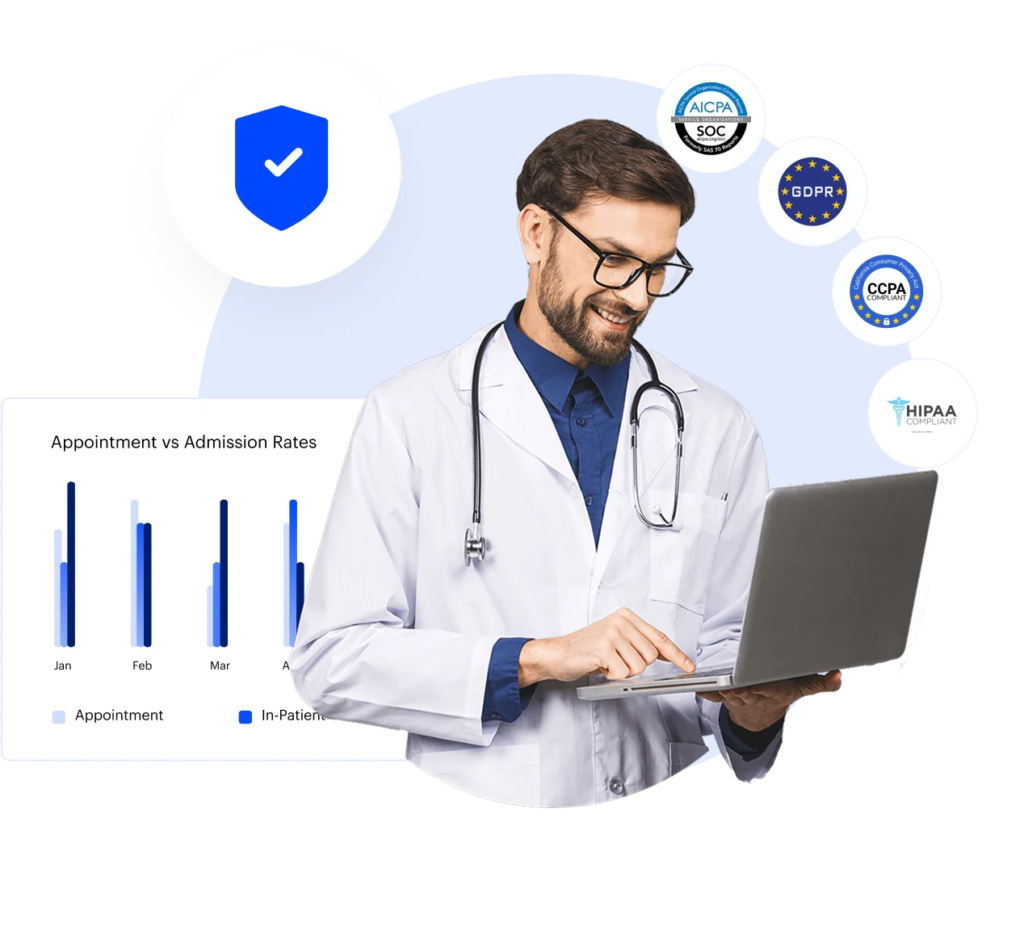
| HIPAA compliance | LeadSquared offers a HIPAA-compliant healthcare CRM with a BAA, access controls, and audit trails. | HIPAA compliance is not guaranteed. It is often be an add-on. |
Connected, automated outreach replaced manual processes for Posterity Health, enabling 7× revenue growth with the same team.

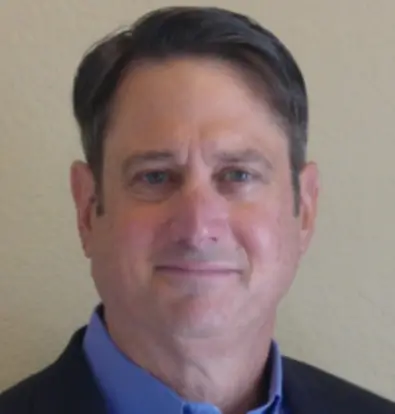
“LeadSquared’s implementation has transformed our operations completely, surpassing all other platforms we’ve used at Tandem.”

Give your team connected workflows that make everyday operations easier to manage.
See what LeadSquared’s Hospice CRM can do for your practice.
Can an urgent care CRM track patients who are new to the health system?
Yes. LeadSquared can help urgent care centers distinguish new inquiries and patients from existing records and track their movement through the acquisition funnel. This is particularly useful for health systems that use urgent care as an entry point for new patients.
How can a CRM help urgent care centers measure marketing ROI?
A healthcare CRM can connect marketing activity with the inquiries and patient conversions that follow. LeadSquared can track lead sources and patient acquisition activity so teams can compare the performance of different campaigns and channels. This gives urgent care operators a clearer way to evaluate marketing investment instead of relying only on metrics such as clicks or website traffic.
Can urgent care CRM software track downstream referrals?
Yes. LeadSquared can track referral sources and referral activity beyond the initial urgent care inquiry. This can help health systems understand what happens after an urgent care encounter and measure referral conversion and retention. Recent Journal of Urgent Care Medicine research specifically recommends tracking downstream referrals and referral retention to understand the broader value of urgent care visits.
Can a CRM show whether an urgent care patient came from a PCP, health system, or marketing campaign?
Yes. CRM like LeadSquared supports patient source attribution so teams can connect inquiries to their acquisition source. For an urgent care center, this can include referral sources as well as marketing channels and campaigns. This helps teams understand how patients are reaching each location and which acquisition sources contribute to conversions.
Can urgent care centers use a CRM without replacing their EHR?
Yes. A CRM and EHR serve different purposes. The EHR remains the system for clinical records while the CRM can manage patient acquisition, inquiry workflows, communication, referrals, and other front-office processes. LeadSquared can integrate with EHR and EMR systems so organizations can connect these workflows without positioning the CRM as a replacement for the clinical system.
What should an urgent care center look for when moving from spreadsheets to a CRM?
Look for a system that can centralize patient acquisition data, automate repetitive workflows, preserve existing information, and connect with the systems your team already uses. LeadSquared supports data migration from other CRMs and software, along with configurable healthcare workflows and integrations. The exact migration process depends on the source system and the data that needs to be transferred.
How does an urgent care CRM help identify referral leakage?
A CRM can give teams visibility into what happens after a referral is created, including whether the referral progresses to the next stage. LeadSquared can track referral activity and conversion data, helping organizations identify where referrals are dropping out of the process. This matters for health systems because recent urgent care research identifies downstream referral leakage as an important source of lost value.
Can an urgent care CRM help connect patient acquisition with long-term patient value?
It can provide the data needed to follow acquisition activity beyond the initial inquiry or visit. LeadSquared can track acquisition sources, interactions, referrals, and conversion activity, giving teams a broader view of how patients enter and move through the organization. For health systems, this can support analysis of the downstream value associated with urgent care as an entry point.


 Read the full story