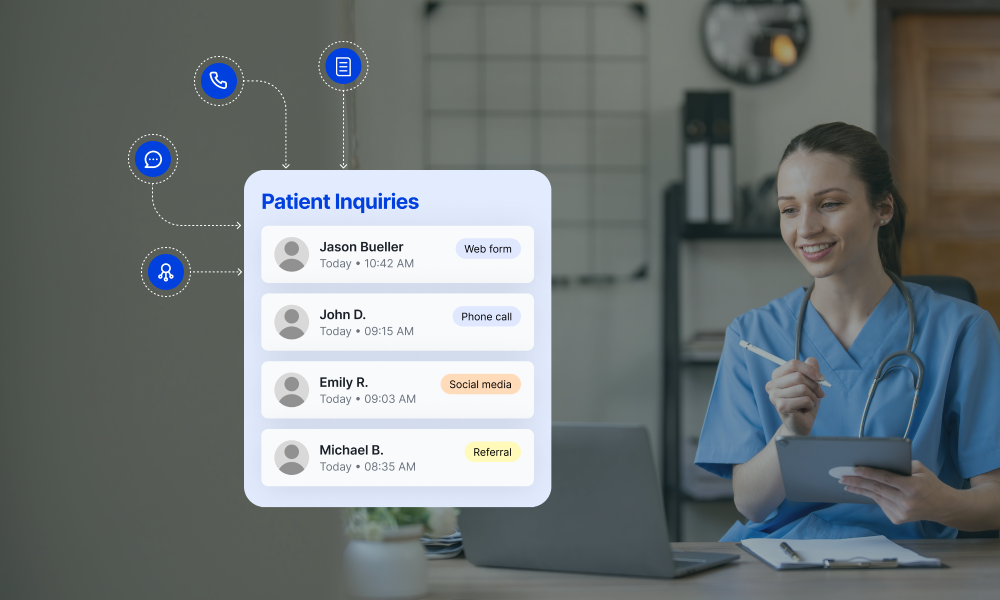
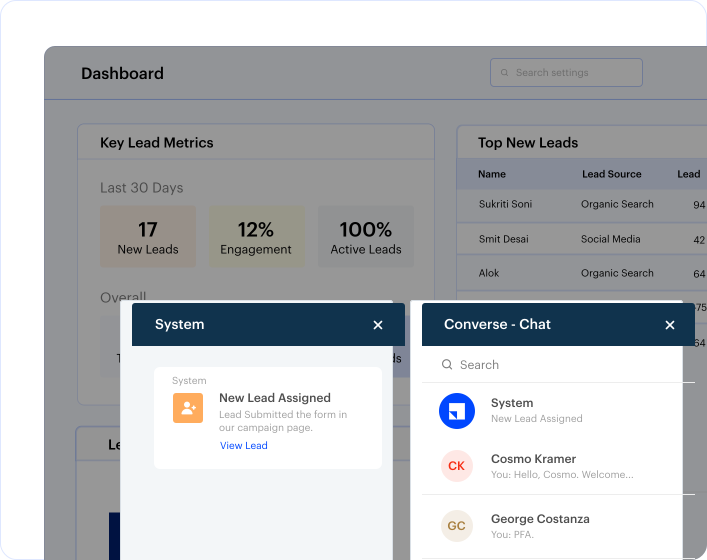
Managing inquiries across channels: Medical spa prospects may reach out through phone, email, web forms, chat, and social channels. According to research cited by AmSpa, 58% of healthcare practices rely on front-desk staff to manage incoming inquiries, while 49% route web form submissions to a general inbox. This can leave staff manually checking different channels and makes it harder to maintain a consistent process for every new inquiry.
Maintaining consistent follow-up: AmSpa identifies underused EMR/CRM, email, and text platforms as a common engagement gap. Practices may collect contact information during intake but fail to follow up consistently. When follow-up depends on individual staff members and manual reminders, prospects can receive delayed or inconsistent communication.
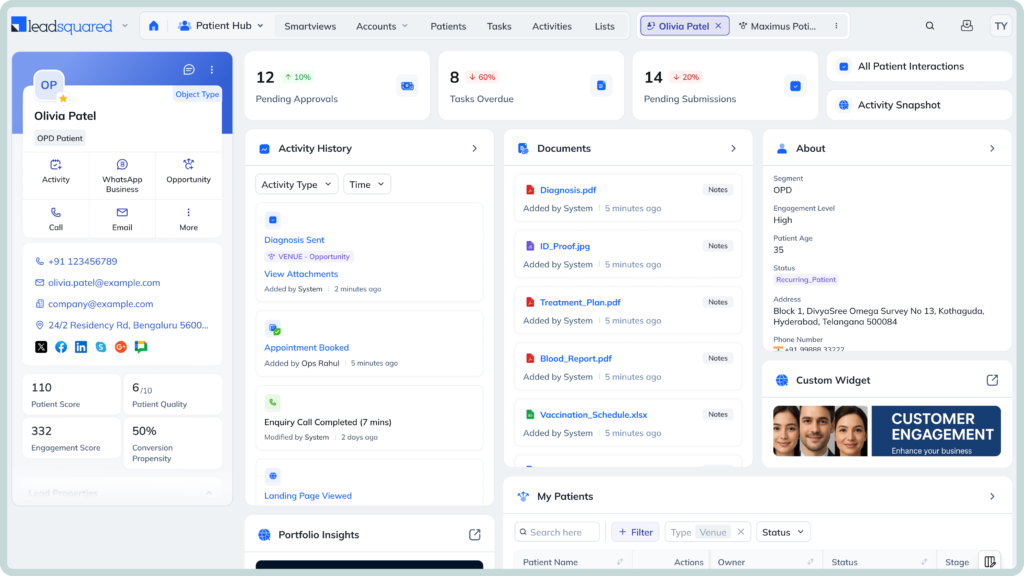
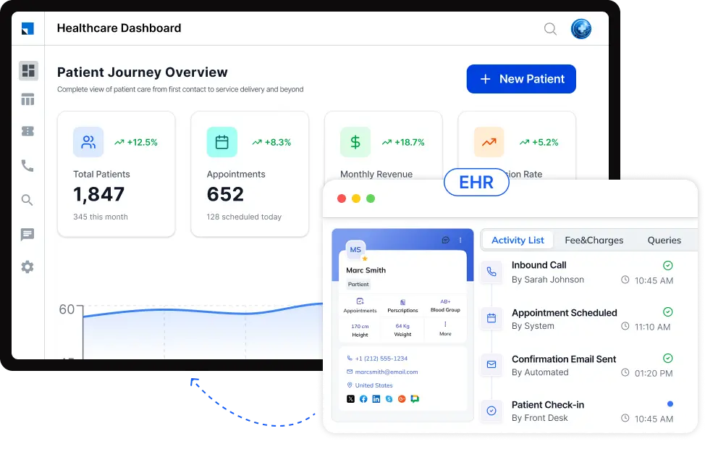
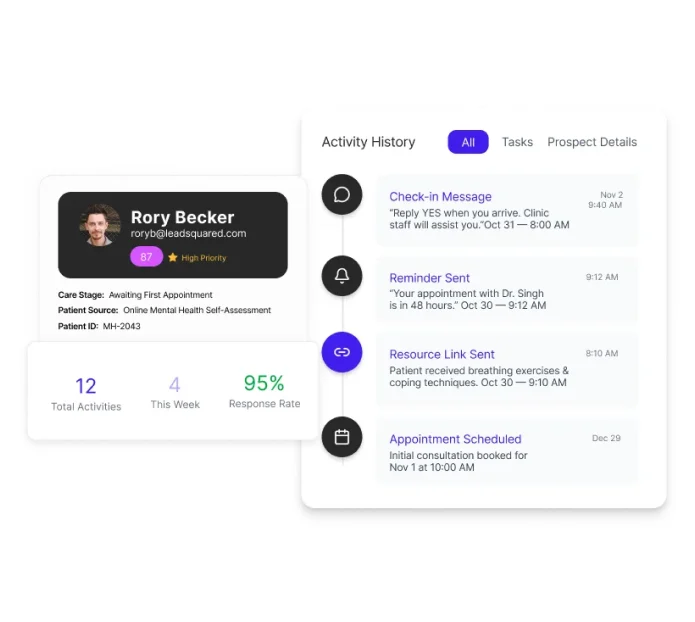
Keeping patient information connected: Medspa software can span clinical records, communications, marketing, and other operational functions. AmSpa notes that practices can end up running three or four disconnected systems, creating a need to move information between platforms. This creates additional data-entry work and makes it harder for teams to maintain a complete view of each patient or prospect.
Tracking opportunities with existing patients: A 2026 analysis of more than 100 aesthetics and medspa brands found that growth among the practices studied was driven largely by existing patients returning more often, spending more per visit, and joining memberships. When patient interactions and previous outreach are not organized in one place, teams have less visibility into which patients are active, inactive, or ready for re-engagement.
















 Read the full story