





Emergency Room CRM Software
For seamless continuity of care
Make it easier for patients to take the next step after an emergency visit. Streamline coordination, simplify follow-up communication, and support smoother transitions to ongoing care.
Powering 250,000 unique experiences (and counting)





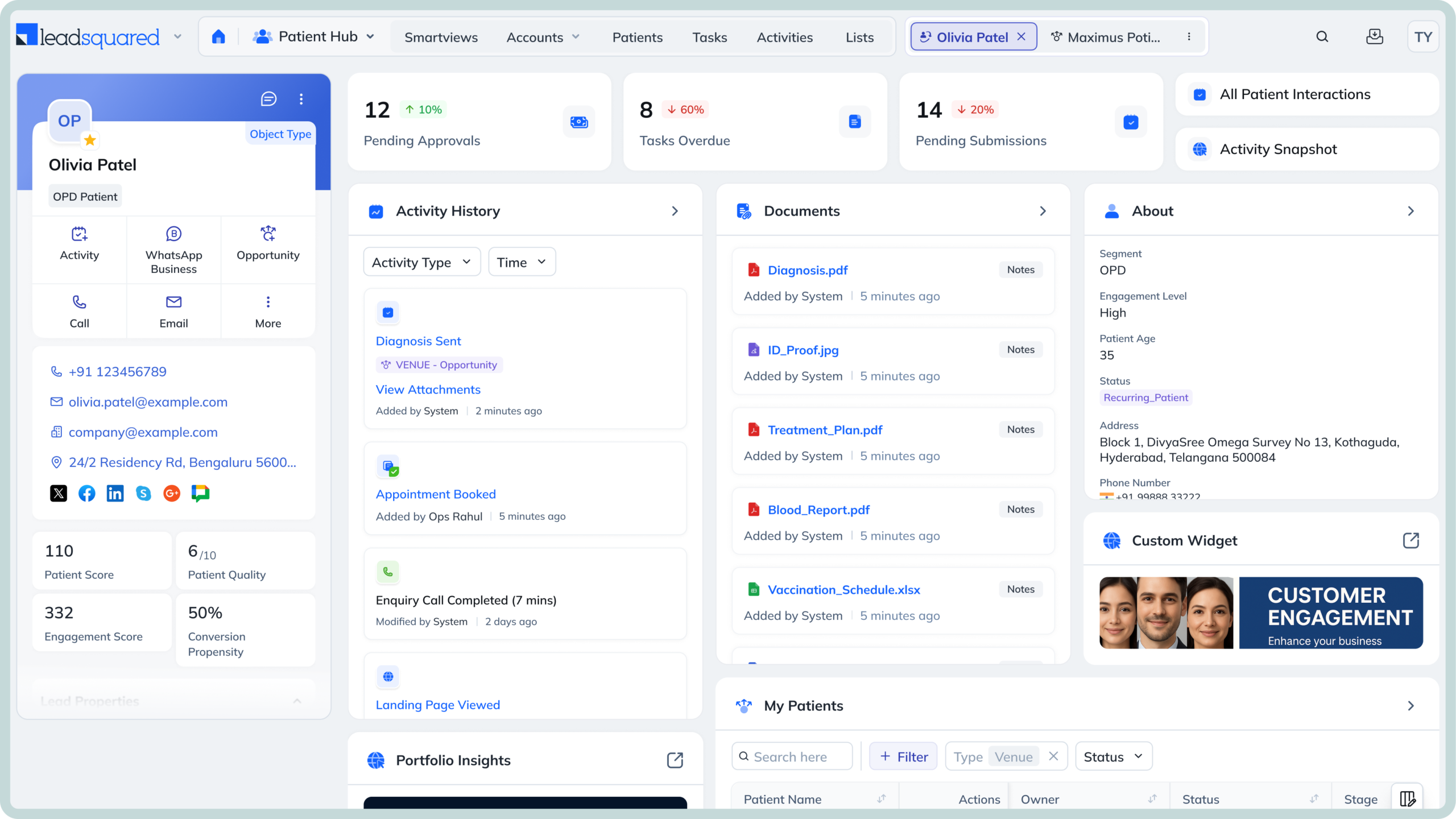
Emergency departments are designed to deliver rapid, episodic care, but a patient’s journey often continues beyond the emergency visit. Many patients leave the ER with referrals, follow-up recommendations, diagnostic testing requirements, or discharge instructions that require coordination with other providers and care settings. A healthcare CRM helps emergency departments streamline these care transitions, improve visibility into referral and follow-up workflows, and support more effective communication as patients move to the next stage of care.
A healthcare CRM helps emergency rooms:
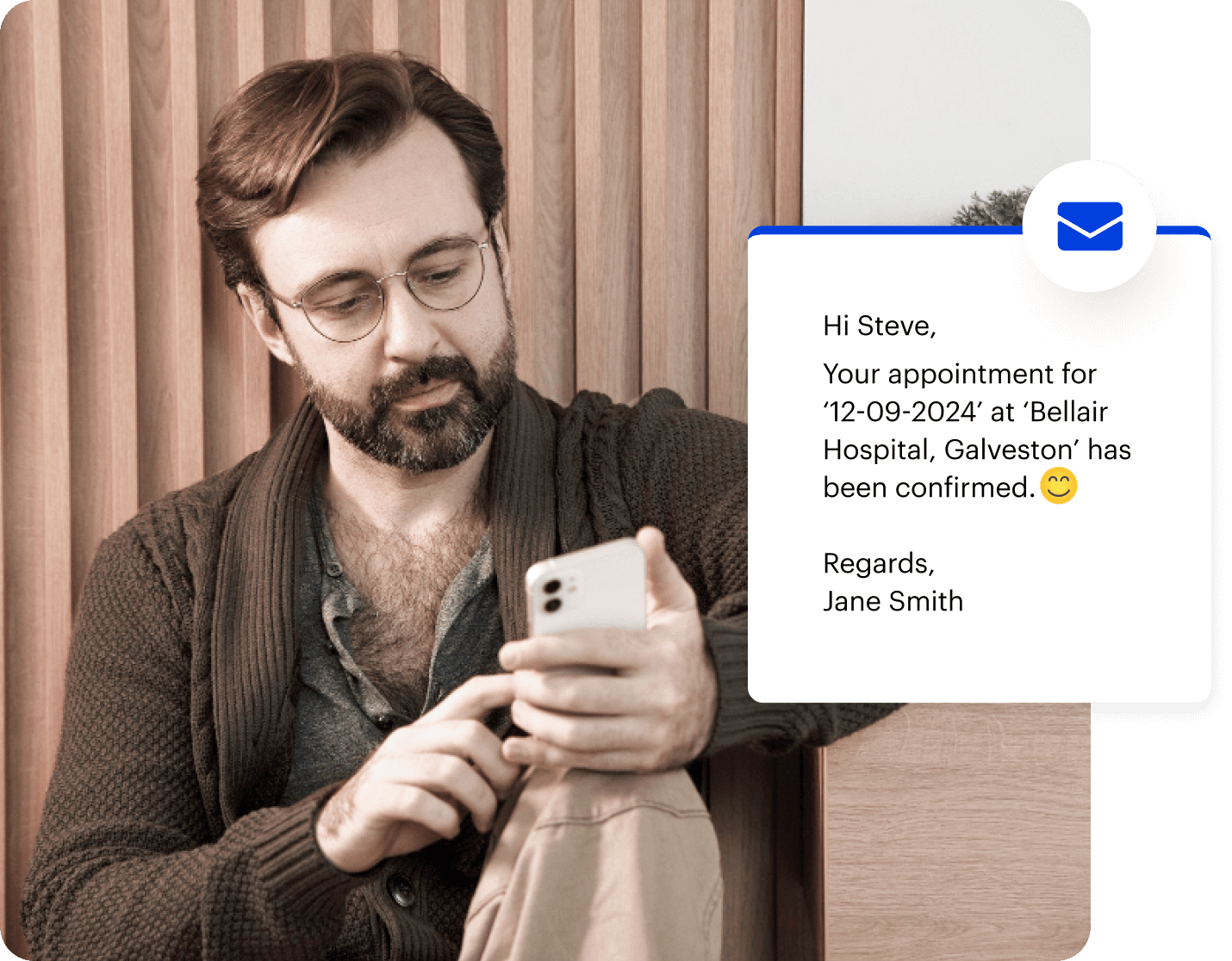
Enable patients to receive timely updates and follow-up information through automated communication workflows. Share appointment reminders, referral-related updates, and care transition messages without relying on manual outreach.
Streamline emergency department operations by automating patient communication, referral management, and care transition workflows. Route tasks to the right teams, trigger actions based on predefined rules, and track workflow completion without relying on manual coordination.

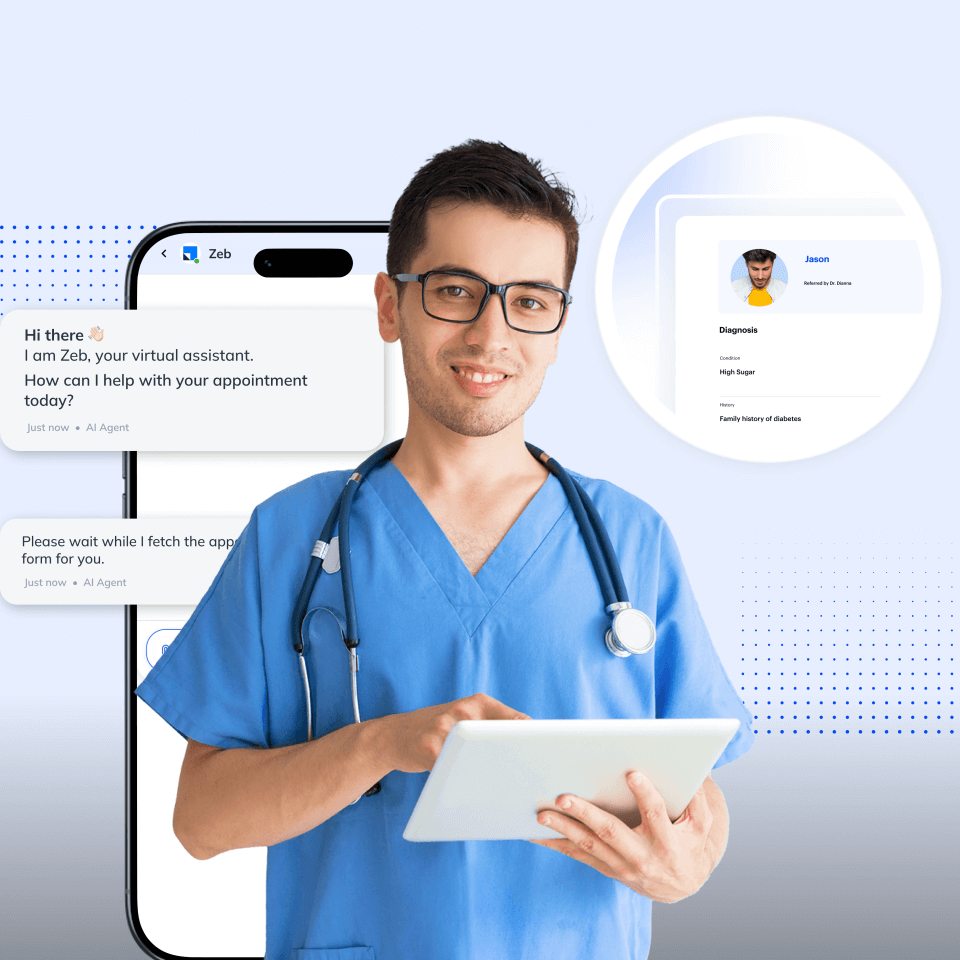
Enable patients or their caregivers to complete registration forms and submit required documents through digital intake workflows. As patient information is captured and organized in a centralized system, registration teams can access accurate records without relying on manual paperwork or disconnected tools.
Coordinate patient handoffs more effectively as patients move from the emergency department to inpatient units, specialty services, referral providers, and other care settings. Track referrals, manage transition workflows, and maintain visibility into key activities from a centralized platform.
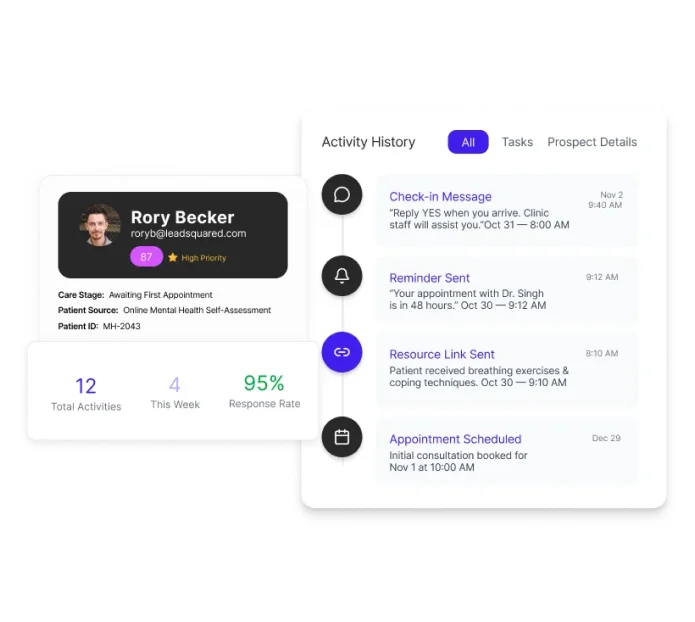
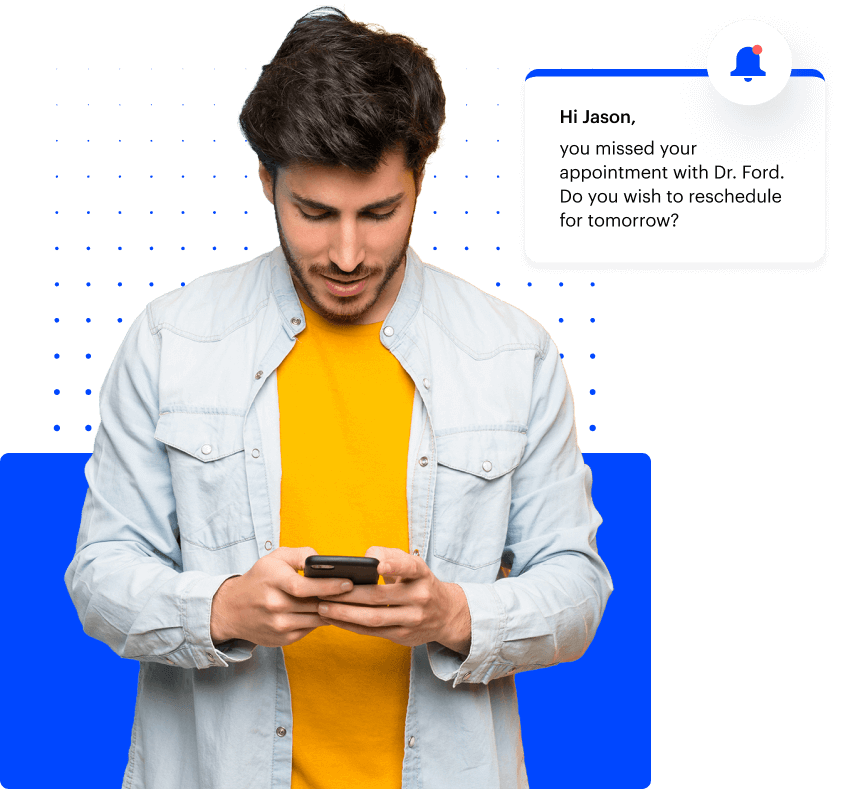
Support smoother care transitions after discharge with automated follow-up workflows. Send reminders, share discharge instructions, and communicate important next steps without relying on manual outreach. By centralizing follow-up activities in one place, teams can improve coordination and gain greater visibility into post-discharge outreach efforts.
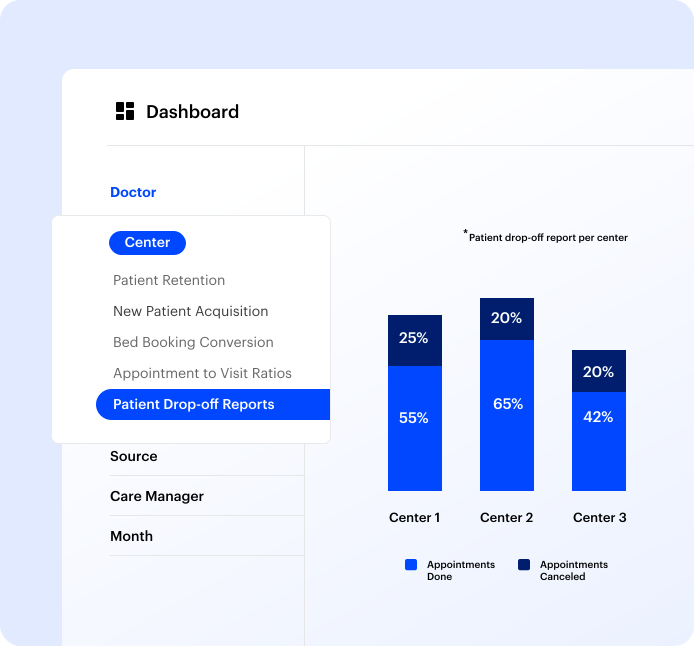
Measure the impact of your referral, communication, and care coordination efforts with healthcare analytics built into LeadSquared’s CRM for emergency rooms. Consolidate data from patient outreach, referrals, and follow-up activities to gain a clearer understanding of operational performance.
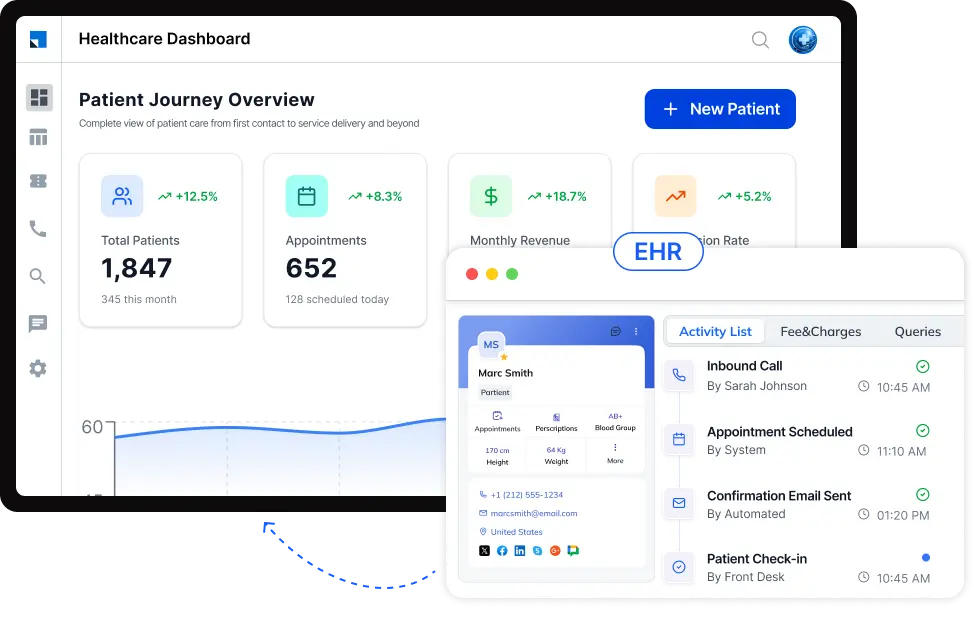
Ensure your patient information flows seamlessly between LeadSquared and your healthcare technology ecosystem. Integrate with EHRs, scheduling tools, communication platforms, and referral systems to keep teams aligned and workflows connected. This helps improve operational efficiency while delivering a more coordinated patient experience.
Keep patient data secure as it moves across intake, communication, referral, and follow-up processes. Leverage built-in security controls such as role-based access, audit logging, and encrypted data handling to support healthcare compliance requirements.

| Traditional approach | LeadSquared CRM for emergency rooms |
| Patient information is collected across multiple registration, intake, and communication systems. | Capture and manage patient information through connected digital intake and registration workflows. |
| Follow-up communication and discharge-related outreach often rely on manual processes. | Automate reminders, follow-up communication, and patient outreach to support care transition workflows. |
| Referral updates are tracked through spreadsheets, emails, or phone calls. | Monitor referral progress and status through a centralized referral management system. |
| Patient communication is spread across multiple tools and channels. | Maintain a unified history of patient interactions, outreach, and communication activities. |
| Staff spend significant time coordinating tasks and follow-ups manually. | Automate task assignments, escalations, and workflow actions based on predefined rules. |
| Visibility into referrals, follow-up outreach, and care transition activities is often limited after discharge. | Track referral status, follow-up communication, and care transition workflows beyond the emergency visit. |
| Reporting requires data collection from multiple systems. | Access dashboards for referral activity, patient outreach, follow-up workflows, and operational performance. |
| Information is often spread across systems, increasing administrative effort. | Integrate with EHRs and other healthcare systems to streamline data sharing and coordination. |
| Compliance and audit readiness rely heavily on manual controls. | Support secure workflows with role-based access, audit logs, and HIPAA-compliant controls. |
“LeadSquared’s implementation has transformed our operations completely, surpassing all other platforms we’ve used at Tandem.”

Talk to our team to see LeadSquared in action.
What is a CRM for emergency rooms?
A CRM for emergency rooms helps hospitals manage patient communication, referrals, discharge-related outreach, and care coordination workflows associated with the emergency visit. It complements existing healthcare systems by helping teams streamline care transitions, improve communication, and maintain visibility into referral and follow-up activities.
How is an emergency room CRM different from an EHR?
An EHR primarily manages clinical documentation, treatment records, and medical information. An emergency room CRM focuses on patient communication, referral tracking, follow-up management, and care coordination workflows that support patients before and after their visit.
Does a CRM replace an emergency department information system (EDIS)?
No. A CRM is not a replacement for an EDIS or EHR. Instead, it works alongside existing systems to help emergency departments automate patient communication, streamline referral workflows, and support more coordinated care transitions after discharge.
Can LeadSquared integrate with our existing healthcare systems?
Yes. LeadSquared can integrate with EHRs, scheduling platforms, communication tools, and other healthcare applications to help synchronize patient information and streamline workflows across systems.
How can an emergency room CRM help reduce missed follow-ups after discharge?
A CRM can automate reminders, appointment communications, and patient outreach workflows to help patients stay informed about their next steps and encourage follow-up care completion.
How long does it take to implement a healthcare CRM for emergency rooms?
Implementation timelines vary based on factors such as integrations, workflow requirements, and organizational complexity. Most healthcare organizations begin by identifying key communication, referral management, discharge coordination, and care transition workflows before configuring the platform to support their processes.
Which emergency department teams can benefit from a CRM?
Emergency department administrators, patient access teams, discharge coordinators, referral management teams, care coordination teams, and operational leaders can benefit from a CRM by reducing manual work, improving communication, and supporting more efficient care transitions.
How can emergency departments measure the success of a CRM?
Common metrics include referral completion rates, follow-up outreach performance, communication response rates, workflow efficiency, discharge coordination effectiveness, and care transition outcomes.
How long does it take to implement patient engagement software in a gastroenterology practice?
Implementation timelines vary depending on factors such as workflow complexity, integrations, and the number of locations involved. Many practices prioritize solutions that can integrate with existing systems, support staff onboarding, and adapt to existing workflows without requiring extensive operational changes.
Can LeadSquared support multi-location hospitals and healthcare networks?
Yes. Healthcare organizations can use LeadSquared to standardize patient communication, referral management, discharge outreach, follow-up workflows, and reporting across multiple facilities and care settings.


 Patient Intake Software for Ambulatory Surgery Centers
 Read the full story