





- Home

- Learn
- Healthcare
- 5 best CRM for medical spas
HEALTHCARE
5 best CRM for medical spas
Contents

 19 min read


The medical spa industry continues to grow rapidly as consumer demand for aesthetic and wellness treatments increases around the world. Clinics offering Botox, laser procedures, and other advanced treatments are expanding, and competition is intensifying as more players enter the market.
In United States alone, the medical spa market has surpassed billions in annual revenue and is expected to keep growing over the next decade.
Running a medical spa is not like running a typical clinic or a beauty salon. Most services are elective, repeatable, and part of long‑term treatment plans. A potential client may first find you online or through ads, reach out with questions, schedule a consultation, return for multiple treatment sessions (and then continue with aftercare, memberships, or product purchases). Managing this extended client journey without a proper digital system would be a mistake.
To address the above needs, more medical spas are turning to customer relationship management (CRM) software.
What are they, and how can they help medical spas?
In this guide, we’ll explore the best CRM software for medical spas and walk you through how to choose the right one for your business based on your needs and growth stage.
Most med spas rely on multiple channels to generate inquiries, including social media, paid campaigns, and their website. As lead volume increases, keeping track of each inquiry becomes harder without a centralized system.
In many cases, there is no clear visibility into which inquiries have been responded to and which have not. Follow-ups may depend on manual effort or individual staff members, which makes the process inconsistent. Over time, this results in missed opportunities and fewer bookings.
Scheduling works well when volumes are low, but as bookings increase, maintaining consistency becomes more difficult.
Reminders may not always be sent on time, reschedules are not tracked properly, and last-minute cancellations create gaps in the calendar. These issues lead to empty appointment slots and underutilized staff, which directly affects daily revenue.
Retention often depends on how consistently a med spa stays engaged with its clients after a visit.
Without a structured process, follow-ups can become irregular. Some clients may not receive reminders for their next session, while others are not informed about relevant treatments or offers. This makes it harder to maintain continuity of care and reduces repeat visits.
As operations expand, many med spas adopt different tools for booking, marketing, and client records. However, these systems often operate separately.
This means client information is spread across multiple platforms, making it difficult to get a complete view of interactions. Staff may need to switch between tools to perform simple tasks, which slows down workflows and increases the chances of errors.

Most med spas receive inquiries from multiple sources such as Instagram, website forms, calls, and messaging apps. Without a central system, these inquiries can easily get scattered.
A good CRM brings all inquiries into one place and clearly shows their status. For example, you should be able to see which inquiries have been responded to, which need follow-up, and which have already been converted into bookings. This helps your team stay organized and respond on time, which directly affects how many inquiries turn into consultations.
Appointments are at the core of your daily operations, so the CRM should make scheduling simple and reliable.
Look for a system that not only manages bookings but also sends reminders automatically. For instance, clients can receive reminders a day before and a few hours before their appointment. This reduces the chances of missed visits and helps ensure your time slots are fully utilized.
A CRM should store key client information such as past visits, basic treatment context, and communication history. This allows your team to understand where the client is in their journey and continue conversations without starting from scratch.
Follow-ups are important, especially for treatments that require multiple sessions.
A CRM should automate these interactions. For example, it can send aftercare instructions immediately after a visit, remind clients to book their next session in a few weeks, or reach out to clients who have not visited in a while. This helps maintain continuity without relying on manual effort.
As your client base grows, sending the same message to everyone becomes less effective.
A CRM should allow you to group clients based on their treatments or activity. This makes it possible to send relevant offers, such as promotions for clients who previously opted for a specific service or reminders for those who have not returned in a few months. This improves engagement and increases repeat bookings.
Many medical spas offer prepaid packages or memberships, such as a set number of laser sessions or ongoing treatment plans. Managing them manually can quickly become confusing, especially as the number of clients increases.
A CRM should keep track of each client’s package in a structured way. It should clearly show how many sessions have been used, how many are remaining, and when the next session is due. This allows staff to access accurate information instantly, without having to check multiple records or rely on memory.
Beyond managing day-to-day operations, a CRM should also help you understand how your business is performing.
A good CRM for medical spas provides clear reports on key areas such as how many inquiries you are receiving, how many of those inquiries are turning into booked consultations, which treatments are generating the most revenue, and how often clients return for additional sessions.
These insights help you answer practical questions. For example, you can see whether your team is converting enough inquiries, which services are worth promoting more, and whether clients are coming back as expected.
If you operate more than one branch, the CRM should allow you to manage everything from a single system.
You should be able to view bookings, access client records, and compare performance across locations. This ensures consistency in operations and helps you scale without losing control.
| CRM | Category | Best for | Handles operations? | Pricing |
| LeadSquared | Healthcare CRM | Med spas that want to capture, track, and convert high volumes of inquiries with structured follow-ups and automation | Yes (scheduling, intake, workflows; but not full clinic ops) | Starts at $60/user/month; enterprise pricing available |
| Pabau | All-in-one med spa software | Clinics that want a single system to manage appointments, client records, billing, and day-to-day operations | Yes (full operations including records, billing, packages) | Custom pricing; requires demo |
| Zenoti | Enterprise all-in-one med spa platform | Growing and multi-location med spas that need complete operational control, analytics, and scalability | Yes (full operations + advanced reporting) | Custom pricing |
| Mangomint | All-in-one spa software | Boutique med spas that want a simple, elegant system for bookings, client experience, and daily operations | Yes (operations, booking, payments, limited marketing) | Starts at $165/month; tiered pricing + add-ons |
| HubSpot | General-purpose CRM | Med spas focused on marketing, lead generation, and nurturing client relationships across channels | No (requires integrations for scheduling and operations) | Free plan available; paid plans from $15–$20/user/month |
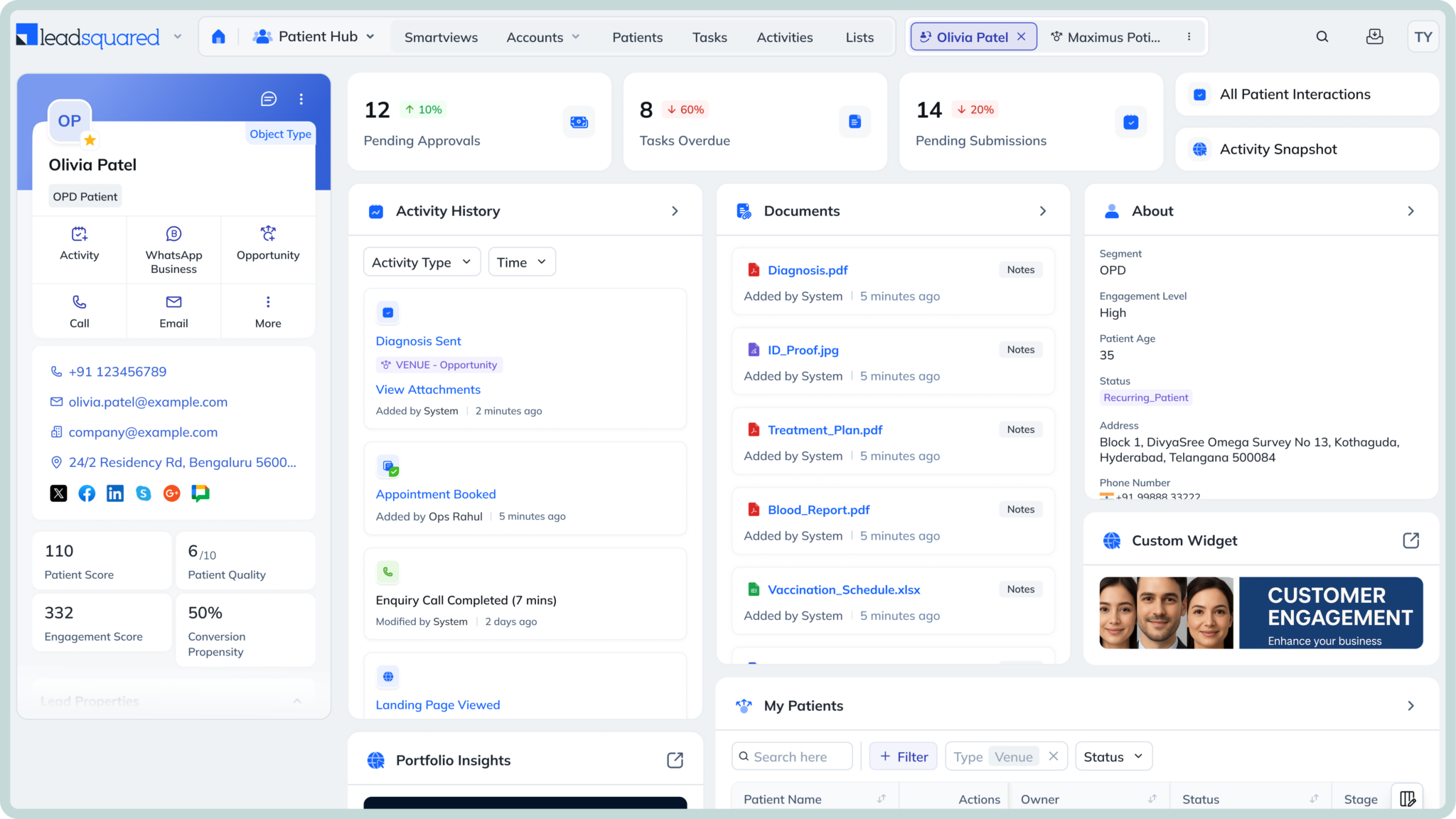
LeadSquared is a fully HIPAA compliant healthcare-focused CRM designed to help businesses manage the entire client journey. Unlike general-purpose CRMs, it is built to handle high volumes of inquiries and structured follow-ups, which are common in industries like healthcare and wellness.
For medical spas, LeadSquared primarily acts as a system to capture leads, track conversations, and ensure follow ups for every potential client in a timely and consistent manner. It focuses more on managing communication and conversions, rather than clinical documentation.
Medical spas and aesthetic clinics that want to improve how they handle inquiries, automate follow-ups, and increase conversion rates from leads to bookings, especially those managing high inquiry volumes from digital channels.
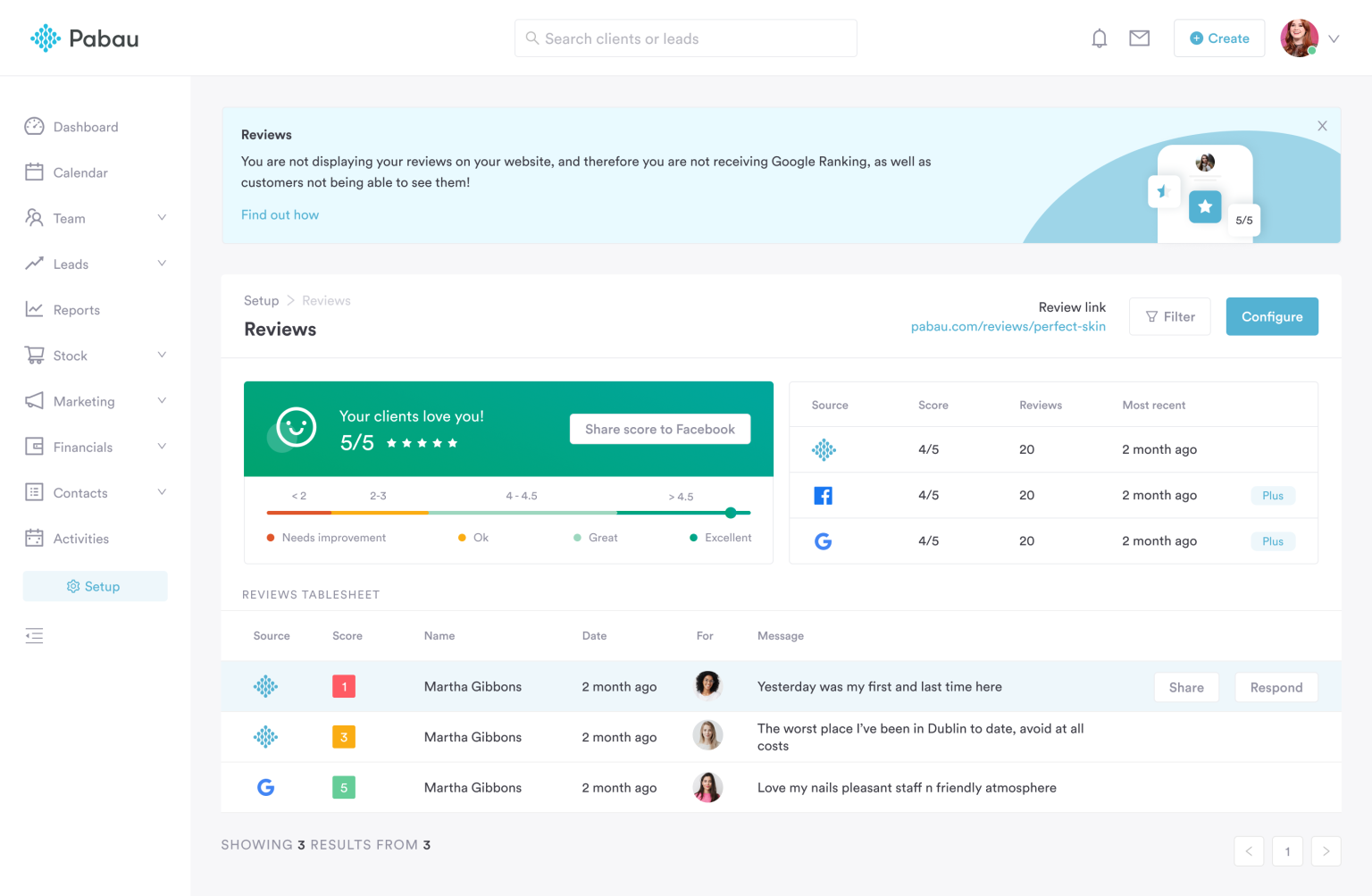
Pabau is an all-in-one practice management software designed specifically for medical spas, aesthetic clinics, and wellness businesses. Unlike standalone CRMs, Pabau combines multiple functions into a single platform, including appointment scheduling, client records, billing, and marketing tools.
For med spas, this means Pabau is not just focused on managing leads and communication, but also on running day-to-day operations. It is commonly used by clinics that want a single system to manage bookings, store treatment records, and handle client interactions without relying on multiple tools.
Medical spas and aesthetic clinics that want a single system to manage appointments, client records, and basic communication without relying on multiple separate tools.

Zenoti is an all-in-one software platform built for medical spas, salons, and wellness businesses.
The platform is widely used by growing, multi-location med spa chains because it is designed to handle both day-to-day operations and business-level insights. Instead of using separate tools for bookings, client records, and marketing, clinics can manage everything within Zenoti.
Mid-sized to large medical spas and multi-location chains that want a comprehensive, all-in-one system to manage operations, client experience, and business performance in one place.
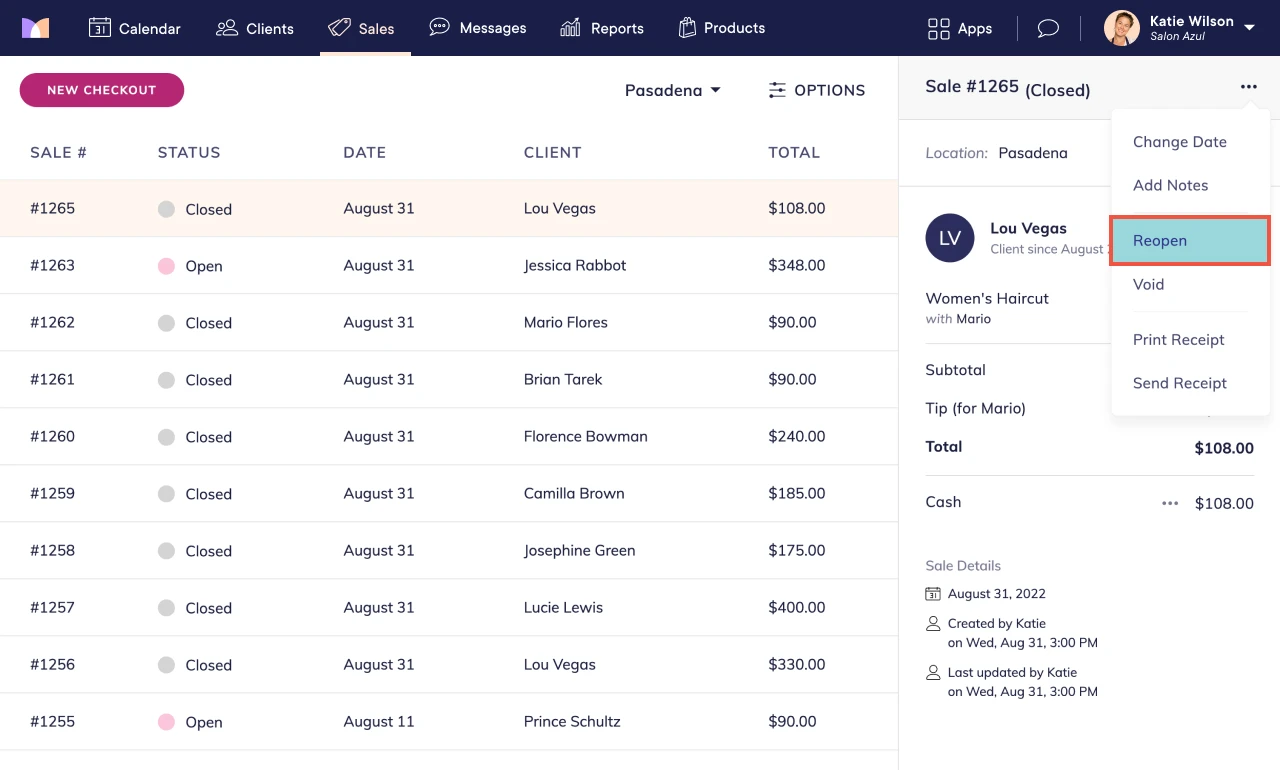
Mangomint is an all-in-one software platform designed for salons, spas, and medical aesthetics businesses. It combines appointment scheduling, client management, payments, and basic marketing tools into a single system.
Rather than focusing heavily on lead management or complex automation, Mangomint is primarily built to simplify daily operations and improve how clients book and interact with your business.
Medical spas that prioritize a smooth booking experience, clean interface, and all-in-one operational management, especially boutique or high-end clinics that want simplicity over complex automation.
Additional features such as forms, messaging, or payroll may be available as paid add-ons.
.png?width=1380&height=1067&name=Healthcare%20SUIs%20%26%20Screenshots%20(30).png "5 best crm for medical spas 6")
HubSpot is a widely used CRM platform designed to help businesses manage leads, automate marketing, and track customer interactions across the entire lifecycle. Unlike tools built specifically for medical spas, HubSpot is a general-purpose CRM that can be adapted to other industries, including healthcare and wellness.
At its core, HubSpot focuses on lead management, communication, and marketing automation.
Medical spas that focus heavily on digital marketing, lead generation, and client communication, and are comfortable using separate tools for scheduling and operations.
By now, it’s clear that not all CRM systems are built the same, and more importantly, not all med spas need the same kind of system.
Some clinics need an all-in-one platform to manage appointments, records, and daily operations in one place. Others are already set up operationally but struggle with a different problem — handling inquiries, following up consistently, and converting interest into actual bookings.
That distinction matters when making a decision.
If your team is missing leads, responding late, or relying on manual follow-ups, even a small improvement in how you manage inquiries can have a noticeable impact on revenue. A CRM that focuses on lead tracking and automation can help bring structure and consistency to that process.
Solutions like LeadSquared are designed with this in mind. They help med spas capture inquiries from different channels, track every interaction, and ensure timely follow-ups without adding more manual work for the team.
If you want to explore how this works in practice, you can book a free demo of LeadSquared to see how it fits into your current workflow and whether it aligns with your business needs.
Choosing the right CRM depends largely on the size of your medical spa and how your business operates.
If you run a small or single-location med spa, it’s usually best to start with a system that is easy to use and affordable. A complex platform with too many features can slow your team down instead of helping. In this stage, the goal is to stay organized and respond to clients quickly.
As your med spa grows and starts generating more inquiries, your needs change. You will benefit more from a CRM that can track leads, automate follow-ups, and help you convert more inquiries into bookings. At this stage, improving response time and consistency becomes critical.
For multi-location or larger businesses, the focus shifts to visibility and control. You need a system that can centralize data across locations, provide detailed performance reports, and help you manage operations at scale.
In simple terms, the right CRM is not the one with the most features, but the one that fits your current stage of growth and supports where you want to go next.
A CRM can have a direct and measurable impact on revenue, mainly by improving how you handle inquiries and client relationships.
First, it helps you respond to leads faster. When someone inquires about a treatment, a quick response makes a big difference in whether they book or move on to another clinic. A CRM ensures that no inquiry is missed, and that follow-ups happen on time.
Second, it reduces no-shows. Automated reminders sent through SMS or email make it much more likely that clients show up for their appointments. This helps you avoid empty slots and lost revenue.
Third, it improves client retention. After a treatment, many clients need follow-ups or additional sessions. A CRM helps you stay in touch with reminders, offers, and check-ins, which encourages clients to return.
Over time, these improvements lead to higher revenue per client and more predictable business growth, because you are not constantly losing leads or relying on one-time visits.
If your medical spa handles sensitive client information, then using a HIPAA-compliant system is important.
Medical spas often collect personal details such as contact information, treatment history, photos, and sometimes medical notes. This type of data needs to be stored and managed securely.
A HIPAA-compliant CRM ensures that client information is protected through measures like encryption, access controls, and audit logs. It also helps your business follow legal and regulatory requirements.
Even if your treatments are more aesthetic than medical, it is still a good practice to choose tools that prioritize data security and compliance.
Yes, one of the most immediate benefits of a CRM is reducing missed appointments.
Most no-shows happen because clients forget their appointment or do not receive timely reminders. A CRM solves this by automatically sending reminders through SMS, email, or other channels before the scheduled time.
Some systems also allow clients to confirm, cancel, or reschedule their appointments easily. This helps fill empty slots faster and keeps your schedule more predictable.
By improving attendance, a CRM helps you make better use of your time and resources.
A CRM and an EMR serve different purposes, even though both are used in healthcare settings.
A CRM focuses on managing client relationships. It helps you track inquiries, communicate with clients, send follow-ups, and run marketing campaigns. Its goal is to improve how you attract, engage, and retain clients.
An EMR (Electronic Medical Record) focuses on clinical documentation. It stores detailed medical information such as treatment records, diagnoses, prescriptions, and clinical notes.
In simple terms, the EMR manages what happens during treatment, while the CRM manages everything before and after the visit.
Many medical spas use both systems together, or choose an all-in-one platform that combines elements of both.
 17 min read 15 min read 18 min read