




EDUCATION
How to improve brand recall among students and parents: A playbook for higher ed leaders
Contents

 18 min read


Your school’s biggest competitor isn’t the college down the road. It’s everything else fighting for a student’s attention.
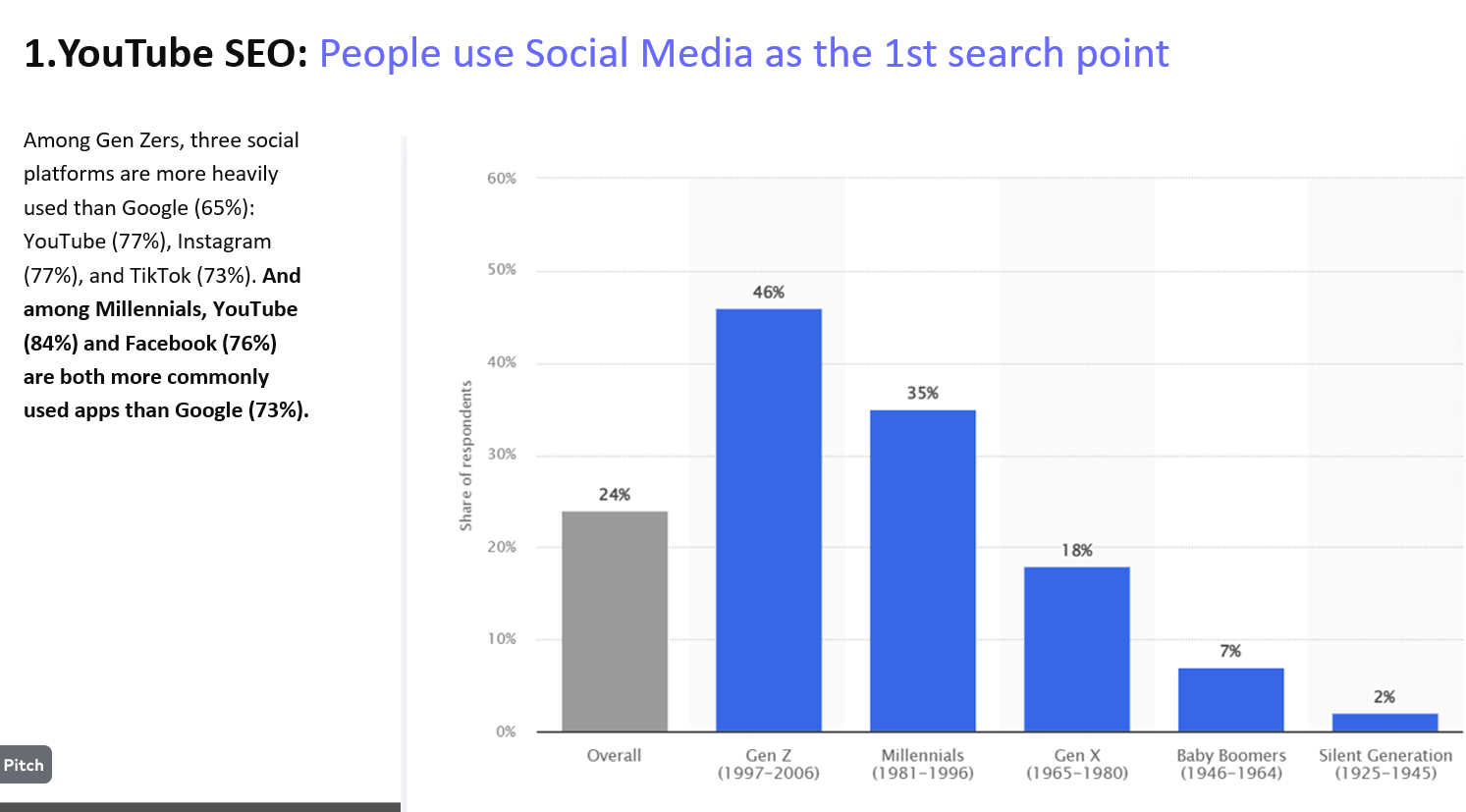
Here’s the uncomfortable truth: the average Gen Z prospect spends 6-7 hours a day on social media. Your carefully crafted email? It’s competing with TikTok algorithms, group chats, and an endless scroll of content designed by billion-dollar companies to be addictive.
Meanwhile, AI is eating organic search for breakfast. According to recent data, 60% of searches now result in zero clicks as users get answers directly from AI overviews. For education specifically, 85% of search terms are “highly likely” to appear in AI-generated results—meaning students may never visit your website at all.
So how do you build brand recall in this environment? Not by shouting louder. The institutions winning today are the ones that feel real—authentic, consistent, and laser-focused on outcomes that matter to students and parents.
This playbook breaks down exactly how to improve brand recall among students and parents, drawing on insights from enrollment leaders, marketing executives, and digital strategists who are solving this problem right now.
“The average is 6 to 7 hours a day. People are on social in that demo,” says Charles Parker, Vice Chancellor of Enrollment Management at Kaiser University (What’s Your Marketing ROI Webinar, April 2025). “So you have to relate to that. But it also can’t be whitewashed with everything else. You have to make it stand out better.”
That’s the paradox: you need to meet students where they are (social media, short-form video, AI-powered search), but you also need to cut through the noise in channels specifically designed to keep scrolling.
The data backs this up. 70% of higher education institutions are planning to increase their digital marketing budgets, but throwing more money at the problem won’t work if your content looks and sounds like everyone else’s.
Here’s what’s changed: students aren’t falling for emotional marketing anymore. They’ve been marketed to their entire lives. They can smell inauthenticity from a mile away.
“95% of people will trust a perfect stranger, but because it’s a review on Yelp and not coming from you, the business—that’s insane,” notes Nick Colombo, Director of Marketing at Guernic Academy (What’s Your Marketing ROI Webinar, April 2025). “You don’t know that person leaving that review. But we trust people, because instinctually, we think, I’m a person, they’re a person with their experience and their feelings—I’m going to trust that. I’m not going to trust a brand I don’t know.”
This shift has massive implications. Students are increasingly ROI-driven, not emotionally driven.
As Henrique Dutra, Director of Product Marketing at LeadSquared, puts it: “Targeting today has to shift from persuasion to proof and precision. Fewer broad messages, more intent-based plays.” (Enrollment Trends Webinar, December 2025)
Brand recall isn’t a vanity metric. It directly impacts your cost per enrollment. When students remember you—and remember you positively—they’re more likely to:
The schools that nail brand recall see higher conversion rates at every stage of the funnel and lower cost per start. The ones that don’t? They’re paying more and more to acquire students who ghost them anyway.
Students don’t care about your mission statement. They care about what happens after they graduate.
“They want outcomes. They want to know what they’re going to be doing—sitting at a park bench, drinking a beer, or whatever they do, and having fun,” explains Charles Parker, Vice Chancellor of Enrollment Management at Kaiser University (What’s Your Marketing ROI Webinar, April 2025). “They care more about that than they do wearing a smock or doing this at your school. They already know that part of it. You’ve got to show them what life is like after that.”
It starts with leading with what they actually care about. This means your program pages, ads, and nurture sequences need to focus on:
According to research from LaneTerralever’s 2024 Higher Education Marketing Report, students need marketers to provide better content about degrees, financial aid, and careers—these are the gaps in most schools’ content strategies.
A helpful resource: The Ultimate Guide To Higher Education Marketing In 2026
Here’s a tactic that sounds obvious but almost no one does: analyze how your enrolled students actually write and talk, then incorporate their vocabulary into your marketing copy.
“We went so far as we would look at what our typical student wrote like—what words did they use,” says Charles Parker (What’s Your Marketing ROI Webinar, April 2025). “We put it into our copy, because you want to be part of the herd, and they can look at you as part of the success that they want to come to your school.”
This isn’t about dumbing down your content. It’s about resonance. A 28-year-old working mom considering a nursing degree uses different language than a 17-year-old high school senior looking at business programs. Your personas should reflect that, and your copy should match.
One of the biggest self-inflicted wounds in higher ed marketing? Hiding key information to “force” an inquiry or campus visit.
“Schools that gatekeep information are gonna be hurting on those AI overviews and ChatGPT,” observes Jenn Lyles, Executive Director of Beauty Schools Marketing Group (Digital Leads and Grassroots Leads Webinar, September 2025). “Old school is like, ‘I’m gonna say very little so that I can get an admissions interview.’ But it’s actually hurting you, because you’re not being authentic, you’re not being upfront, you’re not building trust with that lead.”
It also kills your AI search visibility. AI tools summarize the web—if your website doesn’t have the answers students are searching for, you simply won’t show up in their results.
The fix is counterintuitive but effective: be radically transparent about costs, schedules, and requirements. The students who self-select out weren’t going to enroll anyway. The ones who lean in? They’re higher quality leads with realistic expectations.
70% of students say they’re most interested in content featuring “students like me,” student leaders, and student athletes. Not admissions counselors. Not professional actors. Real students.
“User-generated content has been and performed the best for us thus far, and it’s free,” confirms Chris Sheppard, VP of Digital Marketing at Tricoci University (Digital Leads and Grassroots Leads Webinar, September 2025). “We usually go out and find something that one of our students has created, we ask them if we could use it, and we use it, and that’s worked great for us.”
“User-generated content has been and performed the best for us thus far, and it’s free,” confirms Chris Sheppard, VP of Digital Marketing at Tricoci University (Digital Leads and Grassroots Leads Webinar, September 2025). “We usually go out and find something that one of our students has created, we ask them if we could use it, and we use it, and that’s worked great for us.”
You can’t manufacture authenticity—but you can create the conditions for it.
“You make life so fun that the user-generated content flows from it,” says Nick Colombo, Director of Marketing at Guernic Academy (What’s Your Marketing ROI Webinar, April 2025). “You’re so unusual that people are like, what the heck is going on over there? Are they losing their mind? And they start talking about it.”
This means:
Don’t wait until graduation to ask for referrals and reviews. Build it into every positive milestone.
“We do it at every milestone in our program,” explains Devon Putnam, Director of Student Success at American Sentinel College of Nursing and Health Sciences at Post University (Student Success Webinar, July 2025). “When we publish a Dean’s List, we reach out to students and say, ‘Did you know that you made the Dean’s List? Congratulations! We would love to work with more students like you. Let us know if you know a friend who could also come back.'”
Other high-conversion moments for referral asks: course completion, passing certification exams, holidays relevant to your field (Nurses Week, for example), and graduation.
The numbers are staggering: 84% of students say video content influences their college decisions. Short-form video has become “the cornerstone of student engagement,” with YouTube, Instagram Reels, and TikTok driving significantly higher engagement than static content.
But here’s the insight most schools miss: video isn’t just for awareness. It’s a conversion tool throughout the entire funnel.
A helpful resource: 7 Great Ideas For Your Higher Education Video Marketing + More Tips
Gary Thorup, VP of Operations at MDT Marketing, describes a “virtual assistant” approach that uses personalized video throughout the student journey:
“We take data that we have on a prospect and we generate a video specific to that individual. So it’ll say, ‘Hey, Charlie, just wanted to let you know your appointment is scheduled today at this date and time. Look forward to seeing you there. If you got any questions, connect with us at the button below.'” (What’s Your Marketing ROI Webinar, April 2025)
The results? Charles Parker reports that video nurturing “lifted our conversion and allowed us to do more with less, and have more excited individuals coming through our school.” (What’s Your Marketing ROI Webinar, April 2025)
Here’s permission to stop worrying about production quality: your polished, professionally-shot videos might actually be hurting you.
“Messed up teeth and wrinkly shirts—that’s optional for the video,” jokes Gary Thorup, VP of Operations at MDT Marketing (What’s Your Marketing ROI Webinar, April 2025). The point is serious: organic, unscripted content often outperforms studio-quality productions because it feels real.
Instagram and TikTok trained an entire generation to associate polish with “ad” and imperfection with “authentic content worth watching.” Lean into that.
A helpful resource: A Comprehensive Guide To Higher Education Content Marketing For 2026
Brand recall isn’t a marketing-only problem. It’s built (or destroyed) at every touchpoint: the first ad, the inquiry call, the campus tour, the financial aid conversation, the first day of class.
“Marketing is uniquely positioned as a department within your organization to play a support role through the entire lifecycle of the student,” notes Gary Thorup, VP of Operations at MDT Marketing (What’s Your Marketing ROI Webinar, April 2025). “This is admissions, and it’s financial aid and academics and career services. Marketing is uniquely positioned to be that support team throughout the lifecycle.”
The problem? Most schools are still siloed.
“We all know those school groups that get silo-driven,” says Charles Parker, Vice Chancellor of Enrollment Management at Kaiser University (What’s Your Marketing ROI Webinar, April 2025). “Marketing’s accountability result is more inquiries. Then you got enrollment whose responsibility is good customer service experience and population growth. Sometimes those two things diverge, and you’ve got competing different goalposts.”
The fix starts with data. When marketing, admissions, and student success teams all see the same information in a unified CRM, they can coordinate messaging and handoffs seamlessly.
Dana Hutton, Chief Marketing and Enrollment Management Officer at Southeastern College, describes implementing a CRM system that “increased our contact rate from a 26% to over a 40%”—simply by giving the admissions team data-driven tasks instead of relying on memory and intuition. (Rethinking Student Engagement Webinar, November 2025).
Here’s what cross-functional brand recall looks like in practice: one of Martin Durlak’s clients at Generation Marketing gets “40% of their students from referrals.” (Digital Leads and Grassroots Leads Webinar, September 2025)
“If you walk into that school, you can feel it—it feels like one big family,” he explains. “The students are happy, they love the place, they love what they’re doing. It’s so obvious how they’re getting the referrals. Almost half their students are for free, basically.”
Devon Putnam took a similar approach at American Sentinel, building a partner engagement program from scratch: “Now 80% of our students come from partners. It started with one person who would say, ‘Hey, I noticed that 3 of our students work for Geisinger—we should talk to this hospital.'” (Student Success Webinar, July 2025)
AI can handle the repetitive, time-consuming tasks that eat up your team’s bandwidth:
“Any tasks where time is being wasted and there’s no strategic value to the people wasting that time,” says Sterling Simpson, VP of Business Development at Enrollment Resources (Rethinking Student Engagement Webinar, November 2025). “Repetitive follow-ups, summarizing data, copying and pasting between systems—AI is exceptional for all of that.”
Specific applications that are working right now:
60% of students now use AI chatbots for college research—up from 49% just a year ago. If you’re not meeting them there, you’re invisible.
That said, AI can’t (yet) replace human judgment on high-stakes interactions.
“In-person tours at the school, certain difficult ethical conversations—like if they’re having a hard time with family support or financial aid—that’s something that AI will really miss the bucket on,” notes Samantha Cornmesser, Director of Member Partnerships at CQ (How AI Is Reshaping Admissions Webinar, August 2025). “It’s just not quite there yet.”
Sterling Simpson agrees: “Right now, AI doesn’t have that empathy and can’t do those things that are extremely nuanced. It could be there eventually, but at this point, humans need to lead on the high-stakes moments.” (How AI Is Reshaping Admissions Webinar, August 2025).
Here’s a tactical insight that’s flying under the radar: old-school article marketing is making a comeback because of AI.
“AI is reading the data and the information for the summary it provides you from the best top sites that have the most information,” explains Sterling Simpson, VP of Business Development at Enrollment Resources (How AI Is Reshaping Admissions Webinar, August 2025). “We’ve actually found a lot of success in going back to the old-school strategy of article submissions. It used to be a big thing done in the early 2000s for SEO. Now it’s becoming valuable for AI.”
The key: don’t submit AI-generated articles verbatim. “AI is smart at finding AI. You want to actually have the human element come in, making sure it’s a human-written article when you submit it.”
You don’t need a six-month initiative to start improving brand recall. Here are five moves you can make immediately:
1. Audit your program pages. Pick your three highest-traffic program pages. Do they lead with outcomes (job titles, salary ranges, employer names) or features (course descriptions, credit hours)? Rewrite the first 100 words to lead with what students actually care about.
2. Collect one UGC video. Find a current student who’s posted a “day in the life” or positive content about your school. Reach out, ask permission to repurpose, and test it as an ad. Compare performance to your polished video content.
3. Add referral asks to three milestones. Identify three positive moments in your student journey (Dean’s List, course completion, certification pass) and add a referral request to each. Keep it simple: “We’d love to work with more students like you. Know anyone who might be interested?”
4. Check your AI Overview presence. Search “[your school name] + [your city] + [your top program]” on Google. What shows up in the AI Overview? If it’s thin or missing, your website content isn’t answering the questions AI is looking for.
5. Create one video nurture touchpoint. Record a simple, personalized video template for appointment confirmations. “Hey [Name], looking forward to meeting you on [Date]…” Even a 15-second video dramatically increases show rates.
Brand recall isn’t about being the loudest voice in a crowded market. It’s about being the most memorable one—and memorability comes from authenticity, consistency, and relentless focus on what students and parents actually care about.
The schools winning at brand recall share a few traits:
“The best referral is an organic type of referral, where you’re not even asking for them,” Jenn Lyles, Executive Director of Beauty Schools Marketing Group, points out (Digital Leads and Grassroots Leads Webinar, September 2025). “If you have really good education, people are gonna tell other people about their school. Have great education, have amazing teachers, make school great. Make it a place people want to be, and this will just happen organically.”
That’s the ultimate brand recall strategy: build something worth remembering.
Want to see how a unified CRM can help your institution improve contact rates, personalize nurturing, and track the metrics that actually matter?
Request a demo of LeadSquared for Higher Education.
Focus on authenticity over volume. Lead with verifiable outcomes (job placement rates, salaries), use student-generated content instead of polished marketing, and be radically transparent about costs and requirements. Students trust real experiences over marketing messages, so let current students tell your story.
Video is now essential. Use personalized video throughout the enrollment journey (appointment confirmations, milestone celebrations, nurture sequences) and prioritize authentic, unpolished content over studio-quality productions. LeadSquared’s CRM enables automated, personalized video nurturing at scale to increase conversion rates.
Stop gatekeeping information. AI tools like ChatGPT and Google’s AI Overviews summarize web content—if your site doesn’t answer students’ questions about costs, schedules, and outcomes, you won’t appear in results. Be comprehensive and transparent on your website, and consider submitting human-written (not AI-generated) articles to authoritative sites.
Implement referral requests at positive milestones (Dean’s List, course completion, certification passes), collect and repurpose one student-created “day in the life” video, and audit your top program pages to lead with outcomes instead of features. LeadSquared helps track these touchpoints and automate referral campaigns across the student lifecycle.
You can improve brand recall by using LeadSquared to deliver consistent, personalized, and timely communication across email, SMS, WhatsApp, and calls. Automated nurturing journeys, branded templates, and engagement tracking help reinforce your institution’s messaging at every touchpoint—ensuring students and parents remember your brand throughout the decision-making journey.

 15 min read 29 min read 19 min read



 5 Best healthcare CRM to integrate with athenaOne