




EDUCATION
Most in-demand academic programs students are searching for in 2026 — and how institutions can respond
Contents

 12 min read


Every enrollment season brings its own version of the same question: What do students actually want? In 2026, the signals are clearer than ever. But acting on them before your competitors do is a different challenge entirely.
Search data tells a clear story. Google Trends data (Sept 2024–March 2025) shows sustained search growth in AI, nursing, and cybersecurity degree queries—a pattern consistent with enrollment trends reported by the National Student Clearinghouse.
According to the World Economic Forum’s Future of Jobs Report 2025, 170 million new roles are projected to emerge by 2030, even as 92 million existing positions are displaced — a net gain that heavily favors workers with technology and human-centered skills. And students, it seems, are paying close attention.
This guide draws on publicly available enrollment and labor market data to identify the most in-demand academic programs students are searching for: the programs generating the most student interest heading into 2026. And to help admission leaders understand student search demand. It is a synthesis of signals across credible sources — scoped primarily to the United States, with job outlook data extending to 2030.
For admissions leaders trying to align recruitment messaging, capacity planning, and counselor workflows with actual student intent, this data is a starting point (not a guarantee). Search volume reflects interest, not always follow-through. Enrollment decisions are influenced by financial aid, geography, program reputation, and increasingly, how responsive an institution is during the inquiry-to-application process.

Before diving into individual programs, it’s worth understanding why students are searching the way they are. Three macro forces are shaping the most in-demand academic programs students are searching for this cycle:
Entry-level salary ranges and job growth projections cited throughout this section are based on the Bureau of Labor Statistics Occupational Outlook Handbook (2024–25 edition) and are intended as directional benchmarks only. Actual earnings will vary by geography, institution, specialization, and employer. We recommend verifying current figures directly via bls.gov/ooh or tools like LinkedIn Salary Insights and Glassdoor before making program decisions.
Consistently high and rising search volume globally, with notable specificity — queries have shifted from generic “computer science degree” to “AI engineering degree” and “machine learning bachelor’s.”
Median entry salary (US): $95,000–$110,000 (BLS Occupational Outlook Handbook, 2024)
Job growth to 2030: 26% (BLS, software and AI-related roles)
Core skills in demand: Python, TensorFlow, prompt engineering, neural network architecture, and increasingly, AI ethics and governance. Most programs have calculus and statistics prerequisites; selective programs at R1 universities carry acceptance rates below 15%.
Among the most consistently searched health programs year over year, with searches skewing toward accelerated formats and programs with guaranteed clinical placements. Most students enter via the BSN (Bachelor of Science in Nursing), which leads to RN (Registered Nurse) licensure. Those seeking advanced practice roles — including Nurse Practitioners (NPs), who can prescribe and diagnose independently — typically continue to an MSN (Master of Science in Nursing).
Median entry salary (US): $62,000–$75,000 (BLS, registered nurses, 2024)
Job growth to 2030: 6% for RNs; 40%+ for nurse practitioner tracks (BLS)
What makes nursing searches unique is their local intent — students want programs within commuting distance or in specific metro areas. Institutions that surface well in local SEO and respond quickly to inquiries have a significant first-mover advantage in this segment.
One of the fastest-rising search categories since 2022, with strong interest in interdisciplinary programs that don’t require a pure math background.
Median entry salary (US): $80,000–$98,000 (BLS, data scientists, 2024)
Job growth to 2030: 35% (BLS, data scientists and mathematical science occupations)
Sustained high search volume, with students increasingly searching for programs carrying NSA/DHS National Center of Academic Excellence (CAE) designation.
Median entry salary (US): $85,000–$105,000 (BLS, information security analysts, 2024)
Job growth to 2030: 32% (BLS, information security analysts)
Online availability is high, making this a strong segment for institutions building hybrid or fully remote program pipelines.
Growing steadily, driven by students seeking healthcare-adjacent careers without clinical licensure requirements.
Median entry salary (US): $58,000–$78,000 (BLS, health information technologists, 2024)
Job growth to 2030: 17% (BLS)
Sitting at the crossroads of healthcare and technology, health informatics has emerged as one of the most practical high-demand degrees for students who want healthcare adjacency without clinical licensure.
Searches have shifted from generic engineering queries toward program-specific terms referencing robotics labs, automation electives, and industry partnerships.
Median entry salary (US): $75,000–$92,000 (BLS, mechanical and electrical engineers, 2024)
Job growth to 2030: 10–14% (BLS, mechanical and electrical engineers)
The robotics and automation economy is pulling students back toward traditional engineering degrees — but with clear expectations around applied, industry-connected curriculum.
Significantly elevated post-pandemic, with searches frequently referencing licensure pathways, supervised hours, and telehealth career tracks.
Median entry salary (US): $48,000–$62,000 (BLS, substance abuse and behavioral health counselors, 2024)
Job growth to 2030: 22% (BLS, substance abuse, behavioral disorder, and mental health counselors)
Institutions that clearly communicate the path from enrollment to licensure are converting higher shares of this search traffic.
Rising sharply, particularly among students who cite purpose-alignment as a key enrollment factor alongside salary outcomes.
Median entry salary (US): $65,000–$82,000 (BLS, environmental engineers and wind/solar technicians, 2024)
Job growth to 2030: 11% (BLS, wind turbine and solar photovoltaic roles)
The Inflation Reduction Act committed approximately $369 billion to climate and clean energy provisions (White House, 2022) — investment widely credited with accelerating employer demand for clean energy talent. (White House IRA Fact Sheet, August 2022).
Elevated since the COVID-era supply chain disruptions brought widespread public awareness to the field; strong among community college transfer students.
Median entry salary (US): $58,000–$74,000 (BLS, logisticians, 2024)
Job growth to 2030: 28% (BLS, logisticians)
Students are searching specifically for programs with APICS certification alignment and strong employer partnerships in manufacturing, retail, and defense logistics.
Stable with moderate growth, driven by students seeking programs that go beyond traditional advertising into SEO, paid media, CRM analytics, and content strategy.
Median entry salary (US): $52,000–$68,000 (BLS, market research analysts and marketing specialists, 2024)
Job growth to 2030: 10% (BLS, market research analysts)
As marketing functions become more data-driven, students are evaluating programs specifically on the technical skills embedded in the curriculum.
| Program | BLS Job Growth to 2030 | Status |
| Data Science / Business Analytics | 35% | Accelerating |
| Cybersecurity | 32% | Accelerating |
| Supply Chain Management / Logistics | 28% | Accelerating |
| AI / Machine Learning | 26% | Accelerating |
| Nursing — MSN (leads to Nurse Practitioner role) | 40%+ | Accelerating |
| Nursing — BSN (leads to Registered Nurse license) | 6% | Stable |
| Mental Health Counseling | 22% | Accelerating |
| Health Informatics / Health Information Management | 17% | Growing |
| Robotics / Mechanical & Electrical Engineering | 10–14% | Growing |
| Renewable Energy / Sustainability Engineering | 11% | Growing |
| Digital Marketing / Marketing Analytics | 10% | Growing |
| Traditional Business Administration | 7% | Stable |
| General Liberal Arts | Varies | Declining |
Job growth figures: BLS Occupational Outlook Handbook, 2024–25 edition (bls.gov/ooh). Figures reflect projected employment change through 2034.
The clearest pattern in this data: programs at the intersection of technology and a high-need sector—healthcare tech, clean energy engineering, AI-enabled business—are pulling the strongest momentum. Traditional programs without a skills-forward reorientation are losing ground in student search behavior, even when they maintain solid employment outcomes.
Understanding what programs students are searching for most is only half the picture. Admission leaders also need to know what barriers students face in actually enrolling.
Students—and the counselors guiding them—benefit from a structured framework when evaluating options. The following factors consistently appear in research on enrollment decision-making (Ruffalo Noel Levitz, National Student Satisfaction and Priorities Report, 2024):
The shift in what the most in-demand academic programs students are searching reflects something deeper than trend-chasing. Students are more informed, more deliberate, and more skeptical of generic program marketing than any previous generation. They’re doing real research before they ever fill out a form—and the institutions that show up with specific, credible, data-backed information are the ones earning the inquiry.
But search interest converts to enrollment only when the follow-up matches the intent. A student who searches “accelerated nursing BSN online” and lands on a well-optimized program page still needs a fast, personalized, and informed response to move forward. When hundreds of such students arrive in the same enrollment cycle—across different programs, different stages of readiness, different geographic markets—managing those conversations manually becomes the bottleneck.
This is exactly where enrollment teams are increasingly turning to education CRM platforms.

The ability to segment inquiries by program interest, trigger personalized nurture sequences, track counselor follow-up velocity, and identify where high-intent students are going quiet in the funnel isn’t a nice-to-have in a competitive enrollment environment. It’s what separates institutions that capitalize on search demand from those that watch it convert elsewhere.
Also read: SEO For Educational Institutions: Boost Visibility
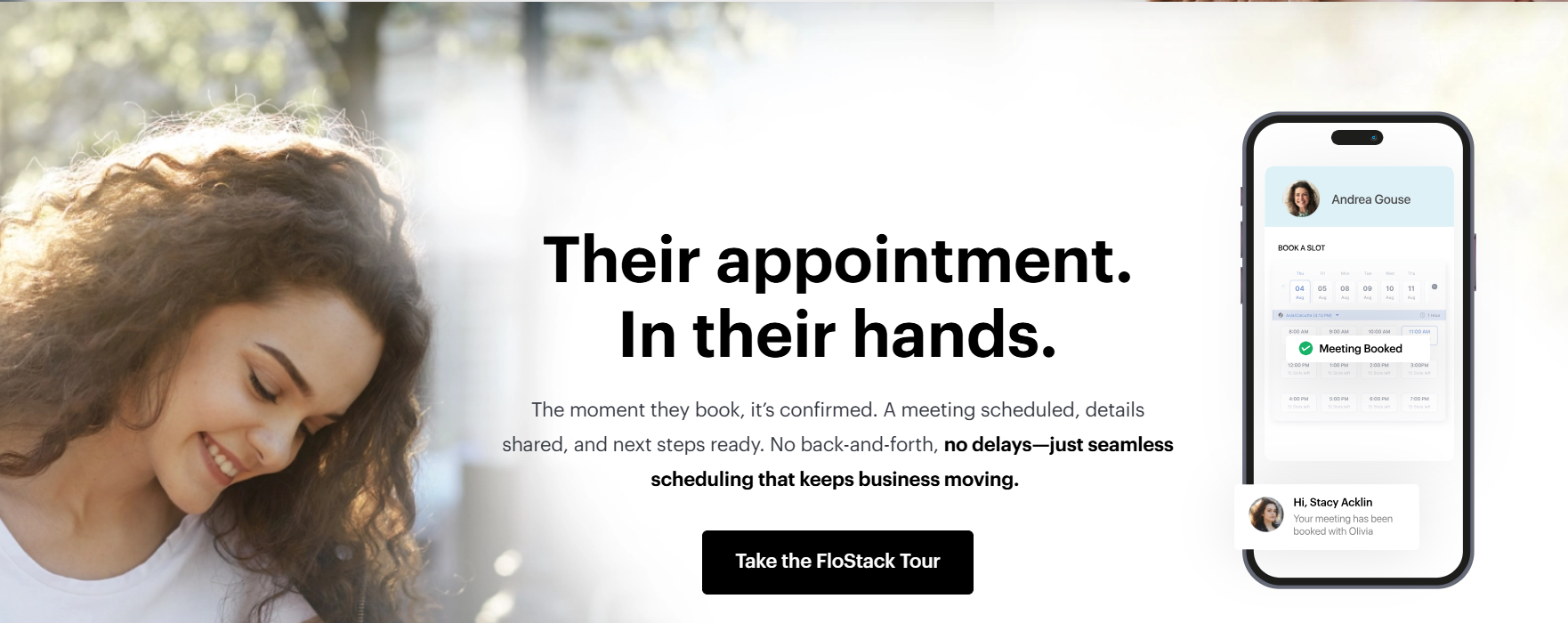
Most high-intent students won’t wait. FloStack closes the gap between inquiry and conversation — automatically qualifying leads, routing them to the right counselor, and scheduling meetings within seconds of a form submission, turning what used to take days into a response that feels immediate.
The programs climbing student search rankings in 2026 share a common thread: they lead to visible, skills-aligned careers in fields where employer demand outpaces supply. AI, cybersecurity, nursing, data science, and renewable energy aren’t trending because of marketing—they’re trending because students have done the math.
For admission leaders, the strategic opportunity is in the gap between what students are searching and how quickly, clearly, and personally institutions respond. A student who searched for your program today made a decision about your institution before you ever spoke to them. What happens next—how fast you respond, how relevant your message is, how well your team can manage volume without losing the human touch—determines whether that search converts to an enrolled student.
If your team is navigating high inquiry volume across multiple high-demand programs, explore how a purpose-built education CRM can help you respond faster, personalize at scale, and give every high-intent student the follow-up they’re looking for. Build the enrollment infrastructure your 2026 class deserves!
About LeadSquared for Higher Education
LeadSquared’s enrollment CRM helps institutions manage high-volume inquiry pipelines, personalize follow-up at scale, and track counselor performance across programs.
Based on Google Trends data and BLS employment projections, the top programs include AI/Machine Learning, Cybersecurity, Data Science, Nursing (BSN), Renewable Energy Engineering, and Mental Health Counseling. All show strong search growth alongside favorable job outlooks through 2030.
Based on BLS occupational projections, cybersecurity and data science offer strong starting salaries relative to time-to-completion — with median entry-level pay between $80,000 and $105,000 — alongside job growth projections of 32% and 35% respectively through 2030 (BLS Occupational Outlook Handbook, 2024).
Yes. Cybersecurity, Health Informatics, Data Science, and Digital Marketing all have strong online delivery options with broad employer acceptance. Nursing remains largely on-campus due to clinical requirements, though RN-to-BSN bridges are widely available online.
Research consistently shows students prioritize total cost, salary outcomes, modality flexibility, and employer partnerships. Program pages and counselor interactions that address these factors specifically—rather than generically—see higher engagement and conversion.
Not necessarily. BLS job growth reflects employer demand, not enrollment capacity or institutional fit. A BSN program with strong clinical placements and local employer partnerships may yield better enrolment outcomes than a high-growth program the institution isn’t yet resourced to deliver well. Use job growth data as one signal among several, not as a recruitment priority ranking.
Research consistently shows that response speed is a decisive factor for high-intent prospects. Students searching for competitive programs — cybersecurity, data science, nursing — are typically evaluating multiple institutions simultaneously. A same-day response, particularly one that addresses the specific program the student inquired about rather than a generic welcome message, significantly improves the likelihood of moving that prospect to application. Enrollment teams can use education CRMs platforms to help with this.
 15 min read 17 min read 14 min read



 How to integrate home health CRM with scheduling & billing software