




EDUCATION
CRM for Skyward SIS schools: Automating career and CTE program enrollment
Contents

 10 min read


Ask a Career and Technical Education (CTE) director how they recruited this year’s welding or health sciences cohort, and you’ll usually hear some version of the same story: a spreadsheet of interested students, a stack of paper applications, a group text thread with the local hospital about how many students they can host for a job shadow this month, and a lot of manual follow-up to keep families from dropping off between the open house and the deadline. Meanwhile, the district’s Skyward SIS sits untouched by any of it — because none of that recruiting activity is really Skyward’s job.
That’s the quiet reality behind CTE programs in more than 2,500 school districts running on Skyward today. A CRM for Skyward SIS career programs exists to take on exactly the work described above — recruiting future applicants, running the application and admissions process, coordinating parent communication, and managing employer partnerships — as a system built specifically for that pre-enrollment stage, separate from (but connected to) Skyward’s official student records.
Disclosure: This article is published by an enrollment technology provider and reflects that perspective. It’s meant to help CTE programs decide whether a dedicated enrollment CRM fits their workflow — not to serve as a neutral, cross-vendor product comparison.
Skyward is a student information system (SIS) built for district-wide operations: grades, attendance, scheduling, transcripts, state reporting, and family communication through Family Access, Skyward’s parent and student portal. It’s the system of record once a student is enrolled and moving through a normal academic schedule.
What Skyward isn’t designed for is pre-enrollment activity — the recruiting, application review, and multi-touch communication that happens before a student ever shows up in a class roster. That’s a different job, and it’s where CTE programs run into friction.
Career and Technical Education programs — welding, health sciences, culinary arts, cybersecurity, automotive technology, and similar pathways — usually sit inside a comprehensive high school or a shared career center serving several district schools. But functionally, they behave more like a small career school of their own than a default enrollment:
None of this is a natural fit for an SIS built around already-enrolled students. It’s a recruitment and relationship-management problem — and it’s a growing one. More than 11.2 million students are enrolled in CTE programs across the country, according to Advance CTE, which means the recruitment and admissions load on individual programs is only increasing. A CRM that connects into Skyward and manages CTE enrollment end-to-end is built to close exactly that gap.
Once you see the gaps Skyward doesn’t fill, the workflows that belong in a CRM become fairly specific. Most programs building a career technical education enrollment pipeline end up prioritizing the same five areas.
The recruiting clock starts in 7th and 8th grade, when students are choosing which high school pathway to pursue. This is where a career technical education CRM earns its keep, powering vocational program student recruitment automation from the very first touchpoint. It lets program coordinators build multi-touch outreach campaigns to feeder middle schools, tracking which students attended an info session, requested materials, or expressed interest in a specific pathway. All of this happens long before Skyward has any record of them.
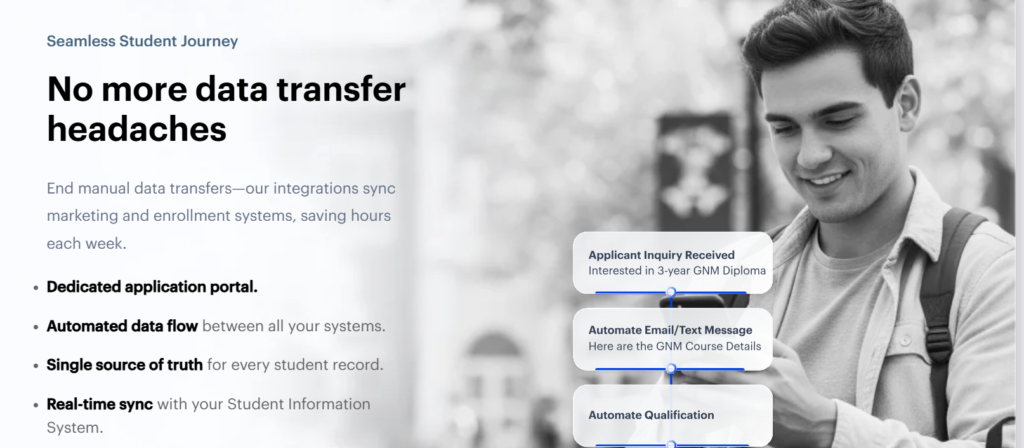
Job shadows, program tours, and open houses are some of the highest-converting recruitment moments for CTE programs. A CRM automates the logistics: online registration, automated confirmation and reminder messages, waitlist management, and post-event follow-up sequences — so no interested family falls through the cracks between the open house and the application deadline.
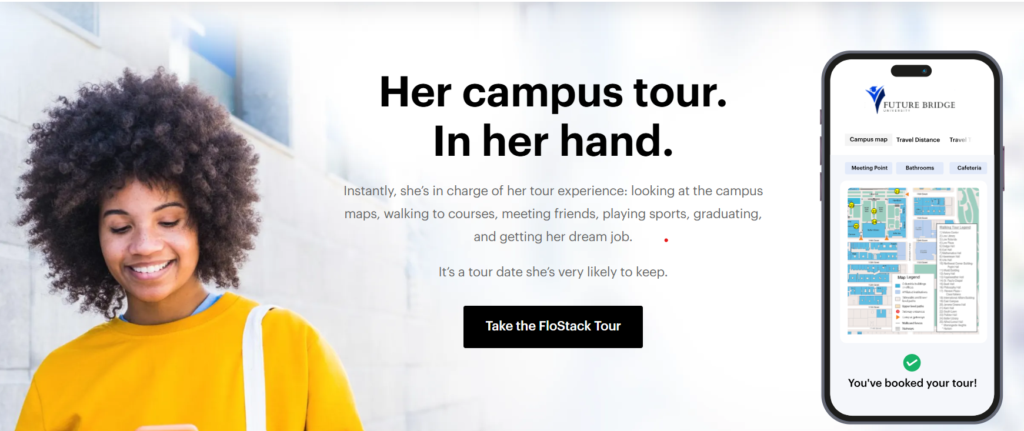
Self-service scheduling tools like LeadSquared’s FloStack take this a step further by giving each prospective student and family a personalized microsite where they can pick an open house slot or shadow day themselves, rather than going back and forth over email or phone to find a time that works. For a CTE center juggling multiple programs and multiple event dates, that self-scheduling layer removes a meaningful chunk of manual coordination work from the recruiting team.
Choosing a CTE pathway is rarely a student’s decision alone — it’s a family decision. Effective Skyward-compatible CRM workflows layer in parent-specific communication: application deadlines, financial aid or dual-credit information, and program outcome data, delivered on a separate cadence from the student-facing messages.
CTE programs live or die by their employer relationships. A CRM can track employer relationships the same way it manages students: tracking which local businesses partner with the program, what internship or job-shadow capacity they offer each term, and when it’s time to re-engage a lapsed partner. This turns “who partners with us” from an informal list into a trackable, reportable pipeline.
Most states require CTE programs to report post-graduation outcomes — employment, further education, or credential attainment — as part of Perkins V accountability requirements. A CRM gives programs a structured way to capture that outcome data over time, rather than reconstructing it manually every reporting cycle. That structure matters most for centers juggling multiple pathways at once, where outcome data for welding graduates, health sciences or medical assistant graduates, and culinary graduates would otherwise live in separate spreadsheets maintained by separate instructors.
A vocational program admissions CRM doesn’t need to replace Skyward — it needs to work alongside it, the same way a general-purpose school CRM software sits beside a district’s core SIS for other enrollment functions.
In practice, this typically means the CRM handles everything before and during the application/recruitment stage, then hands off confirmed enrollments into Skyward once a student is accepted into the program, so the SIS remains the single source of truth for the official student record.
The specifics of that handoff — API-based sync, scheduled data exports, or manual confirmation — depend on your district’s IT setup and Skyward configuration, so it’s worth confirming the technical integration approach with your Skyward administrator and your CRM implementation team before committing to a workflow.
For day-to-day Skyward CTE program management, that separation is what keeps things simple: coordinators work their pipeline entirely in the CRM, and once a student is formally accepted, a clean, confirmed record moves into Skyward. Without anyone re-keying data by hand or maintaining two parallel systems of student information.
Consider a shared CTE center serving a district’s high schools, offering eight distinct program tracks — from health sciences to advanced manufacturing — and receiving more than 600 applications a year across all pathways.
Without a dedicated system, that volume typically gets managed through a patchwork of spreadsheets, shared inboxes, and paper applications passed between counselors. A Skyward SIS CRM integration approach instead gives the center:
The result is a system sized to one workflow, recruitment and admissions, that the SIS was never designed to run. Before, a center like this might have needed one part-time staffer per program just to keep track of applicants. With a shared pipeline, the same coordinating team can manage all eight programs instead. Follow-ups, reminders, and reporting run on their own, rather than depending on someone remembering to check a spreadsheet.
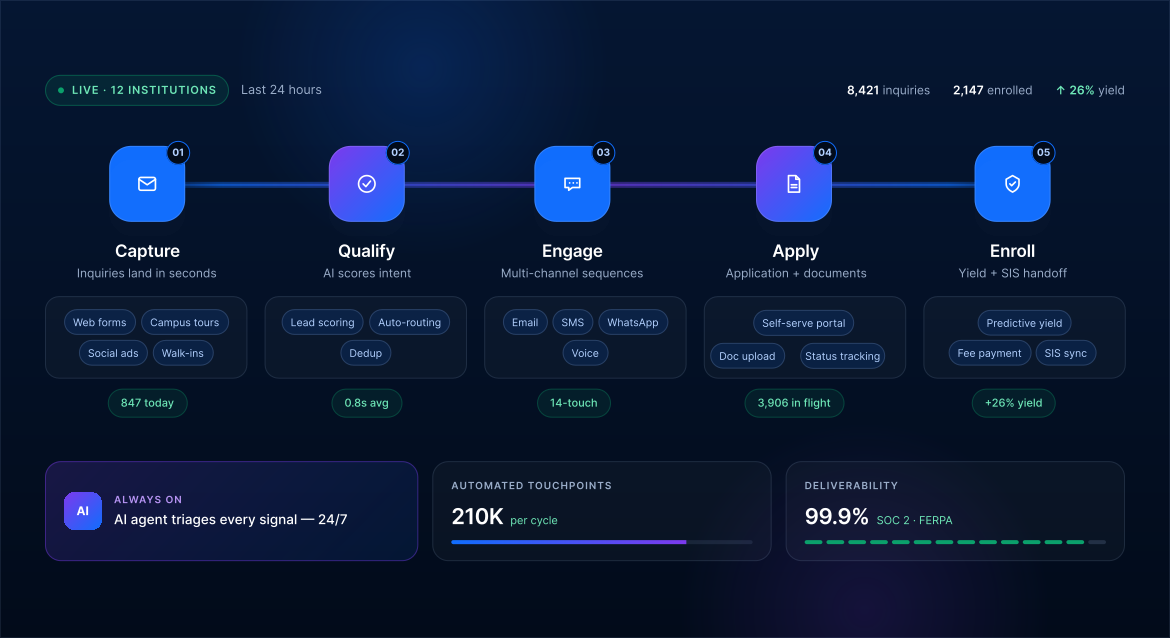
CTE programs are already doing the hard part — building strong pathways, lining up employer partners, and giving students a real head start on a career. What most of them are missing is a system built for the recruitment and admissions work that Skyward was never meant to handle.
A dedicated CRM closes that gap without disrupting anything on the SIS side: recruiting stays organized, applications stop falling through the cracks, parent communication runs on its own track, and employer relationships get tracked as rigorously as student leads. For a broader look at how this fits into a district’s overall enrollment strategy, see LeadSquared’s education CRM solutions.
Ready to see how a CRM built for CTE recruitment and enrollment fits alongside your Skyward setup?
Book a demo to walk through the CTE program enrollment journey and employer partnership tracking in action.
Skyward is built to manage students who are already enrolled — records, scheduling, grades, and family communication through Family Access. It doesn’t include dedicated tools for pre-enrollment recruitment, competitive application review, or multi-touch outreach campaigns, which is why many CTE programs pair it with a separate CRM.
Most CTE programs recruit through a combination of middle school outreach, open houses, job shadow days, counselor referrals, and direct communication with both students and parents. Programs that run this recruitment deliberately — with structured outreach and consistent follow-up — are generally better positioned to fill seats than those that rely solely on default district assignment or word of mouth.
There’s no single standard CRM for CTE, largely because it’s still an underserved niche in most SIS and admissions software markets. Programs typically look for a CRM that can manage a multi-step application pipeline, automate parent and student communication, and track employer partnerships — while integrating with whatever SIS (Skyward or otherwise) the broader district already uses.
Approaches vary widely by district — some use paper applications routed through counselors, others use shared spreadsheets or general-purpose forms tools, and a growing number implement a CTE admissions CRM school district-wide to manage the full enrollment journey from initial interest to accepted applicant, rather than leaving each program to build its own process from scratch.
An SIS like Skyward is the system of record for enrolled students — grades, attendance, scheduling, and official records. A CRM sits upstream of that, managing everything before a student is officially enrolled: recruitment outreach, application tracking, parent communication, and employer partnership management. The two are complementary rather than competing, and most CTE programs need both working together rather than trying to stretch one system to do the other’s job.
LeadSquared connects with Skyward through API-based integration, allowing confirmed CTE applicants to be passed from the CRM into Skyward once they’re accepted into a program, rather than requiring staff to re-enter student data by hand. The exact integration approach depends on a district’s Skyward configuration and IT setup, so specifics are best confirmed with your Skyward administrator and the LeadSquared implementation team during onboarding.
Enter your details and we'll send you a quick confirmation email to verify your address.
 10 min read 12 min read 10 min read



 Veracross CRM integration: Admissions pipeline automation for K-12 private...
