




EDUCATION
GEGI SIS CRM integration: Bringing admissions automation to small private schools
Contents

 10 min read


Most small private and career schools choose GEGI SIS for good reason. It’s built for Title IV-eligible, budget-conscious institutions running admissions and financial aid without a large back-office team, and it does that job well once a student is enrolled.
The gap shows up earlier than that.
An inquiry comes in through a web form, a phone call, or a walk-in, and from that point until the student shows up ready to register, most of the follow-up happens manually: a counselor remembering to call back, a spreadsheet tracking who’s warm and who’s gone cold, a lot of good intentions and not much system behind them. For a one- or two-person admissions team fielding a few hundred inquiries a year, that’s often enough to lose students who were genuinely interested.
That gap between inquiry and enrolled is where GEGI’s published feature set thins out — and it’s where a purpose-built GEGI SIS CRM integration earns its keep. This guide walks through what GEGI SIS handles well on its own, where the gap actually sits, and how LeadSquared fits into it without disrupting anything GEGI already does well.
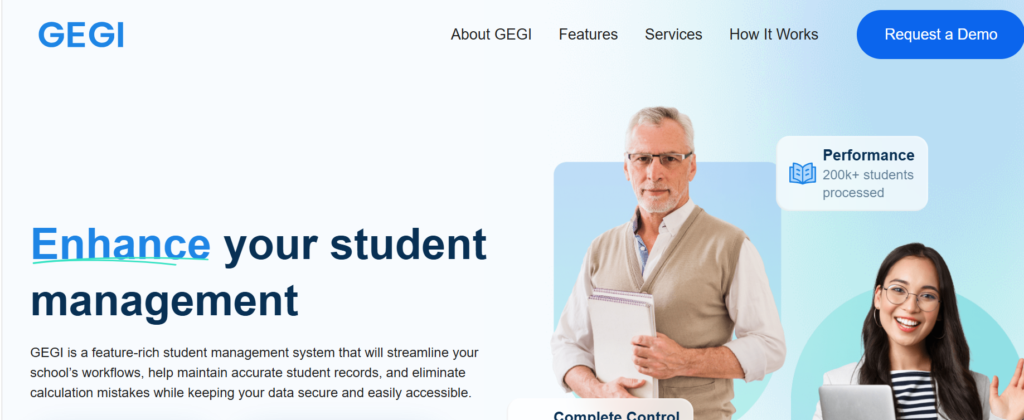
Yes, in part. GEGI markets a multichannel admissions inbox that brings SMS, email, and WhatsApp into one view with full conversation history, and describes its platform as covering the student lifecycle from admission through graduation. Its published feature set centers on communication and records rather than recruitment marketing: as of August 2026, GEGI’s public documentation does not describe multi-touch nurture sequences, engagement-based lead scoring, or channel-level campaign reporting.
Schools looking for a GEGI LLC enrollment CRM pairing typically layer a specialized enrollment CRM like LeadSquared on top, which closes that gap without disrupting the SIS itself.
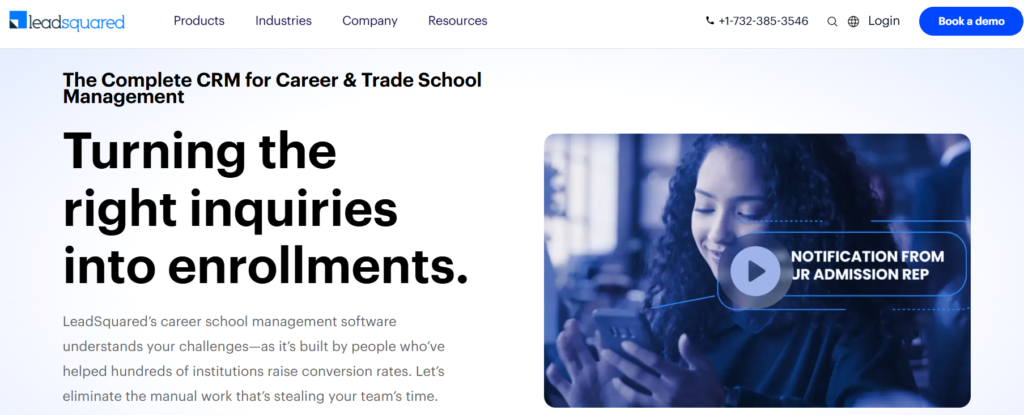
GEGI SIS was designed for small and mid-sized private postsecondary schools, and it does the back-office and compliance work capably:
That focus is why GEGI SIS is a good fit for small, resource-constrained schools in the first place. But the work of filling seats happens before a student becomes a GEGI record, and GEGI’s published feature set doesn’t reach it.
Disclosure: Published by an enrollment technology provider. GEGI SIS is unaffiliated with the publisher, and product capabilities described here should be verified independently.
| Stage | Owner |
| Inquiry capture across web, phone, paid, and events | Enrollment CRM |
| Multi-touch nurture and automated follow-up | Enrollment CRM |
| Lead scoring and counselor call prioritization | Enrollment CRM |
| Channel-level recruitment reporting | Enrollment CRM |
| Admissions communication inbox (SMS, email, WhatsApp) | GEGI SIS |
| Student records, academics, and program catalog | GEGI SIS |
| Financial aid processing and compliance reporting | GEGI SIS |
| Billing, payments, and document management | GEGI SIS |
A CRM for a GEGI student management system setup earns its place here. For a two-person admissions office, it does the follow-up work nobody has time to do by hand. LeadSquared is built specifically for the recruitment side of enrollment: the stage before a prospect becomes a confirmed student in GEGI SIS.
Inquiries arriving through your website, phone, paid ads, email, or event forms get captured automatically and routed into structured, automated nurture sequences — so a prospect who fills out a form at 9 p.m. gets a response before your competitor’s admissions team opens their inbox the next morning. For a small admissions office relying on manual follow-up, that speed and consistency is often the difference between a prospect who stays engaged and one who quietly starts talking to another school.
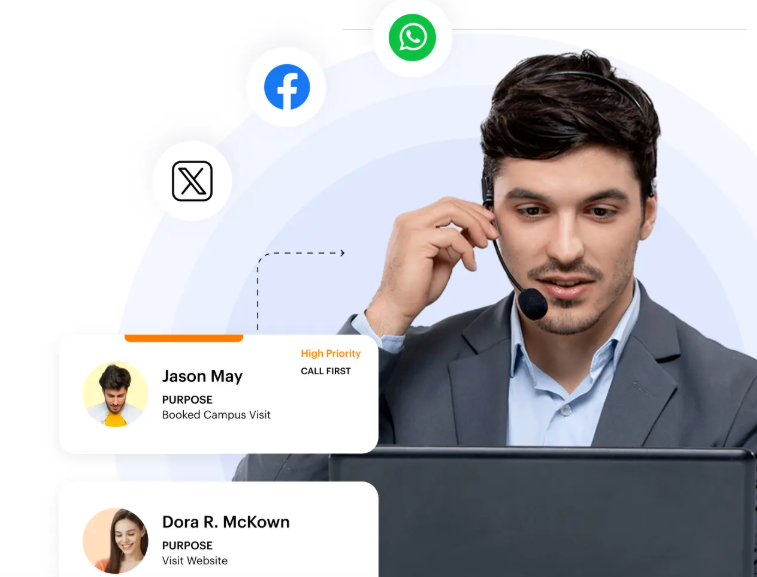
A one- or two-person counseling office fielding a few hundred inquiries a year can’t treat every lead the same way. LeadSquared scores inquiries by engagement and fit, so counselors know who to call first instead of working on a flat list. That prioritization is what makes GEGI SIS admissions automation useful day to day: counselors get a ranked call list, not another dashboard.
Once a prospect enrolls, their contact record and full inquiry history carry into GEGI SIS, so your GEGI SIS team picks up where admissions left off — no re-keying, no history lost from the recruitment stage. LeadSquared is designed to work alongside your existing student information system rather than replace it, so GEGI SIS stays the system of record for compliance, financial aid, and academics.
What the handoff involves
Budget and bandwidth are the two real constraints for schools running GEGI SIS, and they shape how a CRM pairing has to work. NCES counted 5,760 Title IV institutions in the 2024–25 IPEDS collection year, and of the 103 institutions that lost Title IV status that year, 63 were private for-profit — the segment GEGI SIS is built to serve, and one under real financial pressure. For schools in that position, four things decide whether a CRM is viable:
If your school is comparing options more broadly, LeadSquaed’s career school CRM software page covers how this works across vocational and trade programs, not just GEGI setups. If you’re earlier in the process, start with our admission software page.
GEGI SIS does what it’s built to do — keep small private and career schools compliant, organized, and running efficiently once students are enrolled. But admissions is a different job than student administration, and asking one system to do both usually means the recruitment side gets the leftovers: manual follow-ups, and inquiries that go cold before anyone reaches them.
A dedicated GEGI LeadSquared integration keeps GEGI SIS where it’s strongest, on records, compliance, and financial aid, while giving your admissions team the automation and lead scoring it needs to convert more of the inquiries you’re already generating.
Ready to see what this looks like for your school?
See how career schools structure their enrollment funnel.
A student information system (SIS) manages people who are already enrolled — academic records, attendance, billing, and compliance reporting. A CRM (customer relationship management system) manages people who aren’t enrolled yet — inquiries, applicants, and prospects moving through a recruitment funnel. The two systems are complementary rather than competing: a SIS answers, “what’s happening with my current students,” while a CRM answers, “who’s likely to become one.” Most small schools eventually need both, even if they start with just a SIS.
Any enrollment CRM that can exchange records with GEGI through its APIs will work alongside it. LeadSquared is built for that split: it handles inquiry capture, nurture, and lead prioritization on the recruitment side, while GEGI SIS stays the system of record for enrolled students, financial aid, and compliance.
In practice, it means inquiries are captured and nurtured in LeadSquared through the recruitment funnel, and once a prospect enrolls, their information carries over into GEGI SIS for records, billing, and academic tracking, so each system stays focused on what it does best.
For a one or two-person admissions office, the priority is usually fast setup, minimal IT overhead, and pricing that scales with team size rather than institution size. LeadSquared is built around those constraints specifically.
It depends on the inquiry volume and team size. A school fielding a handful of inquiries a month can often get by with spreadsheets and manual follow-up. Once volume climbs into the hundreds a year, manual tracking tends to break down: follow-ups get missed, there’s no consistent scoring of who’s likely to enroll, and it’s hard to see which recruitment channels are actually working. That’s usually the point where a dedicated CRM starts paying for itself in recovered enrollments, not just in staff time saved.
A few things matter more for small institutions than for large university systems: deployment speed (weeks, not months), pricing that scales with team size rather than total enrollment, minimal reliance on in-house IT, and a clean way to hand off enrolled-student data to the SIS without duplicate data entry. It’s also worth confirming how a vendor handles data security, since admissions data includes personally identifiable student information before a prospect ever enrolls. Ask which certifications the vendor holds, such as SOC 2 Type II, and how the platform supports FERPA-compliant handling of student records in your specific workflows.
LeadSquared connects to third-party education systems through its APIs and Universal Data Sync, which is how records move between LeadSquared and an existing SIS. There is no published GEGI-specific prebuilt connector; scope and field mapping are defined with our implementation team during onboarding.
Enter your details and we'll send you a quick confirmation email to verify your address.
 11 min read 10 min read 12 min read


 Best CRM to use alongside WebPT for physical therapy practice growth
