





- Home

- Learn
- Healthcare
- Patient reactivation: A guide to get patients back on track
HEALTHCARE
Patient reactivation: A guide to get patients back on track
Contents

 14 min read


One of the biggest challenges facing healthcare organizations today is not just attracting new patients, but keeping existing ones returning for care.
Patient reactivation is the process of reconnecting with patients who have not visited in a while, missed follow-up appointments, or stopped engaging with their care plans altogether. This group often represents a significant but overlooked growth opportunity.
While new patient acquisition is important, research across industries shows that re-engaging existing patients is far more cost-effective than finding new ones.
Patients who already know your practice are more likely to respond to outreach, because the trust has already been established. In healthcare, this trust is especially valuable.
Beyond revenue, patient reactivation also supports better health outcomes. When patients fall out of care, they are more likely to delay preventive services or ongoing treatment.
In this article, we will explain what patient reactivation means and share practical strategies that you can use to bring patients back into active care.

Patient reactivation is the process of reconnecting with individuals who have stopped coming in for care and currently have no appointments scheduled. Unlike patient recall, which reminds patients who are still active to book routine visits, reactivation targets those who have fallen out of the care cycle entirely. It also differs from patient retention, which focuses on keeping current patients engaged and satisfied over time.
A patient is usually considered inactive if they have missed follow-ups, have no scheduled appointments, or have passed the recommended timeframe for preventive or ongoing care. The exact definition can vary by specialty: primary care patients may be inactive after 12–24 months without a visit, dental patients after 6–12 months, and chronic care patients if treatment milestones are missed.
Reactivation is more than reminders. It also relies on brand awareness and relationship marketing to maintain trust and keep your practice top-of-mind. Personalized outreach that shows patients they are valued increases the likelihood they will return. By combining clinical follow-up with thoughtful communication, patient reactivation helps bring patients back into care, improves continuity, and strengthens long-term relationships.
Patient reactivation is important not just for patient care, but also for the financial health of your practice. Because one of its biggest advantages is cost savings. Bringing back patients who already know your practice typically costs much less than attracting new ones. Studies show that reacquiring existing patients can be five to 25 times cheaper than new patient acquisition because you avoid the high costs of marketing, onboarding, and outreach to unfamiliar individuals.
Reactivation also increases lifetime value. Patients who return are more likely to schedule multiple appointments over time.
Clinically, re-engaging patients sooner helps reduce gaps in care. Regular check‑ups and follow‑ups improve early detection of health issues, leading to better health outcomes.
Not all inactive patients are the same, and treating them as one group often leads to weak results. Segmentation means grouping inactive patients by factors like how long they’ve been away and why they might have stopped care, so your messages feel more relevant and effective. Segmentation is a key part of successful reactivation campaigns because it helps you tailor outreach rather than sending one generic message to everyone.
Patients disengage for different reasons and at different times. A person who hasn’t been seen in six months likely needs a different message than someone who hasn’t visited in two years. Segmenting allows you to prioritize groups that are most likely to return and customize messages that speak to their situation.
Suggested segments:

To segment effectively, use your electronic health record (EHR) or healthcare CRM (Customer Relationship Management System) to filter patients based on visit history, appointment status, and service type. Most systems let you run queries like:
Export these lists or use built‑in reporting tools to create segments. Once segmented, you can build tailored outreach sequences for each group, making reactivation efforts more organized and impactful.
Reactivation messaging is more than simple reminders like “you’re overdue.” To bring patients back, your messages need to feel personal and relevant.
Use language that feels friendly rather than clinical or demanding. Let patients know they’ve been missed and that your practice is ready to help when they’re ready. Phrases like “we’d love to see you back” or “your health still matters” create a positive tone.
Great reactivation messaging often includes helpful information, not just appointment nudges. Short educational facts or references to past care can make patients feel understood.
Tailor messages to different inactive groups (like those missing follow‑ups versus those gone over a year). But don’t include protected health information (PHI) like specific diagnoses in unsecure messages.
Too many messages or pushy language can feel annoying and drive patients away. Focus on helpful, empathetic, and concise content. Keep outreach spaced out, use multiple channels wisely, and always offer an easy way for patients to reply or opt out.
To bring inactive patients back into care, using more than one communication method is essential.
Text messages have extremely high open rates (above 90%) and are read within minutes. They work well for short reminders like “we haven’t seen you in a while.” Call or click to book your next visit.” Texts are especially effective when paired with a scheduling link or easy reply options.
Example:
“Hi jane, it’s been a few months since your last visit. Your health still matters! Reply or click here to schedule.”
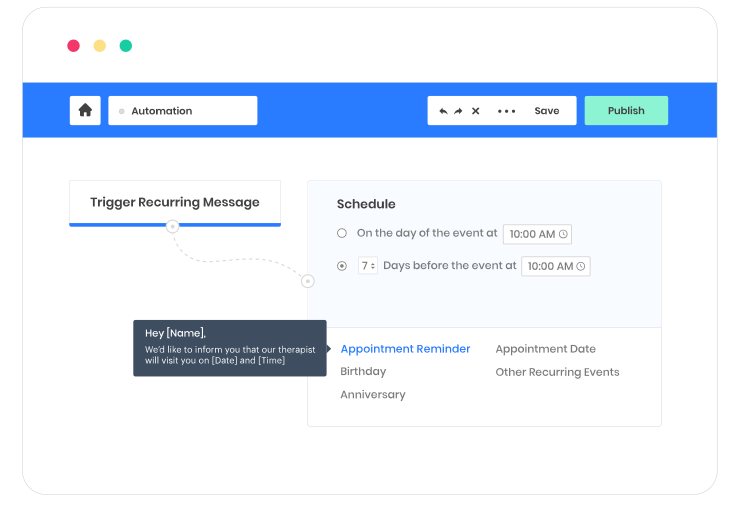
Emails work best when part of a thoughtful sequence rather than a single message. A sequence of emails spaced over days or weeks can increase response rates.
For instance:
Live phone outreach remains one of the most effective methods for reactivation, especially for patients at higher clinical risk or those who haven’t responded to automated outreach.
While not a primary channel for personal health messages, social media helps keep your practice visible and reinforces other outreach. Ads or organic posts can remind past patients about services or seasonal care themes and can support broader reactivation efforts.
Example:
A Facebook or Instagram post promoting a “summer wellness check‑in” that appears to users who follow your page or website.
If your practice has a patient portal or mobile app, push notifications are a secure way to reach patients already engaged online. These messages deliver reminders or reactivation prompts directly where patients manage appointments and health records.
Example:
A portal notification like: “your annual check‑up is overdue. Tap to schedule now.”
Research shows that mixing channels significantly increases reach and results. Using at least three different methods can improve reactivation rates by up to 80% and reach more than 95% of patients who have stopped coming.
A smart outreach strategy ensures that patients are contacted in ways they prefer and are more likely to respond to, maximizing the chance they’ll come back to care.
Getting the timing right for patient reactivation is just as important as the messages or the channels you use.
Successful reactivation campaigns often involve multiple touches over time rather than a single message. Practices that make four to five contact attempts using a mix of channels (like text, email, calls, and postcards) can boost reactivation rates significantly.
A common sequence might look like:
Too much outreach too quickly can make patients tune out or unsubscribe. A good rule of thumb:
This rhythm reminds patients that you’re thinking of them while giving them breathing room between messages.
Not all patients will respond after several attempts. It’s practical to move patients into a less frequent outreach list or pause the campaign if:
At that point, periodic reminders every 3–6 months can keep your practice visible without overwhelming patients.
Timing can also be influenced by seasonality and insurance benefits:
Incentives give inactive patients a reason to take action. Limited-time offers such as a discounted wellness visit or a reserved back-to-care appointment slot can motivate patients who have been delaying care. These incentives do not need to be large discounts. Small value-adds like bundled services or priority scheduling often work just as well.
Incentives work best when paired with a better care experience. Many patients stop returning because scheduling feels difficult, or if communication is unclear. Improving online booking and sending clear appointment instructions can remove common barriers. Offering flexible hours or telehealth options also helps. When concerns or complaints arise, responding professionally builds trust.
Many patient reactivation efforts break down because necessary patient information is scattered or handled manually by staff. With a digital system like healthcare CRM, you can better manage your reactivation efforts while also leveraging the power of automation to speed up the tasks involved.
In practical terms, a healthcare CRM, like LeadsSquared, helps practices easily identify patients who have not returned for care and understand what kind of outreach makes sense next. It does so by offering features that segment your patient base by variables of your choice and then use the stored healthcare data in the system to guide you.
A CRM also supports the experience improvements discussed earlier. Automated reminders reduce missed appointments, while features like communication history help staff respond clearly and avoid repeated outreach efforts. Its appointment scheduling and follow-up tools also remove friction that often leads to lapses in care.
If you’d like to see how a healthcare CRM can support your patient reactivation needs, feel free to book a quick demo of LeadSquared.
Yes, patient reactivation can be done compliantly when outreach follows privacy rules. General reminders and scheduling prompts are allowed as long as they do not include sensitive health details in unsecured messages. Practices should avoid mentioning diagnoses or treatment specifics in texts or emails and provide clear opt-out options for communication.
Not every patient will return, and that’s okay. Reactivation efforts should always respect patient choice. If a patient opts out or clearly indicates they are no longer interested, it’s best to pause outreach and maintain only occasional, low-frequency communication if permitted. Respectful handling helps protect your reputation.
Success is usually measured by tracking rebooking rates, appointment completion, and time to return after outreach. Many practices also look at response rates by channel and segment. Over time, improvements in scheduling fill rates and reduced care gaps are strong indicators that reactivation efforts are effective.
Patient reactivation is valuable for practices of all sizes. Small practices often see faster results because patient relationships are more personal. Even simple efforts, like consistent reminders and follow-ups, can make a noticeable difference without requiring large budgets or teams.
Some common pitfalls include sending too many messages, using generic outreach that feels impersonal, and failing to fix the experience that caused patients to lapse. Another mistake is treating reactivation as a one-time campaign instead of an ongoing process tied to patient care.
Patient reactivation works best when marketing and clinical teams collaborate. Marketing can manage outreach systems and messaging, while clinical teams help determine timing and priority of patients. Clear roles help ensure outreach feels supportive rather than promotional
Some patients respond within days, especially those inactive for a short time. Others may take weeks or months. Reactivation is often gradual, and consistent effort over time tends to produce the strongest results rather than expecting immediate returns.
Tracking patient reactivation helps practices understand what is working and where improvements are needed. One of the most important metrics to monitor is the reactivation rate, which shows the percentage of inactive patients who return to care after outreach. This gives a clear picture of how effective your efforts are overall.
It’s also helpful to track channel performance. Comparing results from email, text messages, and phone calls can reveal which methods lead to the most responses and booked appointments. Some channels may drive faster engagement, while others work better for specific patient groups.
Another useful metric is time to reactivation, or how long it takes for a patient to return after outreach begins. Shorter timelines often indicate that messaging and timing are well aligned with patient needs. Practices may also look at revenue impact by cohort, which shows how much value reactivated patients generate over time.
Most of this data can be pulled from CRM or EHR dashboards, which consolidate outreach activity, responses, and appointments. When performance drops or certain segments stop responding, it’s a sign to refine messaging, adjust timing, or revisit how patients are grouped.

 17 min read
  7 min read
  12 min read


 Holistic Admissions: What the 360° Application Process Looks Like in 2025