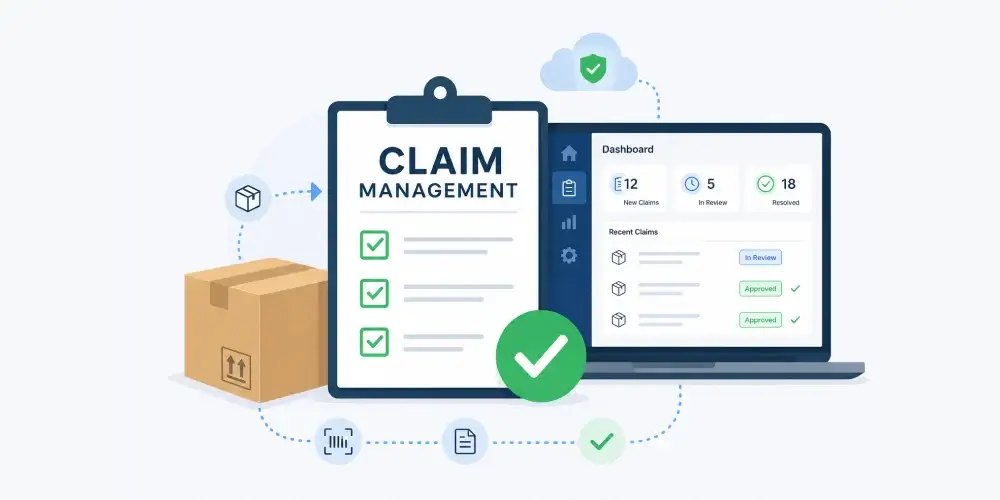

Discover how to automate distributor claims and settlements with automated solutions. Increase transparency, reduce manual errors, and improve relationships.
Abhinav Wuyyuru
12 min read
MANUFACTURING
Mastering Distributor Claims in Manufacturing
Contents
What are distributor claims
Manufacturing sales in India is complex, and their products are sold through multiple layers. A single manufacturer sells to dealers, distributors, builders, and influencers. Every layer operates differently, with distinct documentation requirements, approval hierarchies, and claims processes. Though it may seem like a manufacturer has a single distribution network, it’s actually four or more different relationships running in parallel, each with its own rules and systems.
A claim is a formal application submitted by a dealer/distributor to a manufacturer. Some of the most common types of claims are
Reimbursement for damaged goods,
Price protection claims (raised when there is a price drop from the manufacturer’s end after a distributor has bought the exact product for a higher price),
Trade promotions,
Warranty claims, and more…
A typical claims process starts with the identification of faulty goods and then compiling all the supporting documents (proof of damages, invoices, pricing agreements, etc) and then sending these documents to the manufacturer’s support team via email or WhatsApp.
Once submitted, the claim goes through an internal review process, initial review is done at a branch level, before moving up to the regional level for approval. Finally, after a review, the finance team processes the settlement. On the other hand, earned incentive
details are generally sent directly to the accounts payable department for payment, or the incentive claim is routed to an analyst for a quick review before approval.
Claims settlement usually takes anywhere between a few days to a month, depending on the process set up in the back end. Each branch moves at a different pace, if the evaluation and approval process is manual.
Disputes also arise within your network when your pricing revisions, trade promotion claims, and incentives are all handled manually through email or WhatsApp. There is no easy way out to identify and flag duplicate claims if there is a central system missing.
What’s the cost when claims are manually processed
The manual claims processing is slow and inconsistent, which leaves a lot of scope for human error across the chain. Manual claims processing at a scale affects three core areas of your business.
1) Time: Manual claims processing is lengthy and time-consuming; each claim takes more than 15 days to settle (that’s a lot of time going to waste in 2026), assuming that all the necessary documents are submitted in the first place. Finance teams and branch managers spend a significant amount of time sifting through emails, WhatsApp chats, and spreadsheets to track these claims.
2) Money: In sectors like FCMG, Pharma, and consumer electronics, dealers often place return requests. This can happen due to seasonal overstocking, damaged goods, and expiry-related returns. For large distributors managing hundreds of SKUs, there can be dozens of open claims at any point. When a distributor returns the defective goods to the manufacturer, they raise a claim to recover that money. Until the manufacturer settles it, the distributor’s cash is blocked. This makes it harder for the distributors to place new orders. For manufacturers, manual claims processing can also result in duplicate claims being settled, leading to significant financial losses if the network is large and complex.
3) Relationships: Branch managers are the point of contact between the manufacturer and the distributor. When a distributor has money stuck in a pending claim, they follow up to know when they’ll get it back. If the branch manager has no way to check the claim’s status, they can’t give distributor a clear answer. The repeated back-and-forth, combined with the slow resolution, frustrates the distributor and put the branch manager in an uncomfortable spot. Distributors who experienced unexplained claim rejections or payment details become more sceptical of the manufacturer and the new programs they introduce.
When there is no consistent communication between the manufacturer and its network, trust can quickly erode.
Distributor claims process
Step through each process to see where it breaks down — and where it doesn't.
Manual processDays to weeks
Claim submitted
Email, WhatsApp, or physical form. No standard format.
No claim ID created
Manually logged by branch
Each branch tracks in its own spreadsheet or inbox.
No cross-branch visibility
Waits for approval
Sits in a manager's inbox. No SLA, no escalation path.
Ownership unclear
Settlement
Days to weeks. Distributor had no visibility throughout.
Trust erodes with every delay
Process complete — weeks lost, distributor frustrated.
Claim type, value, and branch determine routing automatically.
No claim sits unassigned
Structured approval with SLA
Timer starts on assignment. Auto-escalates past deadline.
Full audit trail throughout
Settlement
Days to hours. Distributor tracked status throughout.
Faster payment, stronger trust
Process complete — settled fast, distributor informed.
How claims work before a system exists
Most of the time, a distributor submits their claims via email, WhatsApp, or sometimes a physical form to the respective branch where they usually place orders. The branch manager or a claims analyst then reviews and approves the claim before forwarding it to the regional office.
Later, the finance team verifies the approved claim against the original invoice, validates the supporting documents, and processes the payment. The challenges arise when there are multiple handoffs at each stage, with no centralized view across branches.
1) First point of failure: Intake Process: With each branch following its own intake process, claims enter the system in numerous formats, often missing crucial details. This forces them to go back to distributors for additional documents before the claim can enter the review process.
2) Second point of failure: Routing issues: Without proper assignment rules, claims always end up in someone’s inbox, waiting to be picked up by an analyst or branch manager. This significantly delays the claims process.
3) Third point of failure: Reconciliation: Claims then need to be manually reconciled against payouts recorded in the ERP. If there is a mismatch, the entire process has to start from the top.
The full claims lifecycle
From first submission to final settlement — every stage, who owns it, and what can go wrong.
Stage 01
Claim submission
The distributor raises a claim against the manufacturer
Who does this
Distributor or dealer — triggered by a pricing discrepancy, damaged goods, rebate entitlement, or promotional credit.
What gets submitted
Invoice copy, proof of delivery, supporting pricing agreement, and the claimed amount.
Typical time
Day 1
Triggered at point of dispute
Common failure
Claim arrives over WhatsApp or email with no standard format. Branch has no log of it. It already starts invisible.
Stage 02
Document validation
Check that the claim is complete before review begins
Who does this
Branch manager or claims team — verifies all required documents are present and readable.
Missing document triggers an email chain. Distributor doesn't know what's missing. Days pass before review starts.
Stage 03
Assignment and routing
Getting the claim to the right person at the right level
Who does this
Branch manager manually forwards to regional sales or finance depending on claim value and type.
Routing logic
Claim value determines approval level. Claim type determines the team. Branch determines the geography.
Typical time
1–2 days
If the right person is reachable
Common failure
Claim goes to the wrong approver or nobody picks it up. No escalation exists so it waits until someone notices.
Stage 04
Claim review and duplicate check
The highest-risk stage in a manual process
Who does this
Regional manager or claims analyst verifies the claim against pricing agreements and checks for duplicates.
Duplicate risk
Same claim submitted to two branches. Both logged separately. Without a central ledger, both can reach approval simultaneously.
Typical time
3–7 days
Longer if disputed
Common failure
Duplicate not caught here surfaces at month-end reconciliation — after payment has already gone out.
Stage 05
Approval and sign-off
Final authorization before settlement is triggered
Who does this
Senior manager or finance lead approves based on claim value threshold and policy compliance.
Approval chain
Low-value: branch manager. Mid-value: regional head. High-value: finance director. Each level has a defined threshold.
Typical time
1–5 days
Depends on approver availability
Common failure
Approver is traveling or on leave. No deputy defined. Claim stalls with no notification to the distributor.
Stage 06
Settlement and reconciliation
Payment released and posted against the right accounts
Who does this
Finance team processes payment and reconciles against ERP records. Credit memo or bank transfer issued to distributor.
ERP sync
Approved claim posts to accounts payable. Invoice matched. Settlement recorded against the distributor's ledger.
Total cycle time
7–30 days
Manual end-to-end
What good looks like
Distributor receives payment with a clear reference. Settlement posted automatically. Claim marked closed with full audit trail.
SubmitValidateAssignReviewApproveSettle
Auto-playing
The workaround has traditionally been for branch managers to maintain personal Excel sheets or email folders as tracking systems, with no standardized format or real-time updates. Finance teams then have to pull data from multiple branches and consolidate it manually. This is where duplicate claims tend to surface; oftentimes by the time they are identified, it’s too late.
How duplicate claims happen and how to stop them
Why does a single claim get submitted more than once? It is usually one of these scenarios:
A distributor operating across multiple regions submits the same claim to each branch separately.
A distributor resubmits the claim after a few days simply because they have no visibility into its status.
A branch manager approves a claim, not knowing that the distributor has also submitted the same claim to a sibling branch as well.
Sometimes, a few distributors may also try to exploit systemic gaps; for example, by submitting claims during the incentive calculation period or sending claims at the very last moment to avoid reconciliation. These are signals that a few distributors may be trying to take advantage of a manual process. The challenge is that both unintentional and deliberate duplicates often have similar timing patterns, making them difficult to detect.
The multi-branch duplicate claims problem
How the same claim gets approved twice — and what stops it.
A distributor operating across two territories raises claim #447 — a price protection claim worth ₹2.4L. They have two branch contacts, so they send it to both, expecting whoever responds first to handle it.
So, how do you flag duplicate claims before it’s too late?
The first step is to have a centralized system that assigns each distributor a unique identifier and generates a unique claim ID for every submission. If the same distributor resubmits a claim, the system can immediately flag it for inspection.
The second step is implementing a rule-based assignment system that matches incoming claims against the existing records using parameters such as claim ID, product type, distributor ID, invoice number, and other relevant details.
The system can automatically validate claims, flag those with insufficient information or duplicate entries, and store everything centrally, giving teams a single source of truth to review, approve, and process claims efficiently.
Benefits of a claims management system
Once you implement a claims management system, the whole process becomes easier for you and the distributors in your network. Distributors can submit claims through a self-serve portal that provides clear status updates throughout the claim’s lifecycle. Rejection reasons are clearly documented, allowing distributors to address issues, submit the right documents, and achieve faster settlements.
Claim assignments enter the system structurally and get assigned automatically to the right claims analyst along with the supporting documents, based on predefined thresholds and rules. Regional managers get a centralized view of all claims across their territory, bucketed into different stages: pending, approved/disputed, settled, and sent back.
When the system holds all the data necessary to process a claim, reconciliation becomes easy for the finance team, duplicate detection happens well in advance, and when integrated with ERP, the records post automatically against the right accounts once the payments are processed.
Key features of an effective claims management software
Here’s what to look for while purchasing a claims management software for your teams:
1) Good claim logging: Every claim should be captured, and a unique claim ID should be generated along with the distributor details, claim type, supporting documents, invoices, and the reimbursement amount. These details should be mapped against relevant fields within seconds. The system must maintain a complete record of every action, from submission to settlement, making audits simple and transparent.
2) Rule-based assignment: A good claims management system should help reduce processing time from 15 days to 24 hours by automatically routing incoming claims to the right analyst based on the claim type and threshold set for a single analyst based on pre-defined rules. The software should be capable of handling complex approval workflows of an enterprise manufacturing firm in India.
3) Escalation Matrix: An escalation matric is necessary and should trigger in scenarios such as:
1) No action being taken on a claim for an extended period.
2) A reimbursement request exceeds an analyst’s approved threshold, requiring intervention from a senior manager.
3) A claim being disputed at the branch level but requiring an escalation for resolution.
The escalation matrix should be configurable and adaptable to the complex scenarios involved in manufacturing operations.
4) Easy integration with your existing systems: If a claims management system can’t connect with the rest of your ecosystem, your finance team will still have to enter manual data into the ERP for distributor reimbursement. This defeats the purpose of automation, increases the risk of errors and continues to create delays in the settlement process.
Distribution Checklist will come here:
Fix priority checklist
How to fix your distributor claims process
Work through these in order. Each step makes the next one more effective. Skipping to step 4 without doing step 1 is how most implementations fail.
Progress0 / 6 completed
Foundation — do these first
1
Centralise claims intake
Every claim, regardless of type or branch, enters through a single channel. Assign a unique claim ID at the point of submission. This is the one change that makes everything else possible.
Critical — do first
2
Standardise your claim types and documentation
Define what a valid claim looks like for each type: price protection, ship-and-debit, warranty, promotional. Document the required fields and supporting evidence for each. Without this, intake has no standard to validate against.
High priority
3
Define ownership at every stage
Map each stage of the claims process to a named role, not a person. Branch intake, regional review, finance approval. Set value thresholds for each level. A claim with no assigned owner sits silently in the system. Nobody internally notices it has stalled — the only trigger is when the distributor follows up and asks what happened to it.
Do before automating
Automation — build on the foundation
4
Implement rule-based routing and duplicate detection
Set up automated assignment rules based on claim type, value, and branch. Enable duplicate matching at entry — same distributor, same invoice, same period. This step alone eliminates the most common source of overpayment.
High impact
5
Set SLAs and escalation rules at each stage
Define how long each stage should take. Build automatic escalation when a claim sits past that threshold. Distributors should never have to call to find out where their claim is — the system should tell them before they need to ask.
High impact
6
Connect to your ERP for reconciliation
Approved claims should post automatically to the correct accounts in your ERP without manual re-entry. This closes the loop between the claims system and finance and eliminates month-end reconciliation as a bottleneck.
Final step
Get your checklist →
🔒 No spam. We'll only email you the checklist.
The role of AI in distributor claims management and moving forward
At low claim volumes, a rule-based system can detect duplicate claims based on pre-defined criteria. However, if you’re handling claims across hundreds of distributors day in and out. Near duplicate detection requires AI: claims that have slightly different invoice numbers, but have the same claim values, or the distributor ID is different because they operate across branches.
Duplicate claim detection: A distributor submitting high-volume claims at the end of the quarter, where reconciliation and the approval process need to be fast, which gives them a chance to process a claim that shouldn’t have been.
Moving forward in time, here’s how AI will change the claims management process:
Automated resolution for simple claims: A perfect rule-based system that validates the claim, approves it, and raises a request without any human intervention. This frees up a lot of time for everyone in the process.
AI-based claim volume forecasting: Models that predict the volume of incoming claims based on different parameters derived from past data. This can be based on sales activity, seasonal patterns, and pricing changes.
Self-service AI chat bot: To reduce the workload on relationship managers and claims analysts, the bot responds to all the queries of the distributor once they have applied for a claim. Making the process more transparent and increasing trust with the distributors.
Conclusion: Powering your distribution network
If your claims are coming in from numerous disconnected channels, it will be difficult to track them, and every other improvement that you make to the process is being built on sand. The solution is a central system that lets you handle all the claims with minimum human intervention, at maximum speed.
Something that we at LeadSquared have been building for dealers and distributors for a long time, we understand the complexities in the Indian manufacturing sales ecosystem and have designed a system for large-scale Indian manufacturers: multi-branch visibility, field sales coordination, scheme management, and claims processing.
The service CRM at LeadSquared is built to handle claims workflow, with automated ticket routing, deduplication, and multi-level escalations across sources with real-time dashboards. Customers who have been using LeadSquared’s customer 360 platform have reported a 70% decrease in ticket turnaround time and a reduction of operational spend managing tickets.
We also made sure that integrations are a core aspect for a manufacturing firm. With our in-house UDS connector, you can now connect with any peripheral systems, making the communication of information between your ERP and LeadSquared’s customer 360 easy.
LeadSquared is currently working with some of India’s largest and most complex manufacturing companies across building materials, consumer goods, and other industrial products. The platform is built to handle scale and complexity, which makes claims processing hard in the first place.
FAQ
What is claims management software?
A claims management software allows manufacturing companies to manage different types of claims applied by distributors across branches, regions, and territories. It gives everyone within the system a centralized view to see where each claim stands and eliminates duplicate claims from being processed.
How does claims management software improve distributor relationships?
A claims management software handles the end-to-end process of an application submitted by a distributor. One of the key features of the software is to maintain a record or timestamp every step of the claim process and inform the applicant on where exactly the claim stands, increasing transparency and trust amongst the manufacturer’s distribution networks.
Does claims management software integrate with ERP?
Yes, LeadSquared’s state-of-the-art software integrates with any third-party ERP, with a simple in-house connector called the UDS. It allows LeadSquared to connect with all the peripheral software that you can imagine in the world of manufacturing. Making the whole process much simpler and faster.
Table of Contents
Stay updated with the latest marketing & sales insights
Subscribe for updates
Enter your details and we'll send you a quick confirmation email to verify your address.

We’ll email you once a week. No spam-just valuable content