




EDUCATION
How to increase student enrollment: 10 proven strategies for college admissions teams
Contents

 19 min read


If there’s one thing that all admissions managers fear, it’s falling short of their annual student enrollment goals.
Per a 2025 report, only 43% of chief business officers anticipate their institution’s financial situation improving next year, a decline compared with 2024, with enrollment issues continuing to be a major worry.
The pool of conventional college-aged candidates is shrinking due to demographic changes, and more people are beginning to doubt the worth of a four-year degree, which presents growing hurdles for college admissions teams.
This makes it essential for enrollment teams to identify and apply a robust enrollment strategy to help them push through their yearly targets.
Higher education institutions must comprehend the significance of student enrollment tactics in the current competitive environment. College enrollment rates are declining, so in order to draw and keep students, colleges need to innovate and adapt. A sustainable and vibrant academic environment is the goal of effective enrollment initiatives, not just filling seats.
By providing potential students with strong incentives to select their programs, these tactics help universities stand out in a crowded market. The appropriate tactics can have a big impact, whether it’s by improving campus life, utilizing technology, or implementing individualized communication.
In today’s world, traditional, one-size-fits-all methods of student recruitment just don’t work. Students have higher expectations than standard emails or prearranged open house tours. They have a plethora of information (and opinions) at their fingertips, are perceptive, and frequently skeptical.
Colleges run the risk of coming across as detached and impersonal if they only use outdated playbooks. Authenticity, transparency, and genuine connection are what today’s applicants look for; out-of-date strategies don’t connect with tech-savvy candidates who want genuine value and honest communication.
Furthermore, many students are carefully considering the advantages and disadvantages of going to college. Enrollment outreach may actually increase rather than dispel doubts if it seems out of date or no longer relevant. Institutions that are willing to experiment with new tactics and engage students where they are—online and offline—are likely to outperform those that rely on traditional approaches.
Below is a list of 10 practical student enrollment strategies you can apply to increase enrollment across universities, public and private schools, graduate programs, and community colleges.
TL; DR? You can take a look at the following infographic for an overview of the tips that help you boost student enrollment.
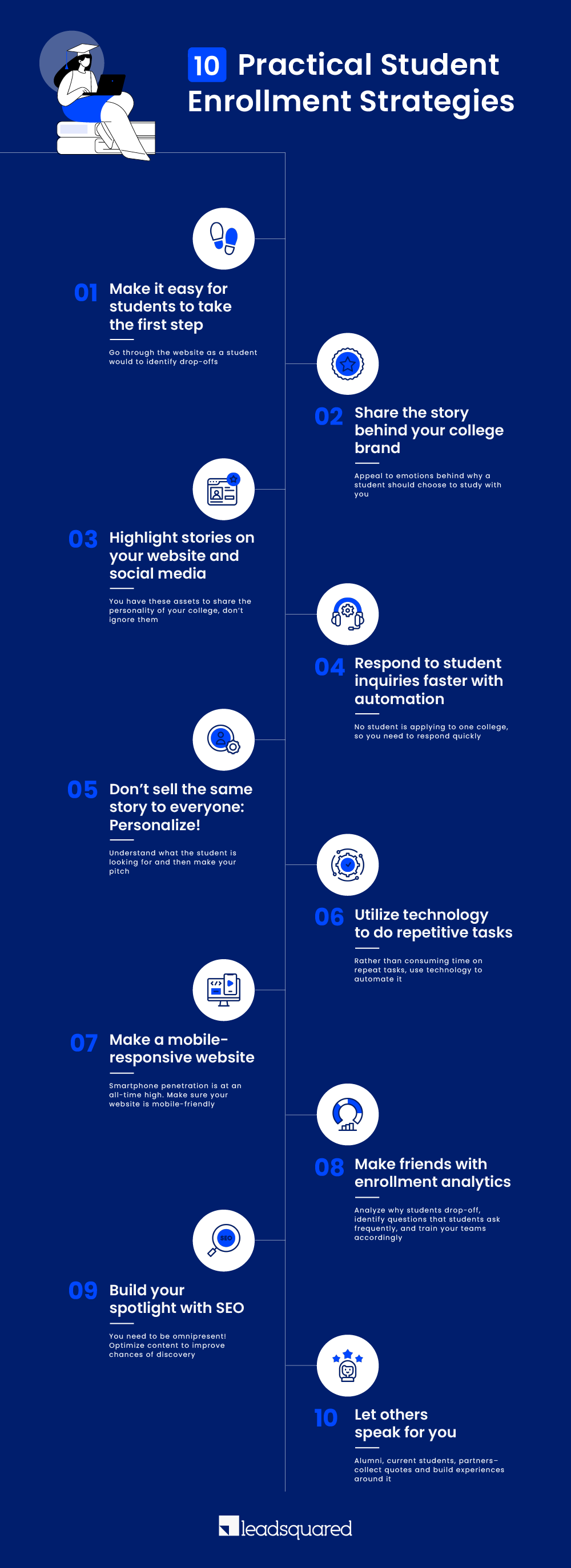
These proven strategies work across the board—whether you’re focused on increasing overall enrollment, filling graduate program seats, or attracting more students to your institution.
It’s crucial that students can find you—but just as critical that they can contact you easily. From the moment they encounter your institution, whether on Instagram, TikTok, or your website, the path to applying or requesting information should be simple and frictionless.
Talking to students, analyzing drop-offs, figuring out what drives them to apply, and making any necessary course corrections are all important.
You could use shorter forms to capture intent (name, email, course interested in)—with this information, your counselor will know how to take the conversation forward. And if you have course-specific forms, then you just need two fields to start the conversation.
You could also use text prompts and explainer videos to help students fill out application forms in more detail.
“Admissions should be an informative process, not one designed to push students into a decision. Establishing a connection with the prospective student and their family is an important part of the process, as it can help to ensure the student will have a positive experience.”
Christopher Salvaggio, Chief Business Officer, Northwest Lineman College
Well, when you are introducing yourself to a prospective student, wouldn’t you want to put your best foot forward? You need to represent your college’s values and what it stands for.
This is why you need to focus on the story you want to tell students who want to choose you as their education partner. The story should be emotional, have multiple characters, and the hero—the opportunities you provide.
Build a narrative that speaks directly to the students you want to enroll. The story should be emotional, include relatable characters, and position your opportunities as the hero.
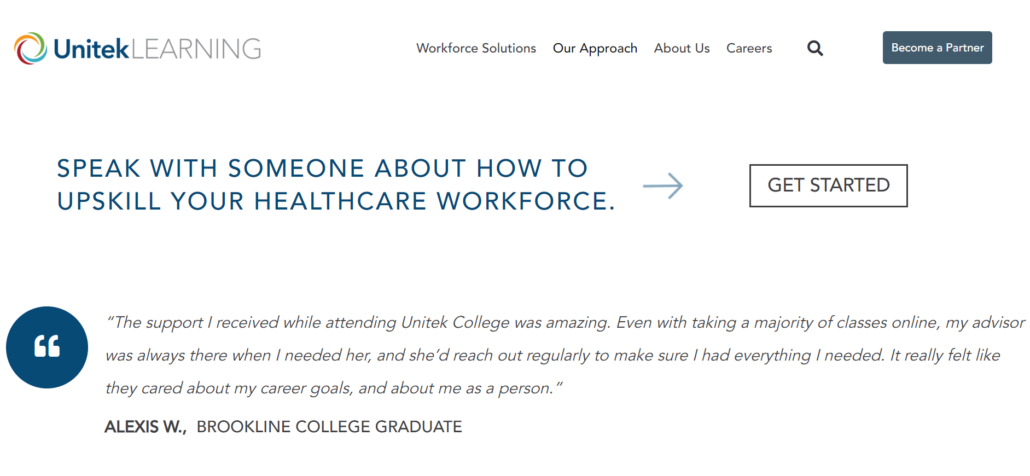
Here’s how Unitek Learning described their college’s emphasis on a student-centric approach: Unitek Learning Accelerates Response Time And Boosts Conversions
And here’s how it benefitted student Alexis:
But for it to be believable, you need to identify your evangelists, your cheerleaders—the students that have studied with you, the parents that have gone through an admissions and financial cycle with you, and the companies/partners that trusted the value you provided through your graduates.
For instance, Seed Global lists the following as the main justifications for students to attend:
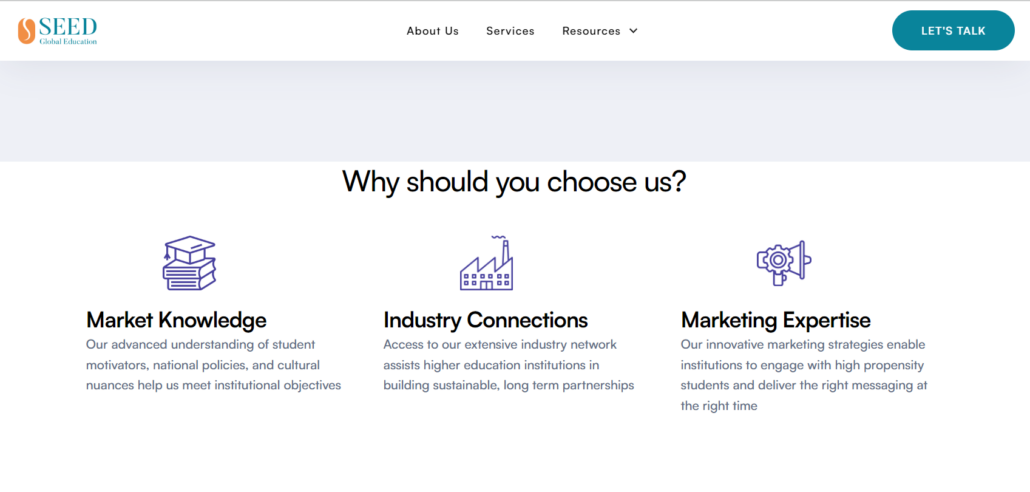
This helps the student as well as the parent make an informed decision by understanding the value proposition of the college they’re considering.
Once you’ve identified your cheerleaders and collected their stories, you need to share them widely. Your website and social media are the best places to start. These platforms allow you to showcase your institution’s personality and build authentic connections with prospective students.
Why is it crucial that others share your stories? To establish trust.
You can distribute these stories organically or via paid media (online and offline). You can run awareness and engagement campaigns on Facebook, Instagram, TikTok, and YouTube to build visibility. Keep an eye on your budget as well as the number of inquiries each campaign brings you. Keep running the best ones and turn off the rest.
Having student ambassador testimonials on your website makes it easier for potential customers to recognize and relate to like-minded individuals. And your college’s enrollment and student engagement rates increase as a result.
Today’s generation wants instant answers to their queries. Education marketers who don’t adjust to this generation’s communication style may not be able to connect with them at all.
The earlier you make the emotional connection the better chance you have because once the applicants have decided that they like a particular school, it’s often difficult for them to backtrack. This is important in creating an emotional bridge between your school and the prospective student.
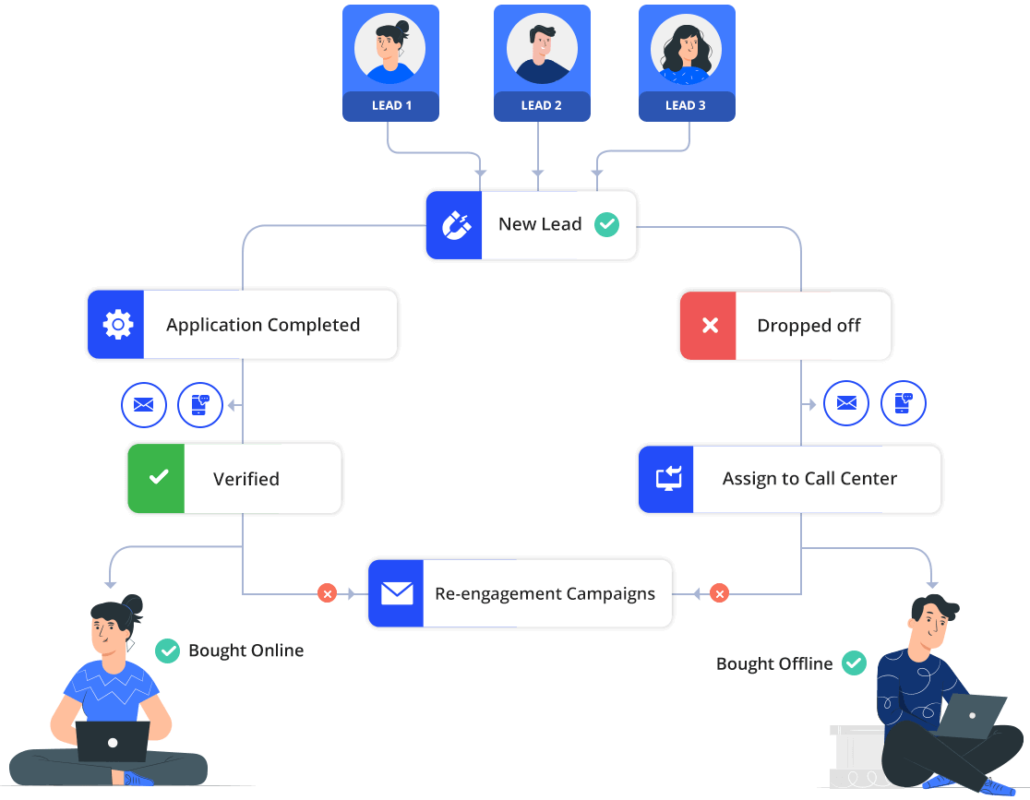
Most data experts say that the response time for your leads must be 5 minutes or less. This may seem nearly impossible but it’s achievable.
With the help of a robust CRM like LeadSquared, you can set up custom admission workflow automations for that can send out multi-channel communications, distribute inquiries to the right counselor and reduce response time to under 5 minutes.
This is how Asher College improved their contact rates:
“LeadSquared’s lead distribution automation helped the admissions team increase speed-to-lead by 12 times. It helped them personalize communications throughout the student life cycle and track all the communications, offering continued rich student engagement from end to end. The contact rate went up by 13% and scheduled campus appointments improved by 5%.”
Kim Gasper, Corporate Director of Admissions, Asher College
Every student’s needs are different, so reiterating the same pitch will only make it harder for your enrollment teams to convince them. Students today like to access information at their fingertips. They can differentiate between the real deal and the BS.
You need to build a process that cues your teams to understand every student’s requirement. For example, Zac has visited your business and economics course pages. If you capture this information, you can utilize it to run a targeted ad for a business course with a specialization in economics on Instagram. Zac views this ad and receives an automated email about the future opportunities for business graduates that you have sent to your well-segmented list of prospects. He opens the email and wants to know more. Then, your counselor gives him a call with a pointed pitch about the course.
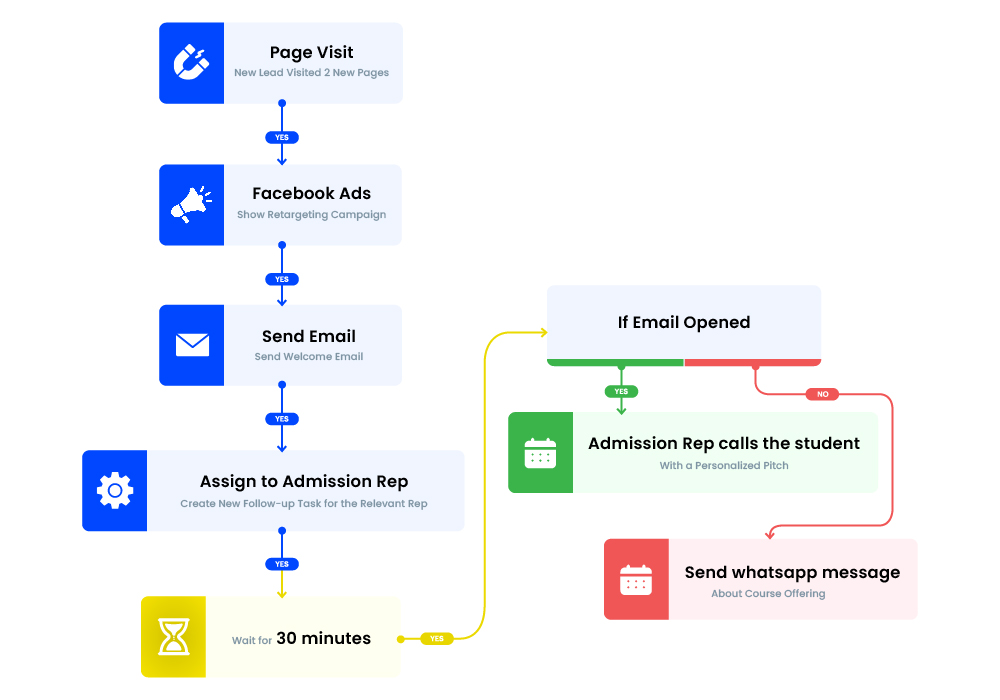
Do you think this will help him get convinced to start an application? 100%.
To empower your counselors with these personalization cues, you need a tool that can provide a 360-view of student activities, segment your audience, and enable targeted omnichannel communication with students. An end-to-end admissions platform like LeadSquared can help you do just that. To know more, get in touch with our team!
With the right technology, you can enable your teams to focus on building the emotional connect with the student rather than spending time updating information.
The right student enrollment CRM can help you
This results in the perfect trifecta – your counselors, admission managers, and channels are working to meet those enrollment targets.
You can implement chatbots, enrollment notifications, and autoresponders to serve your applicants better. Technology also helps enrollment teams widen the reach of their marketing and engagement efforts to hit goals. Identifying the right social media channels like YouTube, Facebook, Twitter, Instagram, Snapchat, Mobile Apps, etc. and combining them with the right tool and messaging can create magic.
Another effective strategy is using SMS reminders to cut through digital noise. While inboxes are crowded, timely text messages about deadlines or next steps are hard to miss. By leveraging your CRM for personalized SMS outreach, you can keep applicants engaged and moving forward—without adding manual follow-ups for your counselors. Twitter, Instagram, Snapchat, Mobile Apps, etc. and combining them with the right tool and messaging can create magic.
Mobile device usage is on the rise, especially among the younger audiences. Imagine opening a poorly designed non-responsive website on your phone where you need to constantly zoom in and out. Forget applying for inquiry, people would abandon the website simply out of frustration.
This responsiveness would allow them to apply from any device, at any time, without ruining the user experience. Having a mobile responsive application process and form will only bode well for your university and have a direct impact on your application rates.
Even the communication channels you choose should be mobile-compatible. For example, if you are emailing them, make sure they have been optimized for mobile devices. Your website, contact information forms, student portal, etc. must be well-suited for mobile devices so that it doesn’t ruin the user experience.
Enrollment marketing is not only about visibility. It has a bigger purpose to serve. It helps admissions managers understand the workings of their teams; the counselors get to understand their students better, and the university is able to showcase the value it can provide once the student enrolls.
But to give clarity to each stakeholder, it is important to track and analyze every quantitative and qualitative enrollment KPI to make the process better.
These cannot be achieved without the help of a proper reporting mechanism. You need a student enrollment system with strong reporting and dashboard capabilities. Not only do you gather information about your prospects, but you’re also able to analyze the performance and the happenings of your admission reps, campuses, and courses.
Being an educational institute, your marketing budget might not allow you to spend recklessly. Therefore, mapping what works best for you and where you should put more or less money is necessary for better results.
To increase your school’s visibility online (unless you are an ivy league), you need to invest in search engine optimization for your website and all content. This includes optimizing for both traditional search engines and AI-powered answer engines like ChatGPT and Perplexity, which students increasingly rely on for college research. Every single page should be designed to rank well and provide clear answers that AI tools can surface—not just your homepage.
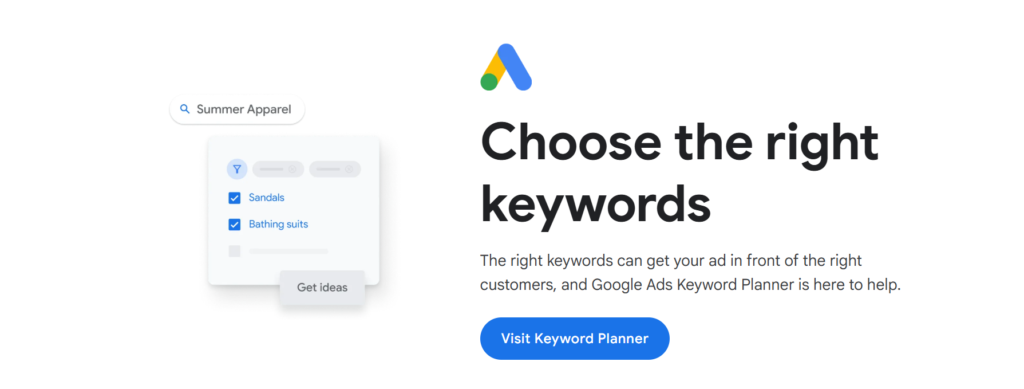
To begin, you need to perform keyword research. Identify a bucket of keywords or phrases that your school or college offers and that your candidates would be interested in. For example, while researching schools, prospects usually use terms such as “Best art programs” or “Business courses” instead of the name of the school.
Use this data to your advantage, so that when prospects begin their search—whether through Google, ChatGPT, Perplexity, or other platforms—your school appears prominently. There is a myriad of tools that let you know what your target audience is searching for. Additionally, structure your content to answer common questions directly, as AI answer engines increasingly pull from well-organized, authoritative sources to respond to student queries.
Here are the top tools that can help you optimize for both traditional search and AI answer engines:
Traditional SEO + AI Optimization Tools:
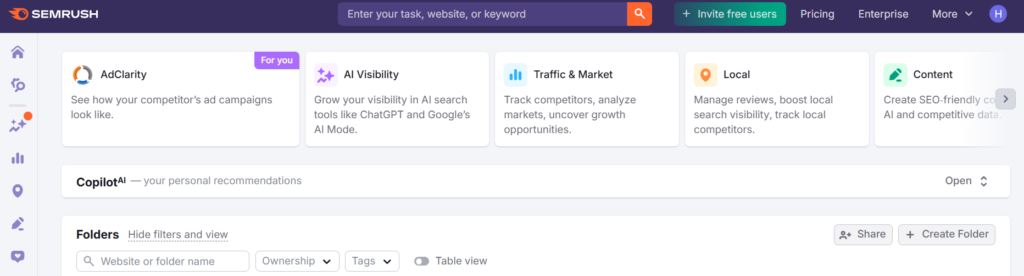
AI Answer Engine Optimization Tools:
A helpful resource:
SEO For Educational Institutions: Boost Visibility
As mentioned earlier, students would relate better to other students and their stories. You can identify a good mix of students–current, alumni, international students, students that did a semester abroad, and recent graduates-who can share their experiences and opportunities that your institution provided them.
Also read: How To Capitalize On Student Testimonials
Real stories of culture and success keep the students engaged during their admissions lifecycle.
You can capitalize on student testimonials by including them in your marketing campaigns to connect with students.
Check out this great example by Georgetown University that used this acceptance story to reach out to students.
There’s something uniquely powerful about stepping onto a campus for the first time. In-person visits go beyond brochures or virtual tours, allowing prospective students to experience the atmosphere firsthand, interact with faculty and peers, and imagine themselves as part of campus life. These moments build emotional connections that often turn uncertainty into confidence, making campus visits a critical factor in converting interest into enrollment and a priority for institutions aiming to drive commitment.
Campus visits are often a deciding factor for students, but distance, time, and cost can limit in-person tours. Virtual campus tours and interactive webinars bridge this gap by showcasing facilities, student life, and campus culture through engaging digital experiences, often paired with live Q&A sessions that allow students to connect with faculty, students, and admissions teams from anywhere.
Many institutions now use immersive video tours and webinars across their websites and outreach channels to expand reach and engagement. These formats help students visualize life on campus while enabling colleges to connect more effectively with international and out-of-state applicants. Understanding how to increase international student enrollment is particularly important for institutions looking to diversify their student body and expand global reach.
Partnerships and collaborations are vital for increasing student enrollment. Higher education institutions can partner with local businesses, organizations, and community colleges to create pathways for students to transfer or receive additional support. These collaborations can encourage prospective students to choose the institution, ultimately increasing student enrollment.
For example, partnerships with community colleges can offer seamless transfer programs, making it easier for students to continue their education. Collaborations with local businesses can provide internship opportunities, giving students practical experience, and enhancing their employability. These partnerships not only benefit the students but also strengthen the institution’s reputation and reach.
By leveraging partnerships and collaborations, institutions can expand their reach, improve student outcomes, and achieve their enrollment goals. It’s a win-win situation that enhances the overall educational experience and attracts more students to the institution.
Enrolling students has never been an easy task. And it is only going to get tougher. Whether you’re working to fill seats in private schools, boost graduate program enrollment, or simply meet your institution’s yearly targets—the key is taking action now. If you want to stop losing sleep over your enrollment numbers, or if your counselors are looking to improve their admissions performance, start applying these strategies today.
And you are not alone; you have technology to aid you. The right tool can help you automate communication, map student journeys, and show where you might be going wrong. In case your university isn’t using an enrollment CRM or is looking to change its current clunky system–check out LeadSquared for Higher Education; it won’t disappoint!
You need a robust enrollment management platform that tracks inquiries, automates multi-channel communication, and provides clear funnel analytics and a 360° view of student activity. Beyond the basics, the right platform enables personalized outreach, streamlined applications, easy event registrations, admitted-student portals, and actionable reporting—freeing admissions teams from manual work so they can focus on engaging students and driving enrollments.
Which activities generate the highest conversions to enrollment? Activities that combine personalization and direct engagement tend to convert best—such as campus visits (virtual or in-person), one-to-one counselor interactions, timely follow-ups via email and SMS, and streamlined application experiences. With LeadSquared, institutions can track which touchpoints influence enrollment most, helping teams focus on the activities that consistently drive conversions.
It is tough to respond to student inquiries manually and it may lead to many missed opportunities. Instead, you can set up automation to respond to student inquiries quickly. This automation could be an email response, assigning the right counselor, or setting up alerts for the team to take prompt action. Addressing student inquiries in under 1 hour will result in lesser student drop-offs, build funnel visibility, and help your team meet their enrollment targets.
Activities that combine personalization and direct engagement tend to convert best—such as campus visits (virtual or in-person), one-to-one counselor interactions, timely follow-ups via email and SMS, and streamlined application experiences. With LeadSquared, institutions can track which touchpoints influence enrollment most, helping teams focus on the activities that consistently drive conversions.
Improving meeting-to-enrollment ratios requires faster follow-ups, personalized communication after meetings, and clear next-step nudges. LeadSquared enables automated post-meeting workflows, targeted messaging, and real-time engagement tracking, ensuring every interaction moves prospective students closer to enrollment.
You can decrease response time by automating how inquiries are captured, assigned, and followed up. LeadSquared instantly routes new student inquiries to the right counselor and triggers immediate calls, emails, or WhatsApp messages—so students are contacted within minutes, and no inquiry is missed.
 20 min read 19 min read
  10 min read



 Fintech Marketing in 2026: Strategy, Trends, and Examples