





MARKETING
Everything you need to know about marketing attribution
Contents

 24 min read


Almost every marketing team eventually runs into this problem.
A campaign seems to succeed. It brings in website traffic spikes and sales growth. Yet it can be difficult to know how much each touchpoint along the customer journey contributed to those results.
Reports from different tools may tell different stories, and each channel may claim credit for the result.
The reality is, customers rarely take a straight path to conversion. They may see an ad and come back days or weeks later before making a decision. By the time the final conversion occurs, it can be unclear which interaction was most influential.
This uncertainty makes decision-making harder. Marketers are left asking questions like which channel really influenced this sale, which campaign deserves more budget, or whether their marketing spend is actually delivering a return.
This article will clear up that confusion. Here, you will learn the fundamentals of marketing attribution and see practical ways to measure the ROI of your marketing efforts accurately.
Marketing attribution is the process of figuring out which marketing activities helped a customer take a desired action, like making a purchase or signing up for a service.
It seems pretty straightforward when you only think about the sale. But rarely do customers head straight to your website and make a purchase, right?
Each step a person takes on their buying journey (say, clicking on a paid ad or opening an email) is called a touchpoint. Attribution helps you see how much each touchpoint contributed to the final outcome.
For example, a customer might first click on a social media ad, later read an email newsletter, and finally call you before converting. Attribution helps you see the relative influence of each of these interactions rather than guessing which one led to the conversion.
Understanding marketing attribution helps connect your marketing efforts to real results, like ROI, so you can see which channels and campaigns are driving your business goals.
In a perfect world, marketers may be able to monitor the whole sales cycle with personal anecdotes from every customer and why they decided to make the purchase decision. However, that is not scalable or realistic.
Understanding marketing attribution helps connect your marketing efforts to real results, like ROI, so you can see which channels and campaigns are driving your business goals.
Attribution is a way to determine the success of advertising campaigns. It allows you to calculate the ad dollars spent based on the number of conversions gained. Advertisers, partners, and app developers may be unable to determine how much is spent on each ad and the payout for a successful conversion without accurate attribution.
Marketing attribution is crucial for optimizing all types of advertising campaigns.
You can improve every aspect of your advertising by tracking user behavior and understanding how they react to paid activity.
Attribution is an integral part of marketing. It affects everything in the advertising ecosystem, from determining how much space costs to measuring campaign performance.
Marketing ROI, or return on investment, shows whether your marketing efforts are bringing in more money than they cost. At its simplest, it compares what you spend on marketing with the revenue generated. For straightforward campaigns, like a paid ad, it’s easy to see which revenue came from which spend: if a customer clicks an ad and converts, the link is clear.
However, most customers do not follow a simple, straight path to purchase. They may see a banner ad, read a newspaper article, browse social media posts, attend an event, search for reviews online, and click a LinkedIn ad before converting. Many of these interactions are hard to track, especially offline or brand-focused activities.
To understand this better, it helps to distinguish between two types of marketing: performance marketing and brand marketing. Performance marketing focuses on campaigns designed to generate immediate, measurable results. For example, paid search ads or promotional emails. Brand marketing, on the other hand, builds awareness and trust over time through efforts like sponsorships or offline campaigns. While the results of brand marketing are often not directly trackable, they influence future conversions and can make performance campaigns more effective.
Marketing attribution helps connect these dots. Instead of assuming revenue came only from the last click, attribution shows how multiple interactions, both brand-focused and performance-driven, collectively influence conversions. This provides a more complete view of ROI and helps marketers make better long-term budget decisions.
A single-touch attribution model is precisely what it sounds like. But we’ll explain. These attribution models credit 100% of a sale to one touchpoint. They are often used when data is limited, or a team wants a simple way to start thinking about attribution.
There are two single-touch attribution models: first-touch Attribution and last-touch Attribution.
As the name implies, this single-source model gives credit to the consumer’s first contact with your brand. It could be their first visit to your website. They may also interact with your content or in some other way that introduces you to them.
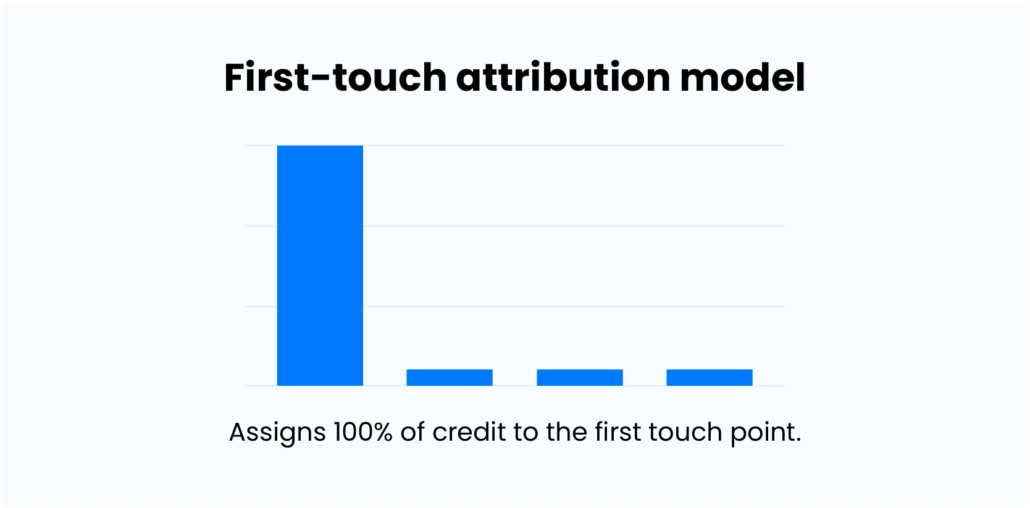
This method of attribution would be used in social media to give credit to consumers who first saw a brand on Instagram. It’s easy to understand and implement. However, it does not provide visibility to lower-funnel touchpoints. When focusing on lead and demand generation, it is best to use the first touch attribution model.
Contrary to the first-touch attribute, this form of marketing attribution credits the final touchpoint, which leads to a sale.
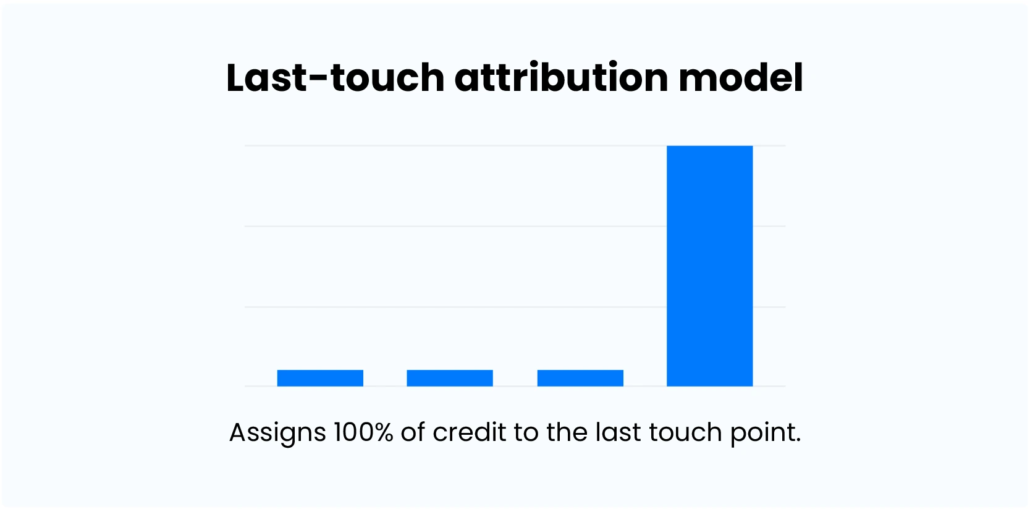
It doesn’t consider any consumer interactions before. It is easy to use and straightforward. However, it can’t track the initial consumer interactions that lead to your brand. If your goal is to drive conversions, the last-touch model is best.
Multi-touch attribution models divide credit according to predetermined rules. The attribution model type that you choose will determine the credit split. Let’s now take a look at each one in more detail:
The linear attribute model gives equal credit to all touchpoints a lead has made during their buyer’s path. Let’s look at an example.
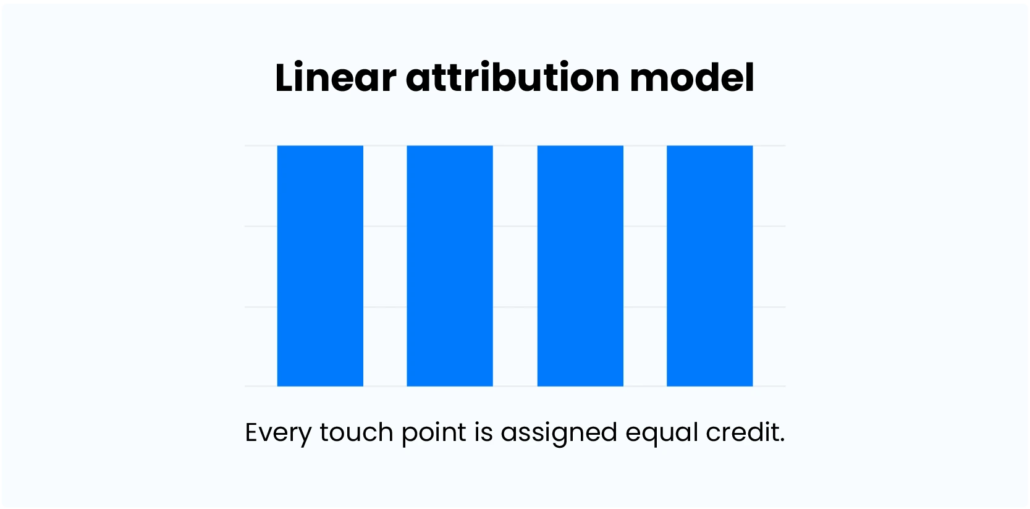
A user clicks on a Google advertisement and visits your site for the first time. They search for your brand three days later and sign up for your newsletter. They return via email a few days later. Finally, they make a sale through a direct search. Linear Attribution would give each touchpoint 25% of the credit.
This model assigns more credit to touchpoints that are closer to the conversion. It is helpful in understanding which channels are motivating customers to purchase.
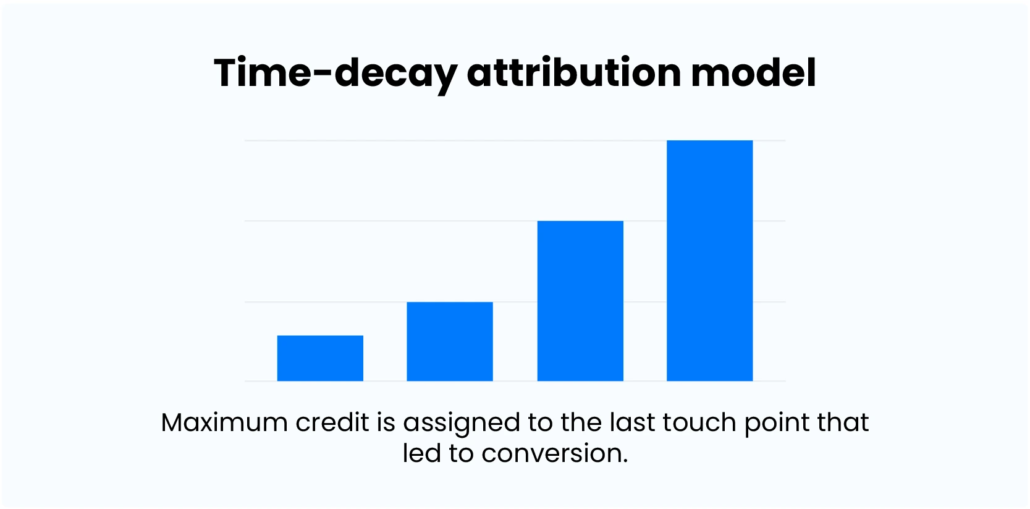
However, it assumes that the last touchpoints impacted the conversion or sale. The time-decay model is best for longer sales cycles like B2B marketing.
The u-shaped, or position-based, attribution model prioritizes credit for two critical key touchpoints, the first and the last. The model also takes into consideration other touchpoints.
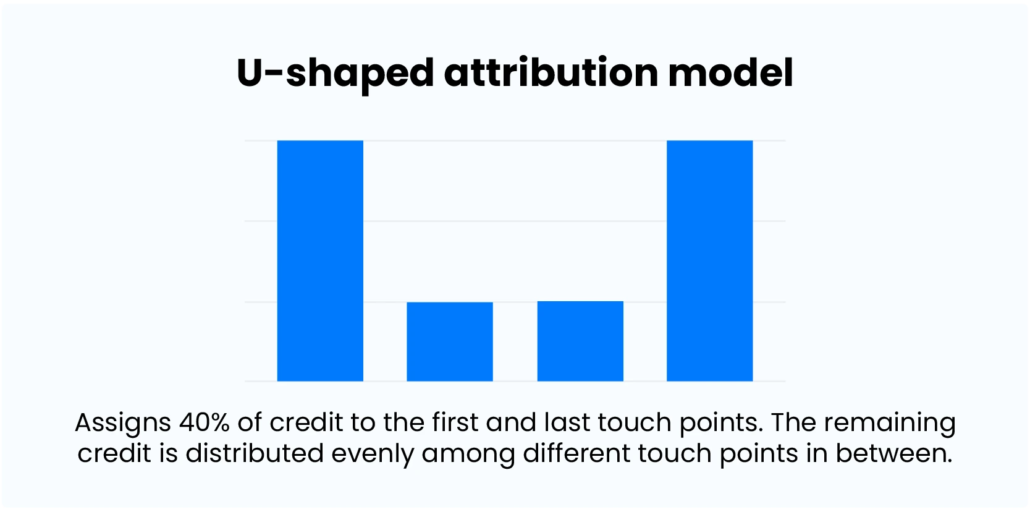
Suppose prospects contact you first via Google Search, then look at your Instagram pages and sign up for your newsletter. The first and last touch points will get a 40% value, while the second touchpoint will get the remaining 20%.
A u-shaped attribution model is a good option if you have multiple touchpoints during the customer journey. But it assumes that the most valuable touchpoints will be the first and last. They may not be in real life.
W-shaped attribution model gives credit to the first, last, and middle touchpoints of the buyer’s journey. All remaining touchpoints receive equal credit.
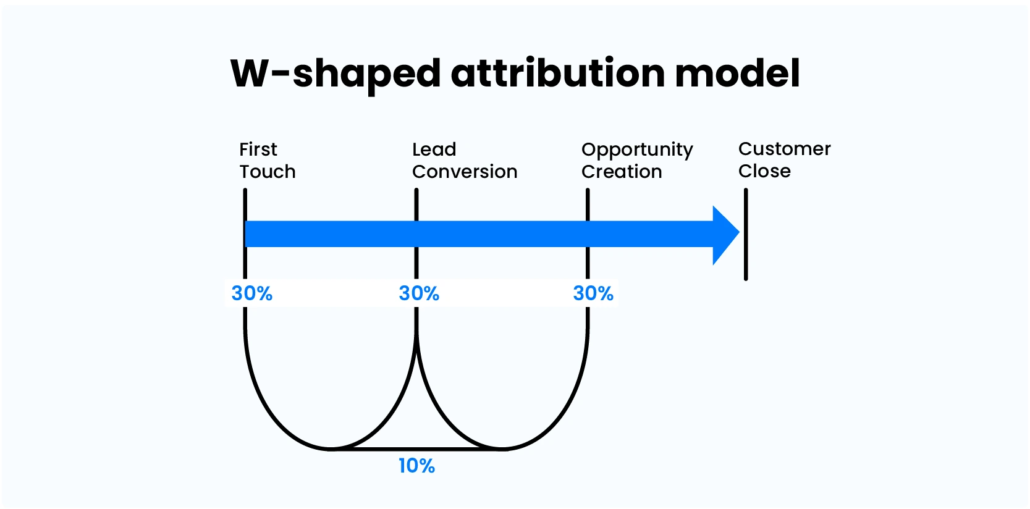
Suppose you want to identify touchpoints that convert leads, but also the touchpoints that encourage customers and motivate them to continue their buyer’s journey. In that case, a W-shaped Attribution is a good option.
The algorithmic or custom attribution model, also known as the algorithmic attribution model, is a customized model that can be tailored to your industry, channel, and buying habits. This model lets you assign your value or attribution weight through a custom model.
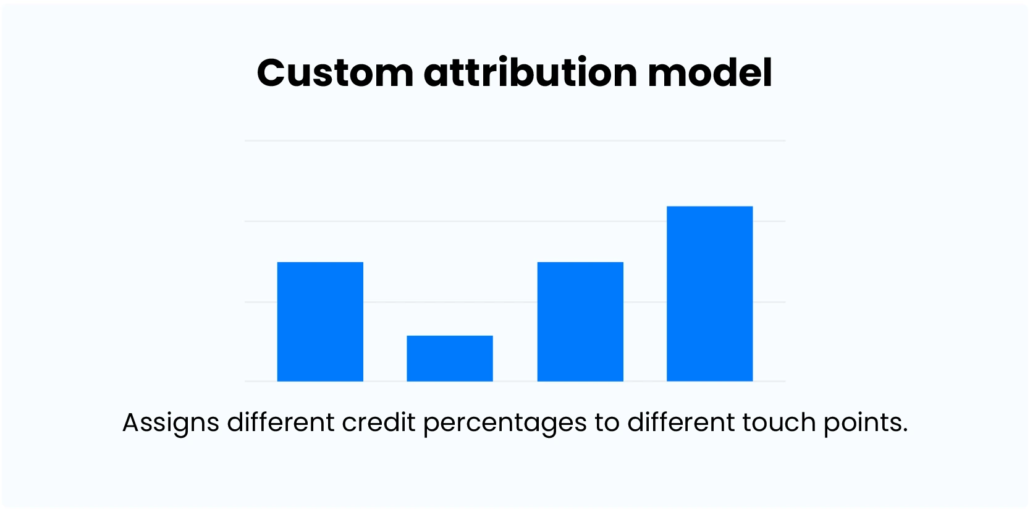
Technically, it isn’t easy to set it up. It requires a large amount of data and takes a lot to troubleshoot. This model is undoubtedly the best, as it offers the most detailed look into what drives your conversions.
The custom attribution model works best for brands with long buying cycles and lots of historical data. Machine learning can more accurately distribute weight across different marketing touchpoints using this data.
This includes data-driven and machine learning-based approaches, going beyond fixed rules. These models employ AI to analyze historical customer data to determine how much each interaction contributes to conversions. These models can adapt automatically as patterns change, but they require more data, analytics capabilities, and sometimes technical expertise.
| Model | How it works | Pros | Cons | Typical use case |
| First-touch | Gives all credit to the first interaction a customer has with your brand. | Easy to implement, highlights awareness and discovery channels. | Ignores later interactions, can be misleading for conversions. | New customer acquisition, top-of-funnel and awareness campaigns. |
| Last-touch | Gives all credit to the final interaction before conversion. | Simple, shows which channel closes conversions. | Ignores nurturing steps, undervalues early touchpoints. | Short sales cycles, direct response and conversion-focused campaigns. |
| Linear | Splits credit equally across all touchpoints in the journey. | Easy to understand, considers multiple interactions. | Treats all touchpoints as equally influential, which may not reflect reality. | Simple multi-channel journeys, high-level reporting. |
| Time-decay | Assigns more credit to interactions closer to the conversion. | Highlights recent interactions, more nuanced than last-touch. | Early-stage interactions may be undervalued. | Medium-length buying cycles, multi-step funnels. |
| Position-based (U-shaped) | Assigns more credit to the first and last interactions, with the remaining credit shared among middle touchpoints. | Balances awareness and conversion, shows the full journey. | Middle interactions receive less weight, requires defined stages. | Funnel-based campaigns with clear awareness and conversion stages. |
| W-shaped | Assigns most credit to three key moments: first interaction, a key mid-funnel milestone, and final conversion. Remaining touchpoints share the rest evenly. | Highlights awareness, lead qualification, and conversion, more balanced for long journeys. | Requires clearly defined milestones, may still overlook smaller supporting touchpoints. | B2B or long sales cycles with lead nurturing and qualification stages. |
| Custom (rule-based) | Lets teams define their own rules and assign weights to touchpoints based on business priorities. | Highly flexible, tailored to specific industries or buying behavior. | Subjective, based on assumptions, needs regular review to avoid bias. | Businesses with unique customer journeys or specific attribution needs. |
| Data-driven / ML-based | Uses historical data and algorithms to assign credit based on actual conversion patterns. | Most accurate, adapts to changing behavior, minimizes bias. | Requires large datasets, technical expertise, and clean data. | Large organizations with complex, multi-channel marketing and detailed ROI analysis needs. |
When choosing a marketing attribution model, it is vital to consider every aspect of your brand. Who are you targeting? What are your preferred channels? Do you want to start your brand or grow your audience via lead generation? Consider the following when choosing common attribution models:
The more touch points included in the sales cycle, the more nuanced and detailed the attribution model must become. Simple last/first-touch models can be sufficient for campaigns with few touchpoints (such as PPC campaigns).
To be effective, longer sales cycles require attribution models that can work across the whole cycle. Because the tracking cookie only has a short lifespan, first-touch Attribution is often ineffective in these situations. Because it accounts for gradual increases in interest throughout the cycle, a time-delay model is better.
Multi-touch Attribution is unnecessary if your focus is on one channel (such as SEO). Choose a “last channel” attribution model instead to show ROI for marketing efforts.
The types of marketing attribution model you choose should be based on the outcome you are trying to measure. A first-touch model is sufficient if your goal is to create demand. A last-touch model is best if you are trying to measure conversions. A multi-touch model will be a good choice if your goal is to measure success across the entire marketing funnel.
Understanding which marketing channels and trends drive leads and sales in your business is more important than ever. This will ensure that your marketing efforts and dollars make a difference. Attribution is not a questionable concept.
Most marketers understand that knowing which marketing channels and tactics drive website traffic is essential. But it is worth mentioning the practical benefits of a good attribution program.
Knowing how prospects are most likely to be influenced can help reduce costs and maximize your ROI.
Marketing attribution helps you:
Smart marketers know how to save money. One dollar spent on ineffective placements can be saved and used to generate results elsewhere. However, without a well-tuned attribution model, it is difficult to determine which dollars are being used for conversions.
It is crucial to understand how different media strategies influence conversion. Cutting costs on a high-cost-per-conversion business strategy and channeling that money into high-performing channels can reduce your total spending while sustaining your results.
Suppose your marketing budget has reached a point of diminishing returns, or your results have stagnated. In that case, it’s a good idea to identify low-performing channels. You can reduce costs while still maximizing your sales efforts.
Most marketing decisions will be made based on ROI. Knowing which channels have the most influence can help you determine where to spend incremental funds to improve results. It is crucial to understand which levers you should pull to get the desired results for the business’s long-term success.
Attribution models let you validate spending on tactics and channels that promote brand consideration and awareness, so long as they guide a potential customer along the purchase path.
A well-structured attribution model can show you if these early consumer engagements can result in a subsequent purchase – usually credited to a lower-funnel channel like direct navigation and branded paid search.
Multichannel digital marketing is becoming more common every day. Customers can be reached via digital display, influencer marketing, email, and organic social. Attribution modeling lets us see how prospects respond to these messages and move through our sales funnel.
In a rapidly changing world, there are many channels, platforms, and tools. A robust attribution model can help you see how they interact with each other to increase conversion.
After a customer visits your website and is retargeted using ads through a display network on Google, it may be more beneficial to follow up with an Instagram campaign or pay for placement.
Your attribution model will reveal how customers interact with your messages, touchpoints, and these platforms’ interactions. This will allow you to create the most effective and efficient path to purchase for as many prospects as possible. Understanding customers’ behavior better will help you serve them efficiently.
Well-tuned attribution models will help you create path-to-purchase paths, enabling you to tailor your marketing efforts to your ideal customers. Knowing your customers’ needs will allow you to reach them at the most relevant points to influence them. This will help you build stronger connections, increase brand loyalty and increase customer lifetime value.
Marketing attribution can help decision-makers determine what the future holds regarding media and marketing decisions. Channel attribution allows marketers to see how each campaign performs and where they are positioned in customer journeys.
This will enable them to make better decisions and change their course of action, resulting in more conversions and engagements. Timely, targeted marketing decisions significantly affect the company’s bottom line.
Marketers are constantly receiving marketing data from every channel. Sometimes it becomes too complex to predict future outcomes or identify new opportunities. Channel attribution combines data from all channels to enable businesses to identify what motivates customers and how they behave – across different touchpoints and devices.
It is crucial to understand how each channel impacts the other. Cross-channel Attribution provides the best way to gain deeper insights into your marketing strategies and understand customers more intimately.
This counts the number of sales, leads, or other desired actions that can be linked to a specific channel or campaign.
ROAS measures the revenue generated for every dollar spent on a marketing channel. It is calculated by dividing the revenue a channel generates by the amount spent on it. For example, a ROAS of 4:1 means you earn four dollars for every one dollar spent.
This metric shows the relative impact of each channel across all conversion paths.
Touchpoint influence tracks how often a particular interaction appears in the paths that lead to conversions. For example, if visits to a blog post frequently occur before purchases, that blog is a valuable early touchpoint, even if it is not the final interaction.
By tracking these core metrics, marketers can move beyond simply comparing spend and revenue. These metrics make it possible to see which channels and interactions actually drive results and begin connecting them to ROI, helping guide smarter budgeting and strategy decisions.
While core metrics show which channels drive immediate conversions, advanced metrics help measure long-term value and efficiency, giving a fuller picture of ROI.
CAC calculates how much it costs to acquire a new customer through a specific channel. For example, if you spend $1,000 on social ads and gain 10 new customers, your CAC is $100 per customer. Tracking CAC across channels helps identify which sources are most cost-effective in acquiring customers.
CLV estimates the total revenue a customer will generate over their relationship with your business. A channel that brings fewer conversions, but higher-value customers may be more valuable than one that produces many low-value leads. Combining CLV with CAC ensures marketing investments focus on channels that deliver long-term returns.
MER measures total revenue divided by total marketing spend. Unlike ROAS, which is channel-specific, MER evaluates the efficiency of your overall marketing budget. A high MER indicates that your marketing is generating strong returns relative to spend.
This metric tracks how efficiently leads move through each stage of your funnel, from awareness to conversion. It helps pinpoint bottlenecks and optimize efforts at each step, to improve overall ROI.
Tracking starts with understanding each touchpoint in the customer journey. A touchpoint could be a social ad click or a blog post visit.
To record these interactions, marketers use UTM parameters, which are small tags added to links. They tell analytics tools exactly where a visitor came from, making it possible to see which campaigns generate traffic and conversions.
Tracking pixels are another tool. They are tiny snippets of code added to websites that capture the activity when someone visits a page, clicks a button, or completes a form. This helps connect online actions to specific campaigns.
Conversion tracking defines the outcomes that matter most (such as purchases, signups, or demo requests) so that every system knows what counts as a success.
Once data collection is in place, the next step is using tools and platforms to organize and interpret that data. The goal is to understand how different channels and interactions contribute to conversions and ROI.
Many teams use analytics platforms, like Google analytics, to track customer behavior across websites and apps. These platforms can record interactions and provide reports that show how users move through different channels before converting.
Digital tools like Customer Relationship Management (CRM) systems store customer data, including leads, sales, and offline interactions. Integrating marketing data with a CRM tool allows teams to see how different touchpoints contribute to conversions over time. This provides a complete picture of the customer journey, combining online activity with offline actions like phone inquiries or in-store visits.
Some organizations use specialized platforms, often called customer data platforms (CDPs), to unify data from multiple sources. These tools can track complex, multi-step customer journeys, analyze patterns, and produce insights about how each channel contributes to results. They help ensure that marketing decisions are based on data rather than assumptions.
Example scenario
A company may track website visits and interactions through an analytics platform, record leads and sales in a CRM, and consolidate all this data in a unified system for analysis. This approach allows teams to see which channels are most effective to make informed decisions about marketing investments.
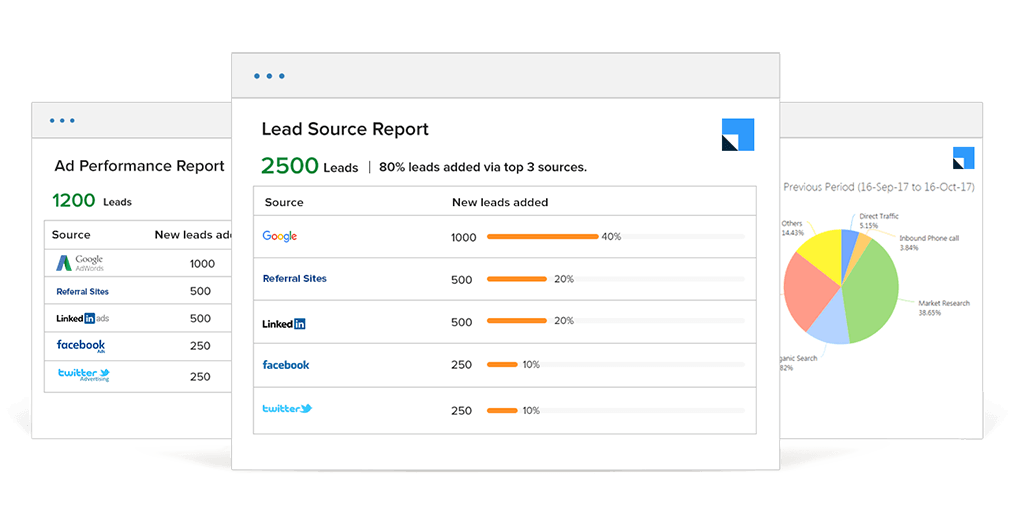
A digital marketing agency managing over five million dollars in annual ad spend faced challenges with its last-click attribution model. This model assigned all credit for conversions to the final interaction, which often undervalued the earlier touchpoints that influenced customer decisions. As a result, some marketing channels appeared more effective than they actually were, leading to suboptimal budget allocation.
To address this, the agency implemented a multi-touch attribution system that combined data from search ads, social media campaigns, email marketing, and analytics platforms. This approach allowed the team to understand how each channel contributed to conversions throughout the customer journey, rather than just the final touchpoint.
After the change, the agency could reallocate budgets based on real impact. Channels that influenced conversions earlier in the journey received more investment, while less effective channels were reduced. In the first quarter after implementing the new system, the agency reported a 45 percent increase in return on ad spend and a 35 percent reduction in wasted marketing spend. Reporting processes were also streamlined, saving time, and enabling continuous optimization.
Real-world examples show that even high-performing organizations can misallocate spend when relying on simple last-click reporting.
As we saw, applying multi-touch marketing attribution models provides a complete view of the customer journey. It reveals which channels nurture leads and ultimately drive conversions.
To do this, many teams now use CRM systems and other digital tools. By tracking interactions across channels and recording leads, sales, and conversions in a single system, CRMs like LeadSquared help teams connect marketing activity directly to measurable ROI.
If you are interested in knowing how this can look like for you your team, feel free to book a quick demo of LeadSquared CRM.
Marketing attribution goes beyond a simple ROI figure by helping answer specific questions about how campaigns influence performance. For example, it can show the incremental value of individual campaigns, measure how ads impact key performance indicators, and reveal offline or non‑digital influences that a basic ROI calculation might miss. It can also reveal whether a seasonal lift or a specific channel interaction contributed to sales, rather than assuming every gain came from digital ads alone. This helps marketers understand why results happened, not just that they happened.
Different attribution models use different rules to assign credit, which can lead to different conclusions about channel performance. For example, first‑touch models give all credit to the first interaction, while last‑touch models credit only the final interaction. Linear or multi‑touch models distribute credit differently across the journey. Because each model views the customer journey through a different lens, the story they tell about which efforts are most effective can vary significantly. That is why model choice should align with your business goals and sales cycle.
Attribution can be complicated by privacy changes and data loss from things like cookie restrictions, app tracking transparency updates, and disconnected third‑party platforms. These limitations can create gaps in the data, making it harder to link touchpoints to conversions accurately. Marketers often address this by combining digital tracking with offline data inputs, using aggregated signals like branded search lift, or incorporating self‑reported data to fill gaps and improve attribution quality.
Attribution results are most reliable when the underlying data is clean, complete, and consistent across sources. Look for consistency between analytics platforms, ensure tracking parameters like UTMs are implemented correctly, and minimize data silos between systems. It also helps to compare insights across multiple models and supplement quantitative data with qualitative feedback to validate trends. No model is perfect, but consistent, quality data makes the insights far more trustworthy.
Attribution for education campaigns can be challenging because prospective students often take weeks or months to decide. Simple click-to-conversion tracking may miss key interactions along the journey. The first step is to define the outcomes you want to measure, such as inquiries, event registrations, applications, or enrollments, and track every interaction that contributes to those outcomes.
Using UTM parameters in campaign URLs ensures analytics platforms capture which channels and campaigns drive traffic and conversions. This helps prevent traffic from being misclassified and makes it clear which touchpoints influence prospective students. Consistent use of UTMs across email, social, search, and display campaigns is essential.
Marketers should also monitor broader indicators, like increases in inquiries or event signups, and compare them with baseline activity. Analytics platforms that track cross-channel engagement can show how multiple touchpoints work together over time.
Marketing attribution can provide deep insights into how channels contribute to conversions, but it is not without its challenges in real practice. One common issue is incomplete or fragmented data. Customers often interact with brands across devices, browsers, and offline channels, and privacy changes like cookie deprecation and tracking restrictions make it harder to link these interactions together. This can leave gaps in the customer journey that skew attribution results. To improve this, many teams rely on first‑party data collection and server‑side tracking that capture user activity more reliably while respecting privacy rules.
Another challenge is the limitations of attribution models themselves. Simple rule‑based models like last‑touch or first‑touch can over‑credit a single interaction and ignore how other touchpoints influenced the outcome. This can lead to misallocation of budget and flawed decisions. A good way to address this is to compare results across multiple models or blend attribution insights with experiments like incrementality testing to see which channels truly drive lift.
Finally, marketers often encounter conflicting model results because different tools and platforms may assign credit inconsistently. For example, one analytics platform might credit social media for a conversion, while another credits search. This conflict can be reduced by standardizing tracking, integrating data sources, and creating a unified view of customer interactions.
Attribution models record associations between channels and conversions, but they do not always prove causation. A channel may be strongly associated with conversions without actually causing them. Advanced analytical approaches like causal attribution and controlled experiments (e.g., incrementality testing) are designed to uncover cause‑and‑effect relationships. These methods can help validate whether a channel genuinely drives conversions beyond what standard attribution models show.

 14 min read
  5 min read
  13 min read


 A Quick Refresher Guide on TReDS