





- Home

- Learn
- Healthcare
- Top healthcare KPIs every practice must track
HEALTHCARE
Top healthcare KPIs every practice must track
Contents

 14 min read


Key performance indicators, or KPIs, are measurable numbers that show how well an organization is performing in key areas.
In everyday life, this might be like checking your steps on a fitness tracker to see how active you’ve been.
In healthcare, KPIs do something similar. They help hospitals, clinics, and healthcare teams see how well they are doing in areas that matter most to patients and to the organization itself.
These numbers help you identify what’s working well and what needs improvement.
KPIs help improve patient care, for example by showing whether patient flow is great or whether readmission rates are rising. They also help with operational efficiency, by showing telling you how well resources are used, and financial health, such as how quickly bills are paid.
Healthcare KPIs must reflect both quality of care and service performance over time.
By the end of this article, you’ll have a clear understanding of the most important healthcare KPIs, why they matter, and how tracking them can make a real difference in both patient care and operational success.

Operational KPIs measure how smoothly the healthcare system is running. They include things like patient wait times, bed turnover, and staff productivity. These metrics help hospitals and clinics reduce delays, use resources efficiently, and improve patient flow.
These KPIs measure how patients feel about their care. They include patient satisfaction scores, loyalty measures like the Net Promoter Score, and complaint resolution times. Tracking these metrics helps healthcare teams improve service, build trust, and retain patients.
Financial KPIs track the money side of healthcare. Examples include total revenue, cost per procedure, and claim denial rates. Monitoring these numbers helps leaders manage expenses, maintain financial health, and keep the facility running sustainably.
Operational efficiency KPIs help healthcare teams understand how well everyday processes are working, especially when it comes to patient flow, scheduling, and staff productivity. These metrics don’t focus on clinical outcomes, but on how smoothly care and services are delivered.
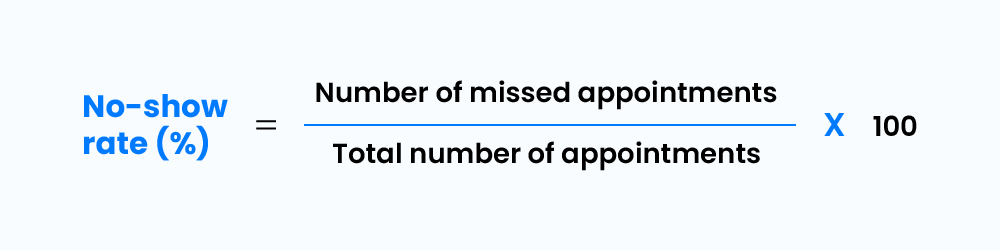
This measures the percentage of scheduled appointments that patients miss without giving notice. A high no-show rate means many appointment slots go unused, which wastes staff time and disrupts planning. Research shows that no-shows can go as high as 80% in some healthcare organizations.
Clinics that monitor this KPI can explore ways to reduce missed visits, such as automated reminders or easier rescheduling options.
Referral rate tracks how often patients are referred to other specialists or services. While not a direct “efficiency” metric in the traditional sense, it gives insight into how care networks work and whether processes for referring and coordinating care are effective. Higher referral rates can also reflect strong collaboration between care providers.
This shows the time between ordering a diagnostic test (such as a lab test or imaging) and receiving the results. Faster turnaround times help patients get answers sooner, reduce delays in care decisions, and improve scheduling for follow-up appointments.
Patient throughput measures how efficiently people move through key stages of care — from registration to consultation, treatment, and discharge. A higher throughput rate means fewer bottlenecks and smoother movement, which often improves experience by reducing wait times and frustration.
These include measures such as the number of patients seen per staff member or procedures performed per hour. They show how effectively staff use their time and skills. High productivity can mean better use of resources, while very low productivity might signal bottlenecks or staffing issues.
Tracking these operational metrics helps healthcare teams spot inefficiencies early. For example, reducing no-show rates and shortening diagnostic turnaround times can make care delivery smoother and more predictable. Improving staff productivity ensures the right number of staff are available when needed. In all cases, these KPIs help reduce bottlenecks, so patients experience shorter waits, and the clinic runs more reliably.
Patient experience and engagement KPIs help organizations understand how people perceive the care they receive. These measures reflect patients’ satisfaction, loyalty, responsiveness, and overall interaction with the service.
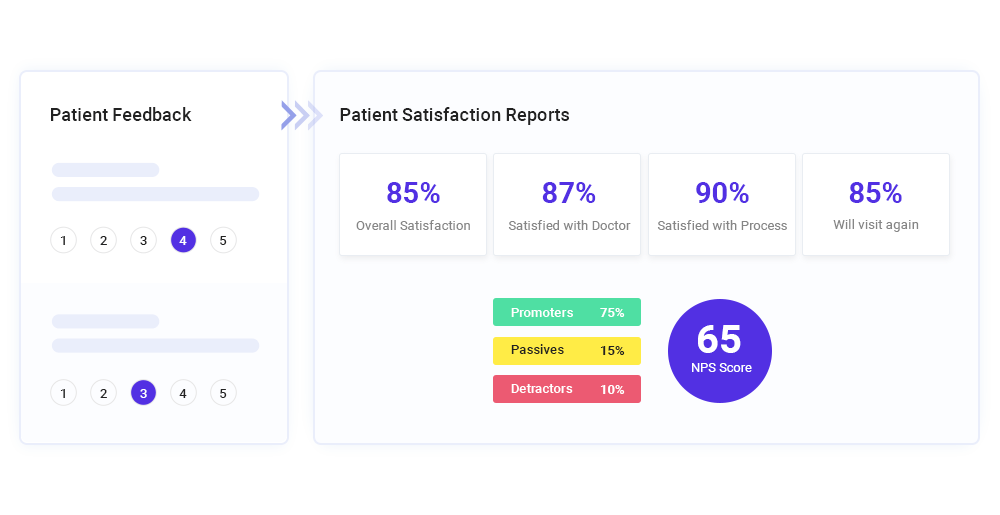
Patient satisfaction scores show how happy patients are with different aspects of their care. Patient satisfaction is a key KPI that measures how happy patients are with the care they receive. Surveys and feedback forms are great ways to collect this information. According to a recent survey, the average patient satisfaction score for healthcare organizations is around 77%.
These scores are usually collected through surveys after visits or treatments. Patients might be asked to rate things like communication with staff, wait times, clarity of explanations, or overall experience. High satisfaction scores often signal that patients feel respected, informed, and cared for.
Net Promoter Score, or NPS, measures how likely patients are to recommend the healthcare provider to others. It’s usually collected by asking patients to rate their likelihood of recommending the service on a scale from 0 to 10. A higher NPS suggests strong loyalty and positive experience.
This KPI tracks how long it takes to respond to and resolve patient complaints. Faster resolution generally leads to better patient trust and satisfaction, because it shows that the organization listens and takes concerns seriously. Slow responses, on the other hand, can damage reputation and patient confidence.
For healthcare organizations to remain sustainable, it’s not enough to provide good care — they also need to manage their finances well. Financial KPIs are measurable numbers that show how healthy an organization’s money flow is. These metrics help leaders make better budgeting decisions and keep the organization financially stable.
This reflects the total money an organization brings in over a specific period, including payments from insurance, patients, and other services. It gives a high-level view of financial performance without complex calculations. Understanding total revenue helps teams see whether the volume of patients and services is translating into income that supports operations.
Operating margin measures how much of the revenue remains after paying for everyday costs like staff salaries, supplies, and utilities. It focuses on core healthcare operations rather than one-time or non-operating income. A healthy operating margin means the organization is financially sustainable and able to cover its basic activities.
This metric tells you how long, on average, it takes to get paid after services are delivered. A shorter number means the organization receives money faster, which improves cash flow. Longer payment times can strain budgets and signal issues in billing or follow-up processes.
This measures how often insurance claims are rejected by payers. High denial rates reduce income and require extra work to correct or appeal claims. Reducing denials improves the revenue cycle and helps ensure that services are paid for promptly.
Together, these financial KPIs help healthcare teams understand their economic health, plan budgets more effectively.
With so many possible metrics available, one common mistake healthcare teams make is trying to track everything at once. The key is not how many KPIs you measure, but whether the ones you choose actually support your goals.
Start by aligning KPIs with what you are trying to improve. If your priority is patient experience, focus on metrics like satisfaction scores or complaint resolution time. If efficiency is the goal, operational KPIs such as no-show rates or turnaround times make more sense. Financial goals, on the other hand, call for KPIs related to revenue, billing, and cash flow. Choosing KPIs without this alignment often leads to numbers that are tracked but never acted on.
The SMART framework is a simple way to check whether a KPI is practical and useful.
Finally, KPIs should not be treated as permanent. Regular reviews are essential. As goals change or patient volumes shift, KPIs should be adjusted to stay relevant.
A healthcare dashboard is a visual representation of the KPIs that provides real-time insights into your performance. Instead of sifting through spreadsheets or reports, you can quickly see how well you’re doing in each area at a glance. Not only does this save you time and make it easier to track your KPIs, but it also helps you identify areas for improvement.
LeadSquared offers 100+ ready-to-use dashboards to measure and analyze the KPIs. These dashboards can monitor daily, weekly, monthly, or yearly progress. The click-through feature in reporting is useful to expand information across the healthcare dashboards.
Healthcare organizations that pay attention to the right KPIs often see real improvements in operations and finances. For example, Memorial Hospital at Gulfport in Mississippi identified that a high patient no-show rate was hurting revenue and delaying care. By using data analytics to understand why patients missed appointments and implementing targeted solutions, the hospital was able to reduce its no-show rate by about 28 percent. Over seven months, this change translated into nearly $804,000 in additional revenue and more efficient use of clinic resources. Hospitals with fewer no-shows can keep schedules full, reduce wasted staff time, and improve patient access to care.
Another strong example comes from UT Medical Center, which focused on the financial KPI of insurance claims denial rates. The center improved its patient registration process to catch errors before claims were submitted. Over the year that followed, initial denials dropped from around $5 million per month to about $1.7 million, a 66 percent reduction. This improvement lowered bad debt and improved monthly cash flow, allowing the organization to allocate resources more predictably.
These case scenarios show how improving specific KPIs — operational and financial — can produce tangible results, helping healthcare teams increase revenue, improve workflows, and make performance more predictable.
In this article, we’ve looked at how healthcare KPIs help organizations understand what happens across care delivery, operations, patient experience, and finances. Metrics such as no-show rates, patient satisfaction, and claims denial rate give teams a clearer picture of where things are working and where improvements are needed. When used well, KPIs help teams make better decisions.
That said, tracking KPIs alone is not enough. Healthcare workflows are complex, and information often sits across multiple systems and touchpoints. As processes grow longer and more connected, it becomes harder to keep track of everything.
This is where healthcare CRM systems fit in.
A healthcare CRM, such as LeadSquared, helps teams organize information and monitor important metrics with its analytics tool. In many of the real-world examples discussed earlier, improvements in no-show rates, claims denials, and patient engagement were possible because teams had better access to data and clearer workflows. Tools like healthcare CRM are what helps you actualize this.
For teams curious about how this kind of structure supports KPI tracking and workflow coordination, feel free to book a quick demo of LeadSquared CRM to see it in action.
5
6
7
8
1
KPIs give healthcare teams a clear picture of how well they are delivering care. Metrics like patient satisfaction, wait times, and readmission rates show which areas need attention. By tracking these numbers over time, organizations can pinpoint bottlenecks or inefficiencies. This allows teams to implement targeted solutions, monitor progress, and ensure improvements are measurable. Using KPIs consistently helps hospitals and clinics maintain high standards of care rather than relying on guesswork.
Yes, but the focus often differs. Large hospitals may track complex operational measures like bed turnover, emergency department wait times, or ICU utilization. Smaller clinics typically emphasize patient engagement, appointment no-shows, and timely follow-ups. The important point is that KPIs should reflect each organization’s specific goals, resources, and patient population.
Accurate and reliable data is critical for KPIs to be meaningful. Technology like electronic health records (EHRs), automated dashboards, and centralized reporting systems helps capture consistent, error-free data. These tools reduce the risk of mistakes and make it easier to aggregate and analyze information across multiple departments. With accurate data, teams can trust their KPI insights, identify trends, and make informed decisions about staffing, workflow, and patient care without relying on guesswork.
Benchmarks provide a reference point for understanding whether performance is good, average, or needs improvement. By comparing internal KPI values to industry standards, national averages, or similar facilities, organizations gain perspective on their performance. Benchmarks also help set realistic targets and goals. Without them, teams may celebrate progress that is still below standard or miss opportunities for improvement. Essentially, benchmarks make KPIs actionable by showing where performance truly stands in a broader context.
In value-based care, providers are rewarded for outcomes rather than the number of services delivered. KPIs play a critical role by measuring the effectiveness of care, such as preventive care compliance or chronic disease management. Tracking these metrics allows teams to identify gaps and take action to improve patient outcomes. Without clear KPIs, it’s difficult to demonstrate the value of care. Well-chosen KPIs ensure that care delivery aligns with patient health goals while supporting financial incentives under value-based models.
Yes. Standards such as HEDIS (Healthcare Effectiveness Data and Information Set) provide widely recognized benchmarks for performance evaluation. Using these standards allows organizations to measure quality consistently and compare performance with peers or national averages. Industry standards help ensure that KPIs focus on meaningful outcomes, not just internal convenience. Following these guidelines helps maintain high-quality care, supports regulatory compliance, and allows facilities to track improvements in a structured and reliable way.
KPI reporting provides staff with a clear understanding of expectations and performance trends. When teams can see measurable progress toward goals, they know where to focus their efforts and which areas need improvement. This transparency encourages accountability and engagement. At the same time, using KPIs as tools for coaching rather than punishment fosters a positive culture of continuous improvement. Properly implemented KPI reporting can boost efficiency, morale, and collaboration across clinical and administrative teams
Yes. Financial and operational KPIs are essential for spotting inefficiencies and controlling costs. Metrics such as claims denial rates, days in accounts receivable, and patient no-show rates reveal where resources are being wasted. By addressing these issues, organizations can reduce unnecessary expenses while maintaining quality care. Tracking these KPIs also supports better budget planning and ensures that savings are achieved without compromising patient outcomes, making healthcare delivery more sustainable over time.
KPIs are not static; they need regular review to stay relevant. Many organizations check KPIs monthly or quarterly, but the frequency depends on the metric and organizational needs. As patient volumes change, new treatments are introduced, or strategic priorities evolve, some KPIs may become less relevant while others gain importance. Regular reviews ensure teams are monitoring the most meaningful indicators and can adjust goals, processes, or resources based on real-world performance rather than outdated assumptions.
Yes. Communication affects patient experience, compliance, and trust. Metrics such as response times to inquiries, clarity of instructions, and follow-up consistency can all be measured. Tracking these KPIs highlights where communication may be failing or succeeding. For example, quick responses and clear instructions can reduce missed appointments and improve adherence to treatment plans. Measuring communication helps healthcare teams create smoother experiences and ensures patients feel heard and informed throughout their care.

 9 min read 20 min read 15 min read


 13 Customer Engagement Metrics to Improve your Marketing Strategy