




EDUCATION
10 Student Engagement Strategies for Enrollment Counselors in Higher Education
Contents

 14 min read


Today’s universities serve diverse student populations spanning multiple demographics, learning preferences, and geographic locations. With such varied audiences, meaningful connection becomes challenging—yet student engagement directly impacts retention.
Students with four or more engagement touchpoints demonstrate a 92% retention rate, compared to just 78% for those with no engagement activities. Thus, student engagement strategies—from initial inquiry through graduation—have become critical as higher education institutions navigate an increasingly competitive landscape.
Keeping each prospective student actively involved throughout the enrollment journey requires strategic, multichannel communication that meets students where they are.
In this article, we’ll share 10 best student engagement strategies to help you engage students throughout their entire journey—from prospects in the enrollment process to enrolled students working toward graduation—through multiple touchpoints that build connection, drive conversion, and improve retention.
These strategies for increasing student engagement will showcase how counselors and advisors can engage better with students—from the initial admissions process through their academic journey.
Prioritizing high-intent prospects is critical for maximizing student engagement. Counselors need complete visibility into each prospect’s activities, behaviors, and requirements throughout their journey. When counselors understand what students are looking for—whether it’s specific program details, financial aid information, or campus life insights—they can deliver relevant, timely communication that resonates. This targeted approach transforms generic outreach into meaningful interactions that keep prospects actively engaged and moving forward in the enrollment funnel.
Engagement tip: Attach priority scores for each interaction your prospects have with you, whether online or offline. This way your counselors will know whom to call first!
Personalized, one-to-one marketing is essential for driving meaningful student engagement. From sharing course requirements to recommending programs tailored to individual interests, your counselors must customize every interaction to resonate with each prospect’s unique journey.
Effective engagement also requires a multichannel approach that meets students where they are—whether through email, text, social media, or in-person events. The key to success lies in maintaining a comprehensive interaction history and context across all touchpoints. Armed with this information, counselors can have genuine conversations that build relationships rather than deliver scripted pitches that feel impersonal and one-sided.
Engagement tip: Keep templatized messages, emails, and scripts handy with personal cues attached for a smoother flowing conversation.
A helpful resource: 10 Keys To Standardize Student Communication Across Counselors
Prospective students encounter numerous obstacles throughout their enrollment journey—from completing applications and uploading transcripts to navigating financial aid forms and processing payments. Each friction point represents a potential drop-off.
Real-time alerts empower counselors to intervene at critical moments and prevent abandonment. For instance, when a prospect stalls while uploading required documents, counselors can immediately reach out with a personalized phone call or email offering step-by-step guidance to overcome the hurdle. This proactive support demonstrates that your institution is invested in each student’s success, building trust, and encouraging continued engagement throughout the admissions process.
Engagement tip: A self-serve application portal with built-in tracking capabilities enables your team to identify exactly where students struggle and intervene at the precise moment they need help. By monitoring real-time application progress, counselors can proactively reach out when prospects hesitate or abandon key steps—turning potential drop-offs into successful enrollments.
Post-admission application: This same real-time intervention approach applies to enrolled students. Academic advisors can receive alerts when students miss assignment deadlines, skip multiple classes, or show declining engagement with course materials. Early intervention based on these signals helps prevent academic struggles and improves retention rates.
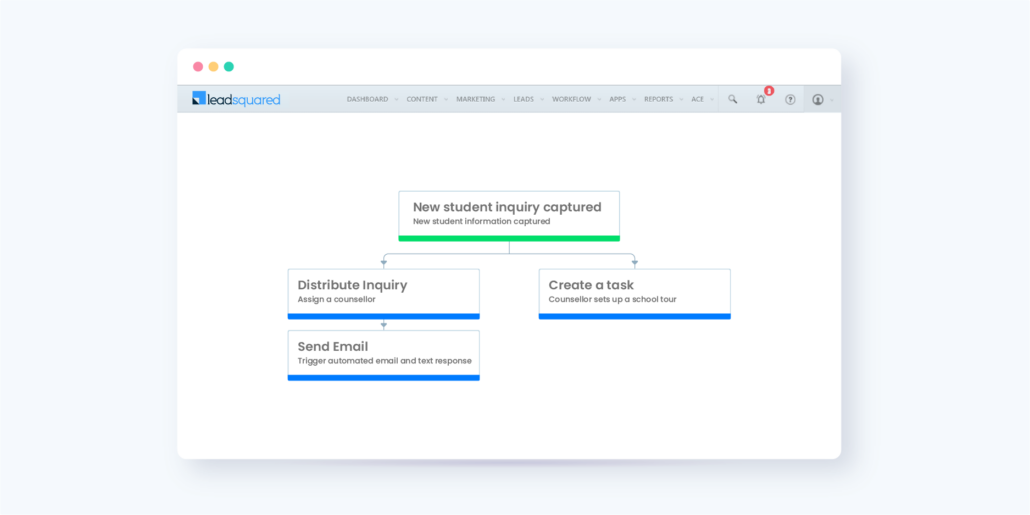
No student is applying to just one university. Your team must respond to every inquiry as quickly as possible.
This is where technology comes into play. You can set up workflow automation at various steps to ensure that no inquiry is missed out. It can be as simple as shooting an automated response from the dean highlighting the opportunities the university can provide.
You can set up multiple automations that help your counselors create meaningful engagements with the students during the admissions process.
A helpful resource: 17 Education Workflow Automation Examples
Engagement tip: Use a CRM like LeadSquared to automate inquiry alerts and route leads instantly to the right counselor, ensuring every prospect receives a response within minutes.
Here’s what one happy customer had to say:
The contact rate went up by 13% and scheduled campus appointments improved by 5%. Admissions specific workflows helped the admissions team prioritize incoming inquiries, engage with more leads, and identify their passions in a more organized fashion.
– David Vice, CEO, Asher College
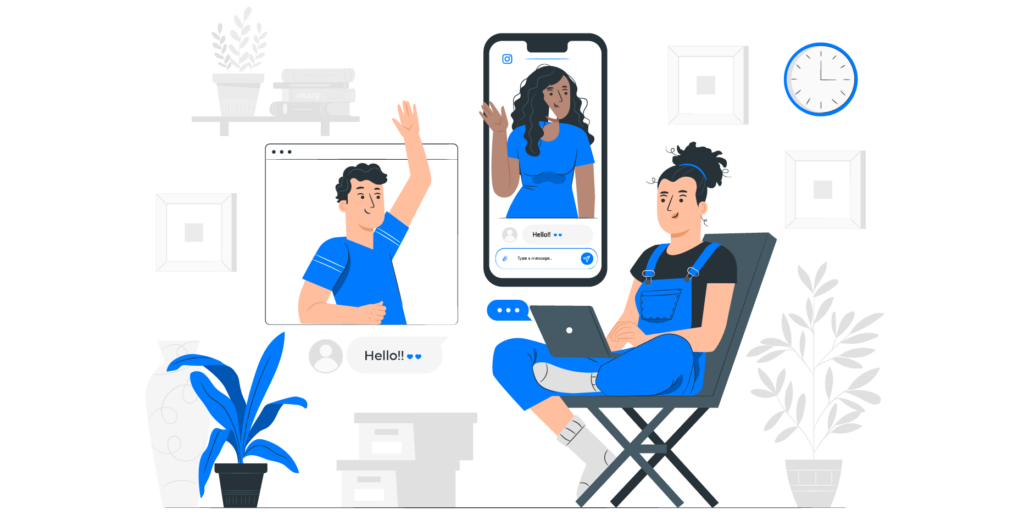
When prospects can easily connect with current students or alumni, they feel more confident in finalizing their choice of university and course.
Interacting with current students helps them understand the course structure, assignments, and workload, while conversations with alumni give them insight into career and employment opportunities after graduation.
Feeling like a part of the community even before enrolling, prospects become more engaged and invested as they move through the admissions process.
Engagement tip (Pre-admission): Set up systems for your counselors where they can easily invite current students to jump on calls with prospects to answer questions about courses and campus life. Peer-to-peer conversations facilitate a more personalized engagement approach.
Post-admission application: Once enrolled, continue fostering these connections through mentorship programs, study groups, student organizations, and peer tutoring systems. Students who feel connected to their campus community are significantly more likely to persist through graduation.
Also read: Student Experience In Higher Education: 6 Proven Strategies
This section introduces the key technology tools that help improve engagement with prospective students. It covers how automation, student portals, integrated communication channels, data analytics, and more can be used to create meaningful and timely interactions.
Setting up automations at various levels of your process helps you make your counselors more productive and efficient.
Automation can be used to assign counselors, send regular notifications to students and internal teams, and track each prospect’s stage in the admissions journey.
According to research from Gleematic, employees spend 10-25% of their time on repetitive manual tasks that could be automated—and admissions counselors are no exception.
Engagement tip: Integrate your inquiry sources, website, and communication channels with your admissions CRM to set up more seamless automation workflows.
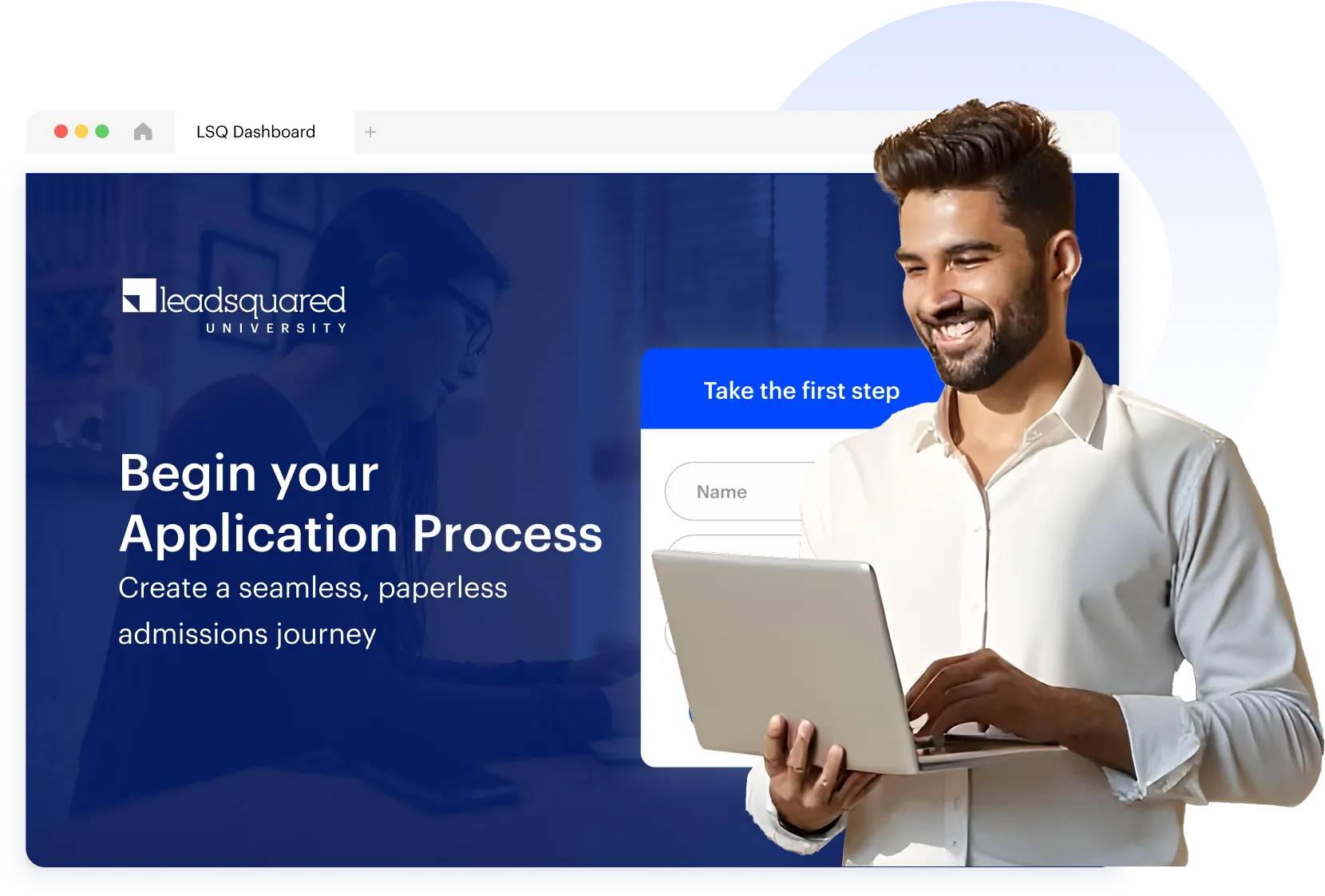
Build a paperless process that supports students from application through graduation. Self-serve student portals help prospects apply online without needing to visit campus. Post-admission, these portals become a central hub where students can register for classes, access grades, submit assignments, request transcripts, and manage financial aid—all while maintaining a secure repository of their information.
LeadSquared’s student portal is a secure system keeping all confidential student information private.
Engagement tip: Self-serve portals will help the students go through the application process at the comfort of their homes. And your counselors will be able to assist them in real-time.
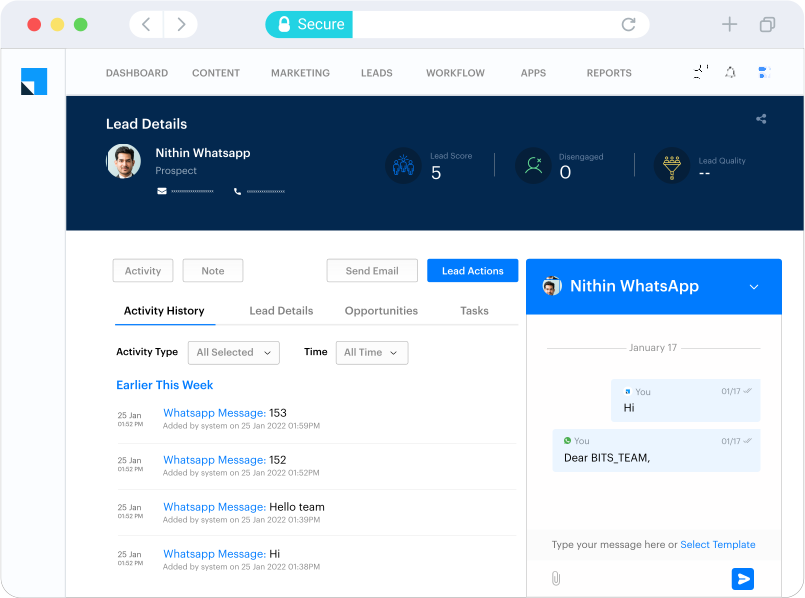
Counselors often have to switch between multiple platforms and maintain notes offline while communicating with prospects across different channels. This fragmentation breaks end-to-end visibility and makes it harder to maintain context.
When chats, emails, and phone conversations are managed on a single platform, note-taking and record updates become much easier. It also ensures that if a prospect is reassigned mid-conversation, the new counselor has complete context and conversation history in one place.
This not only saves counselors valuable time but also enables faster and more effective query resolution.
Engagement tip: Having a single, integrated platform for all your communication channels will not only improve counselor efficiency but also provide qualitative insights on how those conversations are going.
Big data has seeped into every aspect of our lives. To make sense of data, it is important to visualize and track it at every level.
Having your conversations, inquiries, and funnel movement on one simple AI-enabled platform, like LeadSquared, will help you build insightful reports. These insights will give you an edge over your competitors and let you take a corrective course of action ahead of time.
Engagement tip: Keeping track of counselor efficiency, marketing outcomes, education KPIs, student funnel movements, as well as ROIs will make your decision-making process much faster, and more data driven.
Also read: How AI Improves Student Counselor Performance: 5 Use Cases

With an end-to-end Education CRM platform, building and tracking student journeys is much easier. From landing page visits, inquiry form fills to having segmented prospects based on application stages, pieces of information will be readily available to your team. Strategic decisions and personalized conversations? Check!
Having a 360-view of each student’s journey will ensure moving highly engaged students down the funnel. It will help your counselors predict their needs and resolve queries without even picking up the phone for context.
Post-admission value: Once students enroll, this 360-view becomes even more powerful. Track academic performance, course engagement, extracurricular participation, and support services usage to identify at-risk students before they fall behind. This comprehensive visibility enables advisors to provide proactive support—whether it’s recommending tutoring services, suggesting lighter course loads, or connecting students with mental health resources.
Engagement tip: Tracking the source of your inquiry and understanding their journey to conversion will help you identify the channels and strategies that have worked. And the ones that didn’t work. This will also have a direct impact on inquiry-to-enrollment ratios.
Effective best practices for student engagement blend the best of human connection with smart technology. The formula is simple: more personalized conversations lead to better insights, which drive stronger prospect responses and higher enrollment rates.
When you engage students and counselors from the very first inquiry, you create momentum that carries through enrollment and beyond—directly impacting both conversion rates and long-term retention.
These 10 evidence based strategies for student engagement will empower your counselors and advisors to:
You’ll gain crystal-clear visibility into:
Engage better with your students with LeadSquared’s end-to-end admissions platform. It’s helped over 500 universities build a better student engagement process and improved how they communicate and approach students with a simplified admissions process.
To foster genuine student involvement, educators need to look beyond flashy tools or digital distractions. Lasting engagement stems from intentional strategies that put students at the center of the learning experience. Here’s how you can cultivate an environment where students are eager to participate and take ownership of their learning journey:
1. Make learning relevant and real-world-oriented
Tie lessons to real-life situations that matter to your students. Use case studies, current events, or local examples to help them connect classroom knowledge with the outside world. When students see the direct impact and usefulness of what they learn, their motivation naturally increases.
2. Tap into student interests
Get to know what excites your students, whether it’s technology, sports, art, or social issues. Whenever possible, design activities or projects around these interests. For example, use data from students’ favorite games for math lessons, or encourage them to analyze lyrics from music they enjoy for language activities.
3. Embrace collaboration and group work
Learning isn’t a solo sport. Encourage students to work in teams, brainstorm together, or solve problems as a group. Rotate roles and partners to build a sense of community and ensure everyone’s voice is heard.
4. Offer choices and student voice
Give students a say—let them choose how they’ll present a project, select topics, or vote on certain class activities. Building in these choices not only personalizes learning but also empowers students to take charge of their progress.
5. Use a variety of media and formats
Alternate between visual, auditory, and hands-on activities to cater to different learning styles. Integrate podcasts, documentaries, infographics, or interactive simulations from resources like TED-Ed or National Geographic. This keeps the material fresh and engaging.
6. Encourage movement and active learning
Incorporate activities that involve getting out of seats—gallery walks, debates, or even quick physical breaks. Changing the physical environment or pace helps maintain focus and reduce restlessness.
7. Ask open-ended questions
Move beyond simple recall and encourage students to analyze, reflect, or debate. Open-ended questions invite thoughtful discussion and deeper engagement with the material.
8. Scaffold big tasks with step-by-step guidance
Break down complex assignments into manageable steps, checking in with students along the way. This prevents confusion and keeps everyone moving forward together.
9. Allow processing time
After asking questions or introducing new topics, give students a moment to think or jot down thoughts before sharing. This leads to more thoughtful contributions and includes quieter students in the discussion.
10. Make room for fun and laughter
A lighthearted environment is an engaged environment. Incorporate humor, throw in a relevant meme, or share a personal story. Even a brief game or trivia round (think: Kahoot! or Quizlet Live) can energize a lagging group.
By blending these strategies—rooted in communication, collaboration, and student choice—you’ll not only capture attention but also create a more inclusive and energized classroom.
Increasing student engagement in higher education improves retention, academic performance, and overall student satisfaction. Tools such as LeadSquared help colleges personalize communication and identify disengaged students early.
College student engagement activities include interactive lectures, clubs, internships, mentoring programs, and digital engagement through portals and apps. Many institutions leverage LeadSquared to manage campaigns, student interactions, and events in one place.
The benefits of student engagement strategies in university include higher graduation rates, stronger employability skills, and better campus experience, while fostering long-term student success and alumni connection.
Colleges can measure student engagement in higher education by tracking attendance, participation, digital interactions, and feedback, and improve it through data-driven outreach and automation using platforms like LeadSquared.

 5 min read 18 min read
  8 min read



 How to Create Higher Education Landing Pages That Actually Convert: 8 Best ...