





MARKETING
How to Choose the Best Marketing CRM
Contents

 8 min read


CRM software is now the largest software product in the world, with revenue expected to reach more than $80 billion by 2025. More than 46% of sales teams report using CRM software on a widespread basis to fuel sales and marketing activities. And of those that use CRM consistently, their average return on investment is $8.71 for every $1 spent.
But let’s back up for a minute: results are only achievable when you have the right CRM in place AND your sales and marketing teams have chosen to adopt it. Your team needs to know how to use CRM effectively and make it a daily priority.
As a result, only the best marketing CRM will allow you to experience the sales and growth you expect. And while each company may have its own definition of what makes the best marketing CRM, this guide can provide you with inspiration to fuel your decision-making and priorities:
Before you dive into specific solutions, it’s important to set the right expectations for a marketing CRM. Simply put, marketing CRM software is used primarily to run campaigns and generate leads. Nearly three-quarters of CRM users say that CRM gives them better access to customer data, and can shorten the sales cycle by up to 14%. Ideally, your CRM will work in tandem with a sales CRM that will push leads to the next stages in your funnel.
The majority of businesses use CRM to fuel sales and marketing activities. On the marketing side, CRM can automate email campaigns, analyze email and landing page performance, track lead sources to see where your best leads are coming from and engage with prospects that are not ready to speak with a sales rep.
Every business will have unique requirements from a CRM, so it’s important to think about your own needs as you explore solutions.
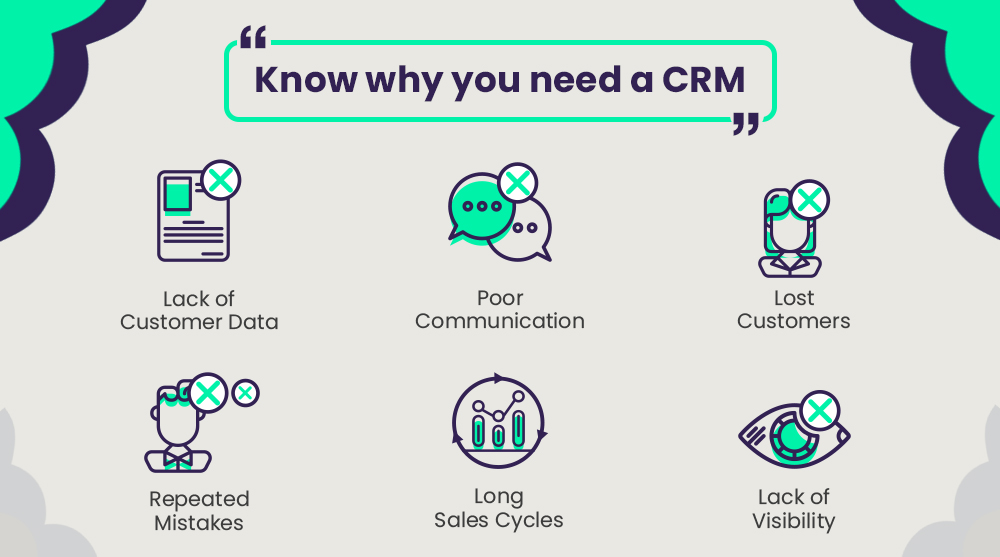
First and foremost, you should decide whether or not you really need a CRM. A CRM can provide a number of benefits to sales and marketing teams, the last thing you want to do is choose a CRM simply because other businesses use them. The best way to decide if you really need one is to try one for yourself to see how it improves or disrupts your sales process. The best marketing CRM will be one that simplifies the way you do things, rather than adding tasks and complexities.
Here are some priorities that can help you figure out your needs:
If you experience any of the above, a CRM might provide an optimal solution.
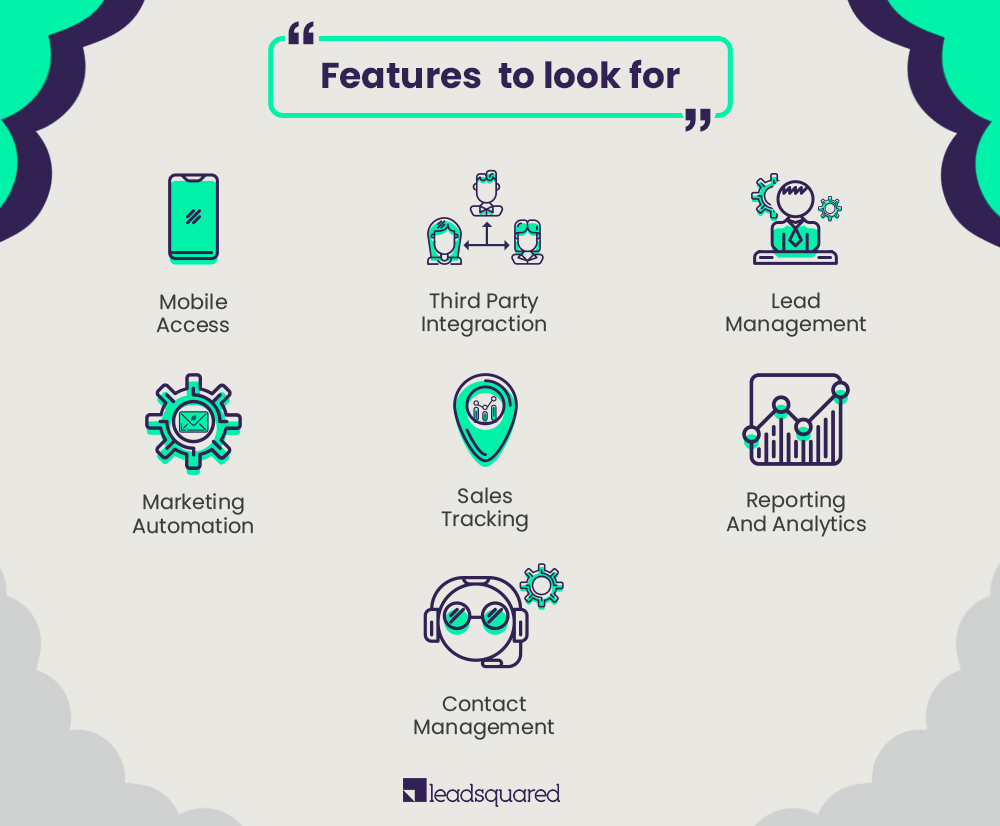
Once you decide you need a CRM and get specific on your business needs, you can start to shortlist the features that will help you achieve your greater objectives. There’s no such thing as a one-size-fits-all CRM, which is why it helps to get specific on your needs before you start exploring solutions.
We covered CRM features in a previous post, but some of the ones you want to research include:
In addition, you’ll also want to consider things like security, ease of use, and the ability to upgrade as your business needs change.
Implementing any type of new software comes with inherent challenges. It’s new territory for your company and the sales and marketing reps who will be using it. Ideally, you will partner with a CRM provider that can provide ongoing support throughout implementation and lunch, along with support as your business grows.
Because most CRM software is in the cloud, this allows CRM providers to tweak and refine their software without you having to invest in any major upgrades. Your CRM will likely undergo several changes as companies make these upgrades, as new features become available, you’ll be glad to know you have a CRM support team that can help guide you through these changes.
Many companies make the mistake of looking at bottom-line cost when choosing the best marketing CRM, but there’s a major difference between cost and value. In many cases, it makes sense for companies to pay more for a CRM solution if it means gaining more value from it.
Again, this comes down to truly understanding your unique business requirements for a CRM and the return on investment you expect from it. Too often, businesses adopt CRM systems that don’t completely meet their needs, and they’re often dissatisfied with the results. A CRM can only be worth the price you pay if it can deliver on your objectives and add real value to your bottom line.
The best way to figure out if a CRM will meet your needs simply to try it for yourself. At LeadSquared, we offer a free 15-day trial of all of our features so you can see how they work and make an informed decision for your business.
Book your free demo today and experience the best marketing CRM software in the industry!
Scalability is one of the most important factors to consider when selecting a marketing CRM. As your business grows, your CRM should be able to handle an increasing volume of contacts, campaigns, and customer interactions without slowing down performance. A scalable CRM allows you to add more users, automate more workflows, and integrate additional tools as your marketing strategy evolves. Without scalability, businesses may eventually outgrow their CRM and face the challenge of migrating to a new system. Choosing a platform that can support both your current operations and future growth helps ensure long-term efficiency and stability.
Data migration is a critical step when implementing a new marketing CRM. Businesses must ensure that all customer records, contact details, and historical interactions are transferred accurately from previous systems. Before migration, it’s helpful to clean and organize existing data to remove duplicates, outdated records, or incomplete entries. This process improves the quality of the data that enters the new CRM. Companies should also plan how data fields will map between the old and new systems. Proper testing during migration helps prevent data loss and ensures the CRM functions correctly once it goes live.
Even the most advanced CRM software will not deliver results if teams do not actively use it. User adoption plays a major role in determining whether a CRM becomes an essential business tool or an underutilized system. To encourage adoption, organizations should provide training sessions, onboarding resources, and clear workflows for employees. Leadership support is also important, as managers can reinforce CRM usage as part of daily operations. When teams understand how the CRM simplifies their work—such as tracking leads, managing campaigns, or analyzing performance—they are more likely to integrate it into their routine.
Customization allows businesses to tailor their CRM platform to match their specific marketing processes. Every company has unique workflows, customer journeys, and campaign strategies. A customizable CRM enables teams to adjust fields, dashboards, automation rules, and reporting formats according to their needs. For example, marketers may want to track specific lead attributes or create custom campaign workflows. By adapting the CRM to fit existing processes, businesses can improve productivity and ensure the system supports their marketing strategy rather than forcing teams to adjust to rigid software structures.
A well-planned CRM implementation can significantly influence how quickly a company begins seeing results. Implementation planning typically involves defining project goals, assigning responsibilities, setting timelines, and preparing teams for the transition. Businesses should also identify which processes will be automated or improved through the CRM. A phased implementation approach often works best, allowing teams to gradually adopt features such as campaign automation, lead tracking, and reporting. Proper planning reduces disruptions during the transition and ensures the CRM becomes fully operational within a reasonable timeframe.
Choosing the right CRM vendor requires more than reviewing product features. Businesses should also assess the vendor’s industry experience, product roadmap, and customer support capabilities. Reading customer reviews and case studies can provide insights into how the CRM performs in real-world situations. It’s also helpful to request product demonstrations or trials to understand the platform’s usability. Evaluating the vendor’s commitment to innovation and long-term development ensures that the CRM will continue evolving to meet changing business needs.
Marketing teams rely on data to evaluate campaign performance and make informed decisions. A CRM with flexible reporting capabilities allows users to generate detailed reports based on different metrics, time periods, or customer segments. For example, marketers may want to analyze campaign performance by lead source, geographic region, or engagement level. Flexible reporting also enables teams to create custom dashboards that highlight key performance indicators relevant to their goals. With access to accurate and customizable reports, businesses can continuously refine their marketing strategies and improve overall campaign effectiveness.

 8 min read
  8 min read 10 min read


 21 Best Sales Apps for 2026