




EDUCATION
5 Higher education marketing channels & 8 strategies to boost enrollment
Contents

 21 min read


The competition for student enrollment has never been fiercer.
With over 5,000 degree-granting institutions in the U.S. alone and a growing number of digital universities, prospective students have more choices than ever—while enrollment numbers tell a different story.
Undergraduate enrollment dropped by over 1.2 million students between 2020 and 2023. While enrollment has shown modest recovery since then, with a 3% increase in fall 2024, total enrollment still remains below pre-pandemic levels. In this competitive landscape where institutions are fighting to regain lost ground, how do you stand out and drive sustainable enrollment growth?
The answer lies in strategic education marketing that builds awareness and creates genuine rapport with prospective students throughout their decision journey.
In this article, we take you through the process of:
We will also discuss best practices to follow and highlight the impact these strategies and tools have on the student conversion ratios for an educational institution. Let’s begin.
Effective marketing builds trust, strengthens relationships, and delivers measurable results. Start with five essentials:
Understand each group’s needs—students, parents, administrators—and tailor content and formats accordingly.
Share informed perspectives through articles, webinars, and events to position your institution or solution as a credible authority.
Use clear data—graduation rates, job placements, learning gains—paired with real stories to make outcomes meaningful.
Turn one strong asset into blogs, videos, infographics, and emails to keep messaging consistent and extend your reach.
Encourage interaction through Q&As, live sessions, student takeovers, or demos to create community and gather feedback.
Together, these steps boost credibility, deepen trust, and support ongoing growth.
The age-old saying “Failing to plan equals planning to fail” applies here too. Right off the bat, set your goals and tick off the checklist to maximize your returns.
Here are a few pre-requisites for creating an education marketing plan:
Ask questions like –
- What skills are required for students to take my courses?
- What should be their ideal educational background?
- What are their interests and career goals? And what future do they foresee?
- How does my course benefit them?
- Which demographic can I cater to?
These will help you create student personas you can reach out to which will directly impact your channels, messaging, budgets, and reach of your activities.
After identifying your target personas, you can start collating content that will resonate with your audience. This could mean infographics, video testimonials, student interviews, campus tours, identifying brand ambassadors, reaching out to corporate partners, and more.
“Young counselors are present on more of the platforms where our target audience is. As a small university, we trust the youngsters and go to the students where they want to interact and want to be heard.“
Matthew Zonis, Director of Marketing & Recruitment, Drew University
This is a crucial step as it will set the tone for engaging with prospective students. And this stage will have multiple rounds of iterations while you are trying to perfect the pitch.
Once you’ve defined your student personas, tailor your messaging for each group—because no single approach works for prospective students, parents, high school counselors, donors, and alumni alike.
By making each audience feel understood, you build trust and create content that drives enrollment and product adoption.
Bring your messaging to life by pairing proof with people. Showcase key results—graduation rates, placements, test score gains, alumni success—and reinforce them with real student or teacher experiences that illustrate those outcomes.
Use this approach effectively by:
This blend of data and storytelling builds trust and makes your impact memorable.
Now that you have resources ready for your admission officers, you need to assign enrollment targets to them. These can be weekly, monthly, or quarterly targets. You’ll also need to define the timelines for converting students, benchmark quality conversations, etc. based on predicted inquiry-to-enrollment rates.
Ask questions like:
- What is the number of students that will enroll this season?
- Do I have learnings from historical data?
- How many prospects should I reach out to?
- How long does it take for me to convince a student to choose my university?
The target is set. You know what is expected. Now you need to identify how to disseminate your message and through which channels. This depends on how any student would approach you or how they would discover you.
The 2 most obvious channels that would be your online and offline storefronts, are your website and campus. This is where the student will approach you. You can build on-campus kiosks, attend student recruitment fairs, organize virtual campus tours to interact with, and resolve any queries that they might have regarding your courses.
“All traffic should normally lead to the website to ensure better conversions and a representation of your unique brand. You can do so much with it through landing pages, interactive chat, and more. You need to understand what your audience needs and build your brand & vision around it. Consistency in brand, messaging, and identity is key for a strong recall and trust.“
Katya Nyangi, Director of Marketing – Strategy & Outreach, African Leadership University
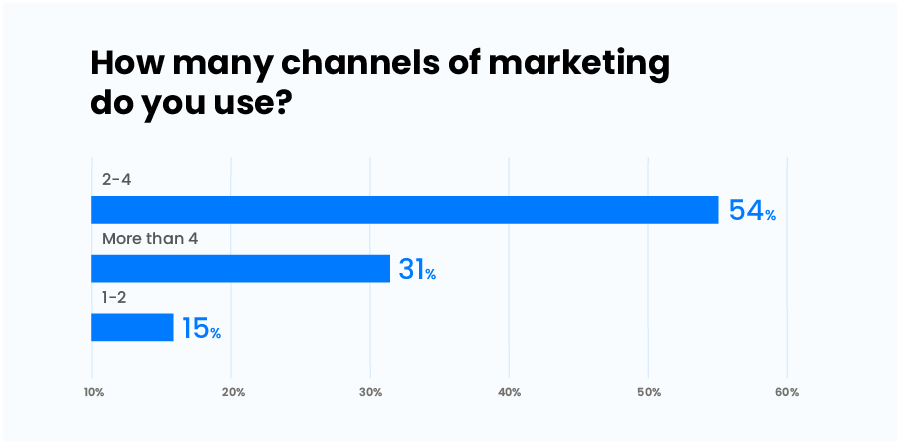
With tailored communication across paid channels, email, WhatsApp, and social media, you can entice students to consider you. You will need to identify channels of distribution like onboarding partners, student ambassadors, working with influencers, gathering online reviews to build trust in the value you provide.
The key is to identify the university and higher education marketing channels that work for your target audience and use them well.
How can you ensure that they choose you? By approaching them at the right time with the right message and through the right channel.
One way to achieve that is through remarketing. You show relevant ads to students who come across your website or drop an inquiry.
Another way to do that is by calling them up as soon as they fill out an inquiry form or download a brochure. Speed-to-lead is an important metric in education marketing. How soon you’re able to reach out to a student who inquired through your website or ad is an important factor that determines whether they’ll enroll in your institution or not.
Once you start getting noticed, evaluate the channels, messaging, and personas that work, find patterns throughout the prospect journey. This will help you identify and streamline the activities that work best.
Earlier word-of-mouth and proximity were the major factors that helped engage with prospects. Now the world revolves around screens, and you need to be sure to pop through the right window.
Here are a few education marketing channels you can use to engage with your prospects.
For every $1 spent on email marketing, businesses see an average return of $36. This should be enough to probe you to activate this channel for your marketing efforts.
“We can send many engaging campaigns by adding different forms of graphics. It is easy to use due to its drag-and-drop functionality. We’ve also noticed higher opens as emails don’t land in junk much.”
Chetna Ahuja, Creative Head, LearnBay – talking about LeadSquared.
This channel is highly valued due to its reach, convenience, and influence it provides. It allows you to make a personal connection with the reader, encourage them to take the next step, and methodically share information.
Best practice:
Measure your campaigns based on the action you want them to take. For example, if you want your prospects to know about your course offerings, catalogue downloads/page visits is a key metric to measure the performance of your campaign.
You can use a higher education email marketing tool like LeadSquared, MailChimp, or Sendinblue.
This is where you can drive detailed conversations with your prospects. This channel helps you truly personalize your offerings by understanding your prospects’ needs. When a prospect fills out a form on your website, it indicates curiosity. On the phone, you get the opportunity to take the next step.
59% of prospects prefer to resolve queries and ask questions on live calls. Calling allows you to help students choose the best course and immediately answer any questions they might have like choosing the right major to financial aid.
Best practice:
If it is an incoming call, always ensure that it is answered. Have a call-back option if your agents are busy. Don’t have a rehearsed speech delivered in a monotone while approaching the student. Have a dialogue and understand the students’ needs.
Text and message app marketing has grown popular due to a few facts – 90% of messages are opened within 3 minutes and unlike email, it has a multi-generational appeal. This is important for educational institutions as they reach out to parents and students alike.
With messaging, you get a chance to be more creative, and the reader has the entire context in the same window. It allows you to hold multiple conversations at the same time, send information as different media options, and engage with the prospect real-time.
Best practice:
Text messaging might be less intrusive than calling them, but if you spam them with too many promotional ones, the chances of you getting blocked are high. It is better to get them engaged through other channels and then use messaging to build rapport.
You can automate the process by using LeadSquared higher education texting solution.
You can also use other text messaging services like:
This is the channel that changed the game for educational institutes. Before social media, your reach was dictated by the proximity of your campus. Now you can not only reach millions but offer them courses where the need to come to campus is not necessary.
Besides your website, this is the channel that can give a personality to your brand. You can share stories, build a community, take feedback, and most importantly get reviews. 93% of prospects say that online reviews have an impact on their decision.
Best practice:
Whether it’s organic content or paid ads, build brand recognition. If your prospects can identify you even before they read the message, it will build trust and urge them to take the desired action much faster.
Top 3 social media marketing tools:
As mentioned earlier, your website is your online storefront. Your prospects come for a visit, peruse what you have to offer, and then share what they are interested in or ask questions. 41% of prospects prefer live chat support over phone or email. So, you can not only impact decision-making but also move the needle in your favor by providing a seamless experience.
Best practice:
Having a bot to answer frequently asked questions is a great time-saving tactic. But also ensure that your prospect can get in touch with your counselors with minimum effort.
Top 3 chat bots for education websites:
When coupled with sophisticated CRM systems, like the LeadSquared higher education CRM, these educational chatbots may help scale tailored communication while gathering useful data into student behavior.
In a webinar that LeadSquared hosted, Matthew Zonis, Katya Nyangi, and Janet Machuka talked about these facets to elevate your marketing efforts:
You can view the recording of the session here:
Having discussed all this, you should also know that the success of your marketing campaigns lies in how well you use these channels.
You may be able to generate inquiries, but can you connect with them immediately? Do you rely on your gut instincts while selecting a marketing channel or check conversion metrics?
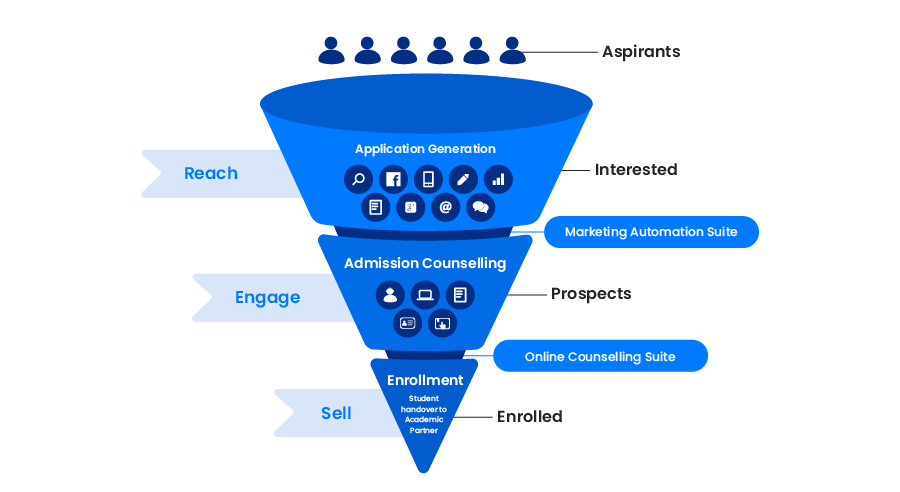
The solution is to use a unified and automated system to send out campaigns, collect inquiries (leads), and track the journey henceforth. Let’s dive deeper into automating your education marketing campaigns.
No matter how many higher education marketing channels you activate to reach your prospects, the end goal should be reaching them as soon as possible.
That is where automating your efforts elevates your communication game.
“It is difficult to have multiple tools to build different processes. It can get expensive as well. So, choose a tool that is well-integrated, shares information, and help multiple teams to work more productively.“
Janet Machuka, Founder, ATC Academy
Here are a few strategies to implement marketing automation.
As per the “Buying Pyramid” model by Chet Holmes, only 3% of prospects are ever ready to “buy now”, while the remaining 97% need to be nurtured before they’re ready to make a purchasing decision. And that is when you can utilize sending out automated sequences of emails or messages.
LeadSquared’s email automation helps you segment and target specific prospects to send out your nurture sequences.
Helpful resources: Higher education email templates, Education drip campaigns, Higher Education Marketing Automation | LeadSquared.
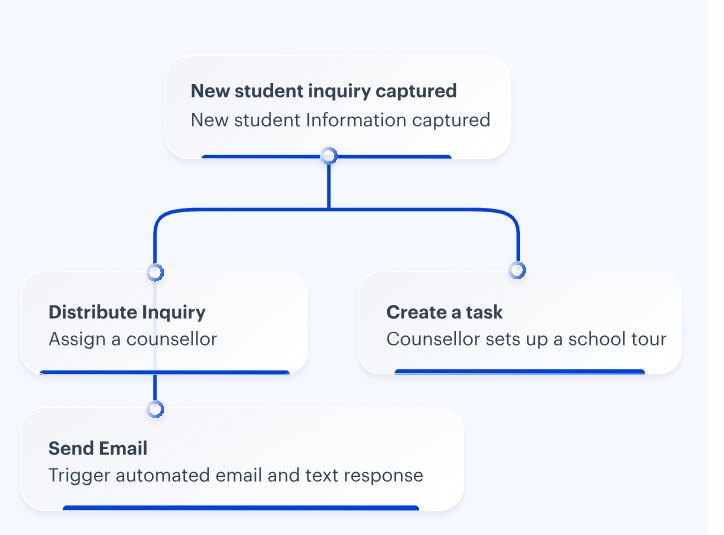
What if the prospect has visited your course page but hasn’t filled in an inquiry yet? Your counselors can know the exact course page and build conversation around the same on their first interaction. So, you are no longer having conversations in the dark.
You can also trigger action-based automations like follow-up reminders to counselors or welcome emails to prospects that have shown interest. This enables you to communicate in real-time across channels.
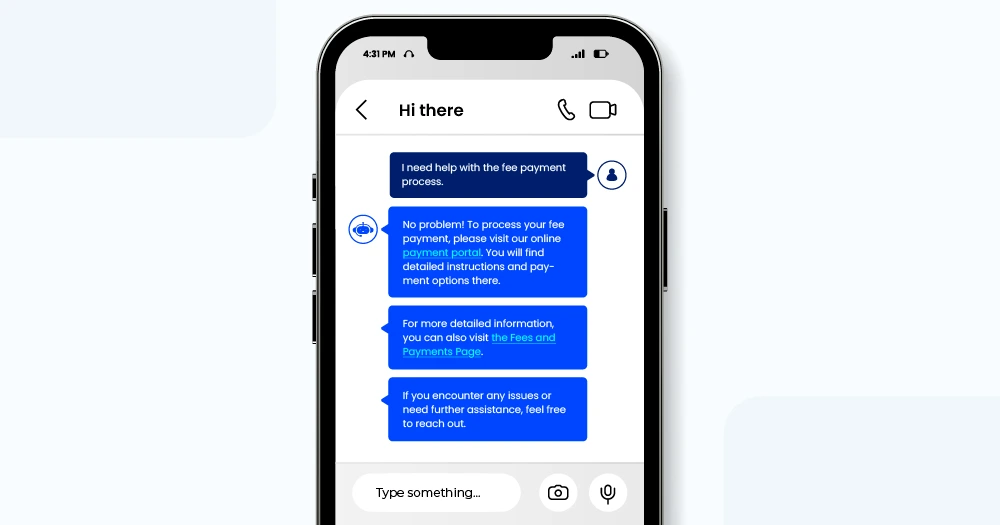
As mentioned earlier, there are a lot of repetitive inquiries coming in through website chat. Common queries like fee structure, financial aid, course prerequisites, etc. Dedicating team members to answer these repetitive questions reduces their efficiency and prevents them from focusing on higher-value tasks.
Choosing a chatbot automation tool that enables you to have AI-conversations for repetitive queries increases the efficiency of your counselors so that they can spend more time having conversations with high-intent prospects. An AI chatbot for education is a well-used tool to improving student experience.
Educational institutions receive a high volume of daily inquiries. Answering every call manually simply isn’t feasible. So, how do you ensure you don’t miss high-intent prospects? Similar to AI chatbots for your website, AI voice agents can answer and engage with every student who calls.
Besides answering calls, it’s also important for your counselors to optimize their calling times. By leveraging auto-dialers and automated lead distribution, you can significantly improve counselor productivity—ensuring they reach the right prospects faster and more efficiently.
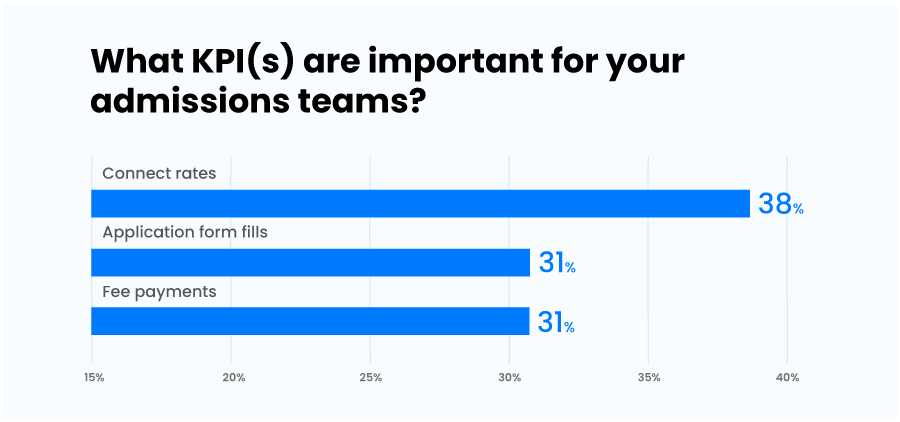
But technology alone isn’t enough. You’ve identified your channels, set up the necessary automations, and started reaching out to a higher volume of prospects. Now comes the critical part: understanding the outcome of your efforts. To truly drive results, you need to continuously track, optimize, and evaluate the impact these initiatives have on enrollments and student experience.
Your open rates, clicks, and replies can be the decisive factor to learn how your prospects are interacting with your content.
Higher opens = Good subject lines
Higher clicks = Engaging content
Higher replies = Good CTAs
The call duration, number of calls connected, and daily calls made per counselor can help you understand whether telephony works for you.
Lengthier calls = Increased chances of conversions
Higher number of calls connected = Higher prospect reach
More calls made per counselor = Increased counselor productivity
Paid ad performance depends on multiple factors – the volume of inquiries, conversion rates, and costs incurred to acquire students. While the performance of organic content can be measured through the interactions and reviews you have received.
Higher volumes, conversions = Healthy channel of acquisition
Higher interactions and comments = Engaging content
At the end of the day, if your marketing activities translate to higher conversion rates, you should continue those efforts. Again, you must define what a conversion rate means for you or your team.
I hope this article helps you start your education marketing efforts today and measure the effectiveness of your campaigns. Whether it is creating a marketing plan, activating education marketing channels, or optimizing your campaign results, these aspects will impact your
And if you’re looking for end-to-end higher education CRM software to capture leads, understand intent, manage interactions, measure campaign performance, and more, check out LeadSquared Higher Education CRM.
Want to see it in action?
Effective course marketing starts with knowing your audience—whether they’re high school grads, working professionals, career changers, or international students—and understanding where they spend their time.
Use a clear multi-channel approach:
Social media: Share student stories and program highlights on Instagram, Facebook, LinkedIn, and TikTok.
Email: Send personalized messages with course details and deadlines.
Partner listings: Leverage education aggregators and marketplaces.
Paid ads: Use Google Ads, social ads, and retargeting to reach qualified prospects.
Events: Connect directly through campus fairs and virtual recruitment sessions.
The goal is to integrate all these touchpoints into one smooth journey that leads prospects from awareness to enrollment.
Numbers speak loudest. Schools can highlight outcomes like graduation rates, college admissions, or test performance—reinforced with real stories such as a top student’s daily routine or a journey from enrollment to success.
Ed-tech companies can demonstrate impact through metrics like improved learning efficiency, reduced costs, or high satisfaction scores, supported by case studies and clear before-and-after results.
Blending data with storytelling creates a compelling, trustworthy narrative that helps stakeholders confidently choose your institution or solution.
Creating content that resonates with students takes effort—so get more value from it by repurposing it across channels.
A single research report or white paper can become:
Blog posts that unpack key insights
Infographics for quick social consumption
Short videos for Instagram, YouTube, or TikTok
An email series highlighting major takeaways
Stats or quotes for media pitches or webinars
Likewise, a strong student testimonial can live on your website, be adapted into a LinkedIn article, and featured as a clip in virtual open houses.
Repurposing extends your content’s shelf life, boosts SEO, and ensures your message reaches students wherever they are. The more consistently they encounter your story, the more likely they are to take the next step.
Thought leadership keeps you visible and influential in the education space. By sharing informed perspectives, you position your institution as a trusted expert.
Ways to lead the conversation:
Publish insights on emerging trends in reputable outlets.
Create videos or webinars that simplify complex topics.
Contribute to journals or collaborative research.
Engage on social media to spark industry discussions.
Speak at conferences to expand reach and connections.
Consistent, informed contributions make your institution a go-to voice—and open doors to new opportunities.
The highest-quality student applicants typically come from a multi-channel approach rather than a single source. However, quality can vary based on your institution’s goals and target audience.
To identify your best-performing university marketing channels, higher education marketing channels, and career colleges marketing channels, track metrics like:
Inquiry-to-enrollment conversion rates
Student retention and academic performance
Cost per quality lead across channels (social media, emailers, text messaging, partners)
Experiment with different channels and measure each channel’s performance using tools like LeadSquared’s Education CRM to understand which ones consistently bring you high-intent, qualified applicants who are the right fit for your institution.
You can optimize your education marketing pipeline by tracking every lead from first inquiry to enrollment and fixing drop-offs at each stage. LeadSquared helps you capture leads across channels, automate follow-ups, prioritize high-intent prospects, and use funnel analytics to identify what’s working—so more inquiries move smoothly toward enrollment.
Education marketing campaigns that deliver the best ROI are those that are targeted, measurable, and quickly followed up. With LeadSquared, institutions can track ROI across channels—such as search ads, social media, webinars, and school outreach—by linking every inquiry, application, and enrollment back to the campaign, helping teams double down on what converts and cut what doesn’t.

 16 min read 17 min read
  9 min read


 How to make your admissions counselors more productive and increase enrollm...
