




EDUCATION
Admissions & Enrollment Funnel Guide for Colleges: Streamline Student Recruitment
Contents

 26 min read


Admissions season is intense and highly competitive. Students are exploring multiple options at once, while colleges and universities are fighting for attention from the same pool. And in the middle of it all, your team is calling hundreds of prospects – yet even after counseling 20-25 students in a day, it can feel like you are not making any progress at all.
To bring order to the chaos, you need a well-structured admissions funnel—a roadmap that shows where each student stands, what support they need, and how your team can personalize every touchpoint.
Generating interest is only the first step; guiding students all the way to enrollment is where real work happens. That’s why so many universities, colleges and career schools use a student management system or a Higher Education CRM to track and manage their enrollment funnel. But what exactly does an admissions funnel include, and how can you use it to its full potential? Let’s break it down.
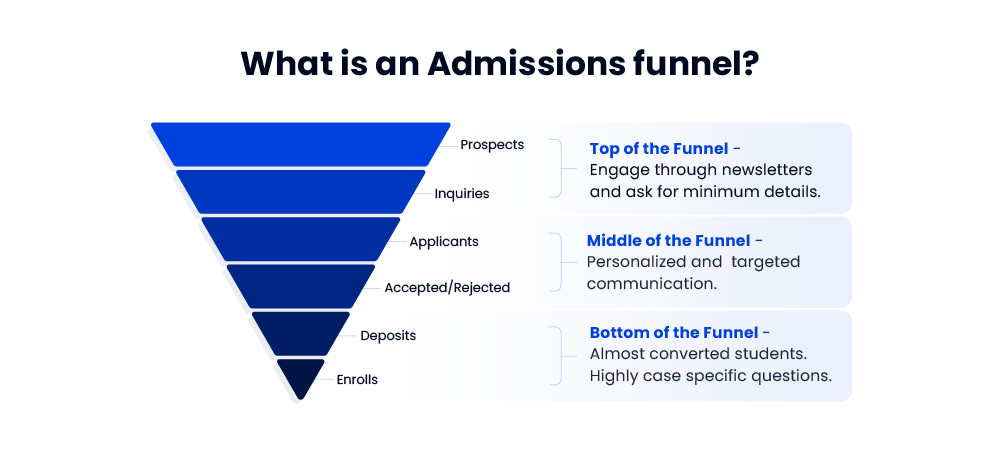
If you want to understand what an admission funnel means in practice, it’s basically the journey a student takes: starting from filling out a form on your website, progressing to prospect and opportunity stages, and finally enrolling. The enrollment journey for a student entails various offline steps as well – like visiting the campus, submitting transcripts and certificates, completing the application forms, taking the pre-requisite tests and interviews, and completing the payment to secure a seat. It is a picturized representation of a student’s journey from inquiry to conversion.
In short, it is a strategic framework that visualizes how prospective students move through different stages—from initial awareness to final enrollment—helping institutions optimize their student recruitment funnel efforts.
Based on conversations with admissions experts and a close look at real-world processes, the enrollment funnel stages generally involve six core steps:
Each stage requires its own set of strategies and communication style to keep students moving forward—and to ensure that the ones who enroll are set up for success.
As mentioned before, the student goes through various stages before they decide to enroll in the course.
For higher education marketers, it is important to track this movement to share information and build relevant content. Understanding the higher education enrollment funnel is crucial for developing targeted marketing strategies that resonate with students at each stage.
The funnel also helps in understanding the cues and activities that determine the next course of action for them.
There are three distinct stages of an enrollment funnel – Top, Middle, and Bottom. Based on the student’s interest and interactions, you can determine their stage in the funnel.
In recent years, a significant shift has emerged: students now begin their university search as early as eighth or ninth grade. What once began around senior year has moved much earlier in the student journey.
This change makes the admissions recruitment funnel even more intricate for institutions. Early engagement means colleges and universities need to catch students’ attention sooner and nurture their interest over a longer period. To keep these younger prospects excited and informed, it’s crucial to collect detailed insights into their motivations and concerns at each stage.
Here’s how early engagement is shaping recruitment strategies:
In summary, early engagement extends both the timeline and complexity of the enrollment management funnel. Forward-thinking institutions are adapting by meeting students right where they are in their search—and supporting them every step of the way.
If you are wondering why we call it a funnel, it is because casual inquiries (top of the funnel) will always be more than the admission-ready inquiries (bottom of the funnel). Let us discuss these stages of the admission funnel for higher education.
From a student’s perspective, this is “a window-shopping phase”. They might be exploring courses, looking for brochures, but may not be serious about enrollment just yet. But from a counselor’s perspective, this is an opportunity to find students who will graduate soon and may enroll in one of your courses. The aim here is to generate as many leads as possible.
You need only a few fields in your lead capture form. You can nurture inquiries and influence them to enroll over time. The purpose of capturing the top-of-the-funnel leads is to build your admissions pipeline. So, keep the lead fields as minimal and precise as possible. But make sure you gather all the relevant information that you’ll need to shortlist a candidate.
Here, the students are interested in your institution. It is the right time to connect them with admission counselors to understand their interests, concerns, etc. You can also send them brochures and invite them to open houses, virtual events, and student communities. You should clearly explain why your institution is the best option. A webinar or a personalized meeting can work wonders.
In terms of leads, they reach this stage either from nurturing activities or directly from ads or your website. However, while capturing the middle-of-the-funnel leads, make sure you get all the relevant information – even if the application form fields are more.
These are the most active leads with a high chance of conversion. Institutions can get away with longer forms at this stage as prospects have made up their mind and are ready to enroll. This is the step when the student has decided to apply for the program.
By the time students reach this point, many have already visited the campus, explored the opportunities the college provides, and formed a clearer picture of the career prospects ahead of them.
For example, the student discovers you through an education fair. They have collected information on the different programs you offer. When your counselors call them for a campus visit, they already know which courses to pitch. And this personalized engagement helps the counselors convert an inquiry into an application.
Therefore, the engagement journey of these leads (student inquiries) will depend on their stage in the college admission funnel.
While reaching the bottom of the enrollment funnel is a significant achievement—students have completed applications, paid deposits, and firmly committed to enrolling—it’s not time to relax just yet. There’s a phenomenon called “melt” that every admissions team should keep on their radar.
What exactly is melt? Simply put, melt happens when students who have signaled their intention to enroll—sometimes even after paying a deposit—reconsider over the summer and ultimately decide not to attend in the fall. They may opt for another institution, experience a change of circumstances, or simply get cold feet. Despite all your earlier efforts, these seemingly solid prospects can “melt away”, leading to a shortfall in your final enrollment numbers.
This is why it’s critical to continue nurturing these committed students even after they appear to be “locked in”. Regular communication, welcome events, connecting them with future classmates, and providing ongoing support through channels like WhatsApp or Discord can go a long way to minimize melt and guide students all the way from deposit to day one on campus.
This phase is often where the difference between a successful start and a lost enrollment. It’s all about making students feel valued, informed, and connected right from the moment they submit their deposit.
Implementing a diversity enrollment funnel approach ensures that students from all backgrounds receive culturally responsive support and feel welcomed throughout this critical transition period.
Here are a few effective strategies you can implement to keep your admitted students engaged and confident in their choice:
First impressions count, and onboarding matters more than you might think. Institutions with strong student orientation programs often see higher levels of student satisfaction and retention. Useful tools like “preparedness checklists” or roadmaps can help students get sorted with necessities—from textbooks to dorm essentials or lab coats—eliminating last-minute confusion.
In summary, ongoing, personalized communication and holistic support—from deposit through orientation—not only reduce melt but also lay the foundation for long-term student success.
Effective enrollment funnel optimization in higher education requires a systematic approach to each stage, from lead capture to final enrollment. Here are twelve proven strategies:
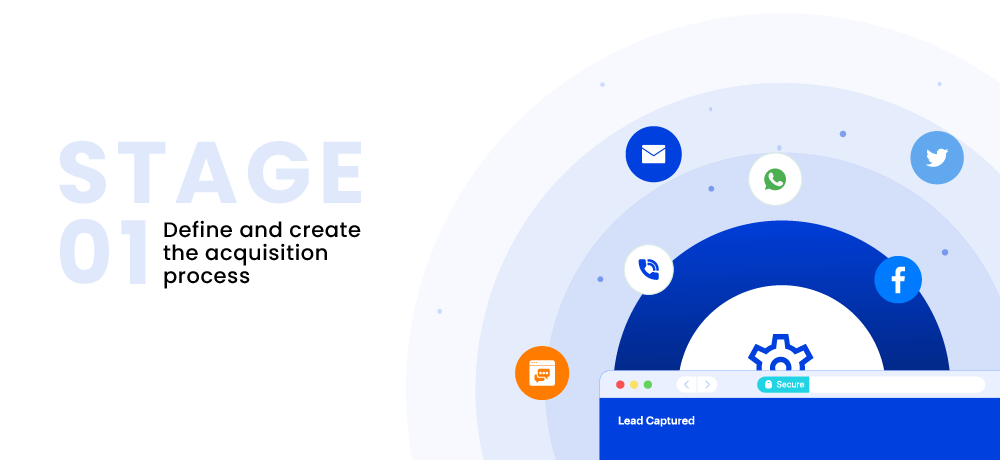
There are various sources through which you can generate student inquiries. However, not missing out on them and assigning them to a student counselor timely is crucial.
Social media channels, such as Instagram, LinkedIn, Meta, and various third-party education marketplaces and student search partners, are the best ways to acquire student inquiries.
Building website landing pages and contact forms on microsites to drive campaign traffic is also effective. With multiple sources to rely on, generating student inquiries might not be that hard. Collating them from different platforms, tracking their status, and following up can be time-consuming. Now the question is – how to manage student inquiries?
Excel to the rescue? Maybe not.
If you are using excel or spreadsheets to maintain this data, you will probably miss out on leads and follow-ups in the process. Hence, the best approach is to use an integrated enrollment solution.
What does an enrollment solution do?
An enrollment platform helps reinvent the admissions funnel – from lead capture to lead management and beyond. It helps counselors identify inquiries that are ready to enroll. With this information, admission representatives can prioritize calling these students and send meeting invitations.
Personalized marketing is no longer optional: it’s the key to attracting, engaging, and converting today’s digitally savvy students.
78% of polled lead nurturing practitioners rank email as the most effective channel for sustaining engagement overtime period. Instead of sending all the information in one email, send a series of at least three personalized emails.
You can also use LeadSquared Admissions CRM to capture leads and run a nurturing sequence automatically. With this tool, you can:
1. Nurture leads through personalized email marketing campaigns.
2. Automate emails based on student profiles, interests, and engagement with your campaigns.
3. Choose from a variety of email templates, test their performance, and make changes instantly.
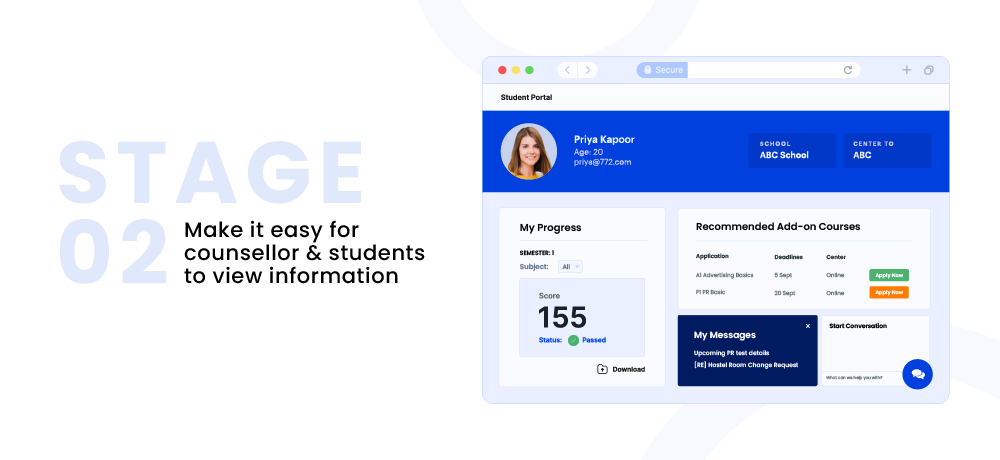
Paperless applicant portals help you make the application journey easy for students. Also, a student-friendly form will always have a higher completion rate. The counselors get to know their audience better when the right field types for admission forms are selected and filled. Admissions-specific workflows help admissions teams focus on incoming inquiries, engage with more leads, and identify their intent in a more organized fashion.
With the help of a student portal, you can:
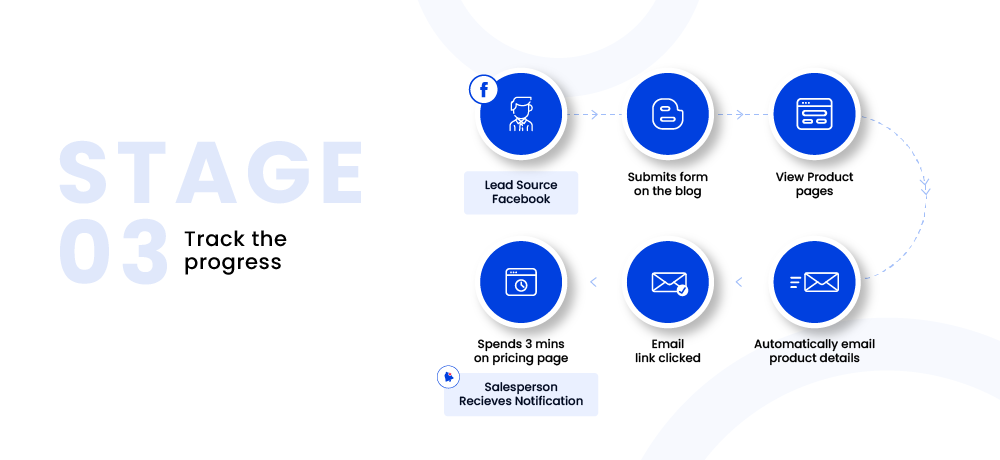
Nurtured leads produce 20% more sales opportunities than cold leads. So, it is necessary to have the right set of sales and marketing tools at your disposal.
For instance, tools such as admissions CRM provide team members with relevant information regarding courses and curriculum that students would find value in. At the same time, it is also necessary to understand the student’s intent for admission.
Tracking progress isn’t just about numbers—it’s about understanding the story behind each inquiry. When a student engages with your institution, whether by signing up for a newsletter, requesting a brochure, or calling in for information, every touchpoint is an opportunity to gather valuable insight. What programs catch their eye? Are they seeking flexible class schedules to balance work and study? Are concerns about tuition or financial aid holding them back? Each interaction helps paint a clearer picture, allowing you to create more personalized and effective communication.
To do this well, it’s essential to bring all your prospect data into a central hub—think of it as building a “single source of truth”.
A robust CRM platform can help you keep tabs on every engagement, giving your counselors and enrollment teams a comprehensive view of each student’s journey. By segmenting prospects based on interest, demographics, or engagement level, you can run targeted email campaigns that speak directly to what matters most for them—letting your staff focus on nurturing genuine connections instead of getting bogged down by administrative busywork.
Below are a few points to keep in mind while tracking student activities:
1. Track web activities: Track the student’s intent on your institution’s website through page views, CTA clicks, video views, and more.
2. Track the time spent on the website: Figure out how engaging your content is (and what your students are interested in) by tracking the time spent on each page and analyzing the bounce rate.
3. Track the effectiveness of pages and content: Track link clicks and understand if the content encourages the student to take action.
4. Track sources: Identify if student inquiries are coming from social media, search engines (organic traffic), digital ads, or through publisher websites.
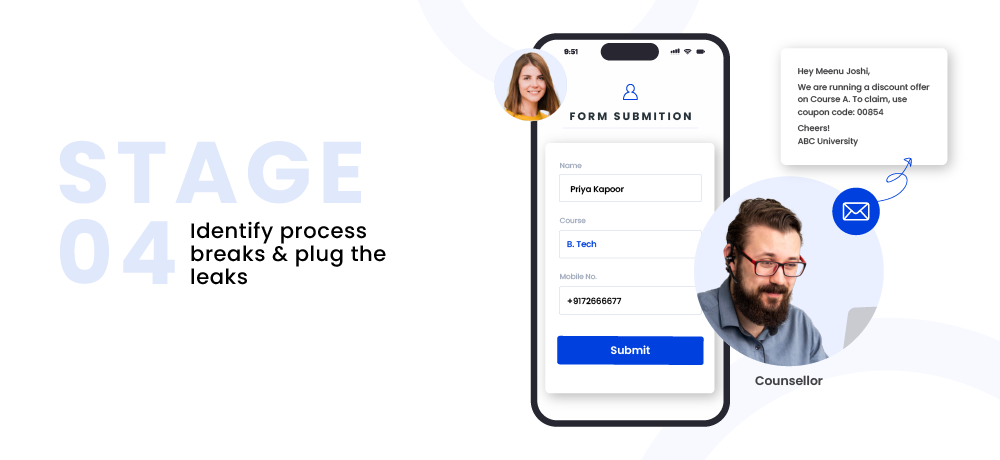
Usually, the college application forms are lengthy. While colleges need this information, students may drop off in the middle for several reasons.
Let’s understand this with an example. Vivek, a student, comes across one of your courses on your university website. He starts to fill in the details so that your admission counselors can reach out to him. However, he gets a call from a friend and abandons the form. He might still want to inquire about your institution, but he forgets to do so.
What next?
Did your college lose a student? Not really. Tools like education CRM will capture the exact entry and exit details. So, your counselors will know how to pursue Vivek and understand his intent.
You can also run remarketing campaigns to remind Vivek to complete his application. The best part is – CRM tool lets you initiate and pursue communication through numerous channels, such as emails, texts, calls, WhatsApp, and more. Also, instead of starting again, applicants can pick up from the point they left. All of these will sum up to a better student experience.
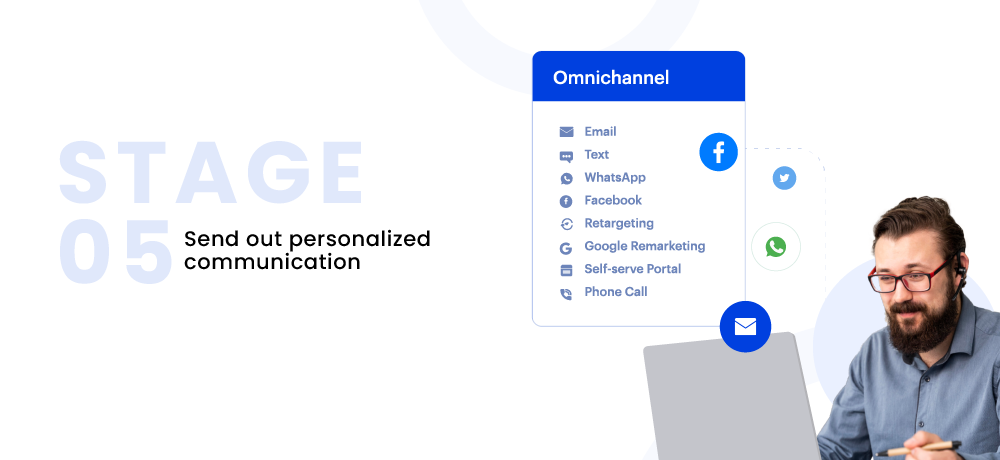
Align marketing and admissions by sending out targeted messages to students/parents who inquire about the courses on your website contact forms/Landing pages.
How do you ensure personalized communication with students to keep them engaged?
No matter how or when a student fills out a form, the enrollment system creates a curated touchpoint. It helps engage with the student until a counselor reaches out to them.
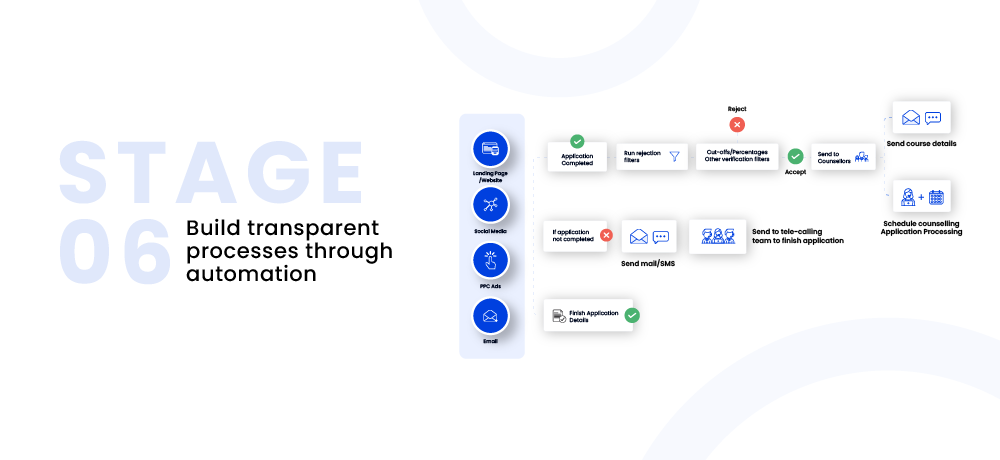
With the help of a workflow builder, you can keep all the teams informed and connected. One can automate actions at different steps in the student journey. (For instance, if the student doesn’t finish the application form, the counselor gets notified). Once the application is complete, it is automatically sent to the verification team. Accepting or rejecting an application can be based on several automated or manual criteria.
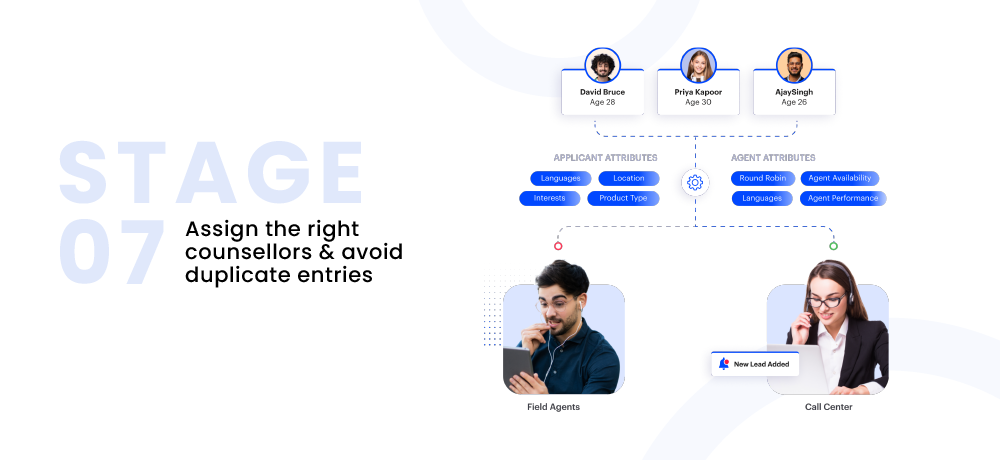
Duplicate leads are a concern for most educational organizations. For example, when a student inquires about your courses on your website and social media, it might create a duplicate record in your system. Such duplicate entries decrease the productivity as different counselors may spend time pursuing the same lead. But a deduplication logic in place ensures the counselors work only on unique leads. From a prospect’s perspective, deduplication improves their experience by reducing the chances of redundant communication.
Admissions CRM makes it easy to filter duplicate leads. Instead of creating new records, it updates the existing record with lead activities. After filtering the data, the system automatically assigns the lead to the counselors for follow-up. This distribution can be done based on specific lead or counselor attributes – unique to an institution.
If the counselor is unavailable or there is a delay in reaching out to the prospect, the CRM system assigns the lead to the next available counselor. The system also solves the problem of overloading your counselors with leads at any given point in time. With a capping logic, the system assigns an appropriate number of inquiries and distributes them equally among the team.
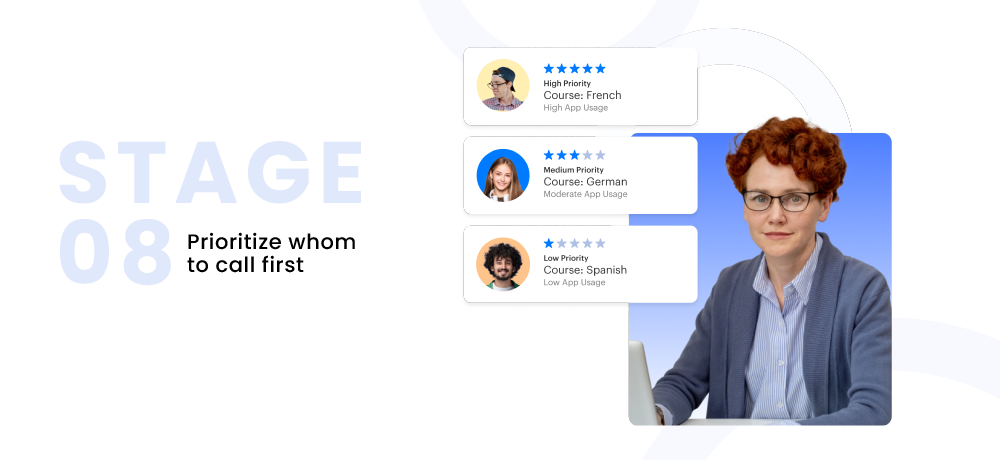
Admission counselors and call center agents struggle with figuring out whom to reach out to first. So, how do you prioritize student inquiries that have a higher chance of conversion?
In high-velocity operations, like that of educational institutions, 100s of admission inquiries flood in daily. It is impossible to call every lead – resulting in missing out on follow-ups and recruitment opportunities.
So, what should you do?
Prioritizing leads based on a scoring system can help you in this case. Lead scoring plays a vital role in prioritizing and selecting admission-ready students. You can assign scores based on the student’s involvement in your offerings, student attributes, and activities.
When a student frequently checks your emails, spends time on your website, or interacts with your content, it means that they have a higher chance of a conversion. Parallelly, the stage of the student in the admissions funnel changes.
Tools like an admissions CRM help you automatically segment inquiries into different buckets like inquiries, applications, eligible/opportunities, and more. This list can also help you prioritize follow-ups. For example, you would want to talk to eligible candidates first. Prioritization and segmentation also help counselors better assist the student and move them forward in the admission cycle.
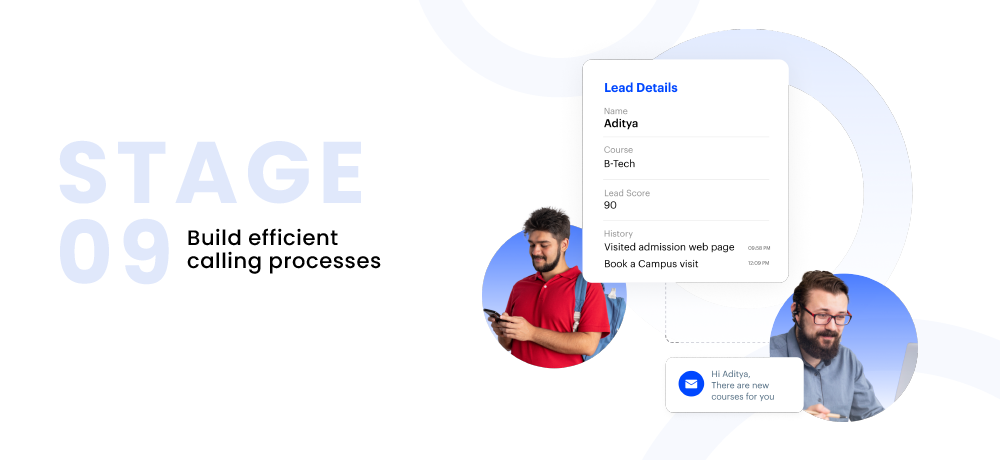
In the education industry, the lead volume is usually high, the channels are many, and a large percentage of students don’t finish their application forms online. It isn’t easy to ensure that all students are reached on time. Hence, a call center system ensures that you don’t miss out on any opportunities.
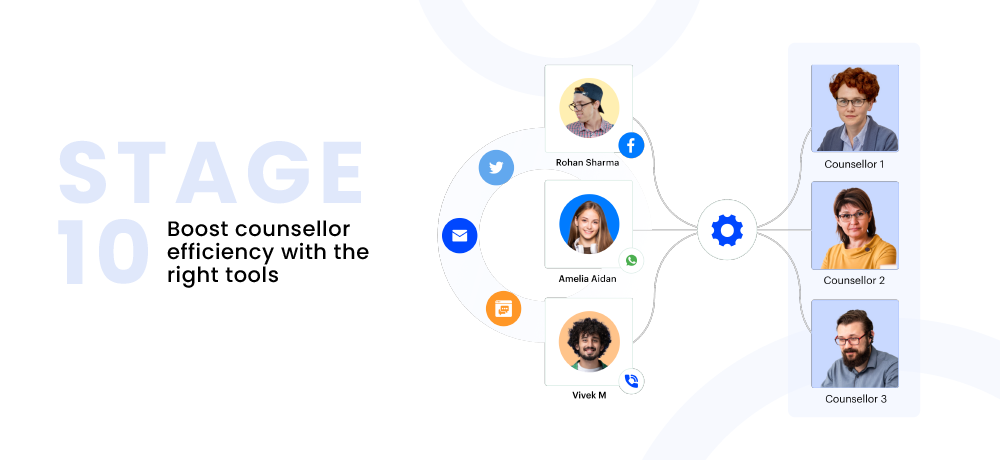
Most educational institutions use an integrated CRM with a contact center solution or an IVR to never miss out on leads. It provides your program associates/counselors with a 360-degree view of students and their requirements. It helps them deliver a personalized service.
Instead of purchasing a separate call center suite and CRM suite, implementing an education CRM that comes with a call center integration is the best choice for educational organizations. Progressive/predictive dialing features of CRM will allow you to call high-priority prospects automatically.
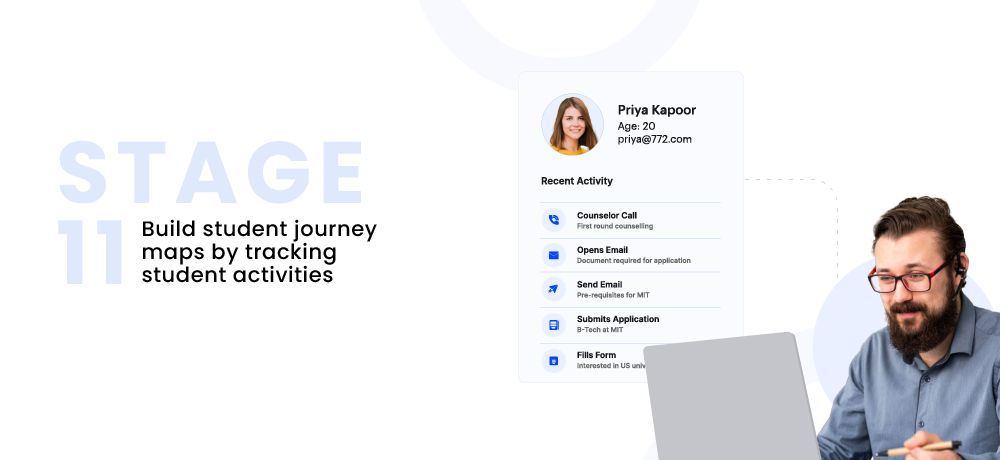
Once the student inquiries get distributed among counselors, they can see student details in one place. It also gets easier to identify their position in the admissions funnel. They can see all assigned leads, opportunities, activities, tasks, and other details through a single dashboard. The activities overview will help you map the student journey – from inquiry capture to enrollment.
For instance, in LeadSquared Admissions CRM, you can set up the following views: Application completed for MBA, Engineering, Arts, and other courses that you offer. You might add different buckets such as new leads added, leads assigned to do, lead overdue, progress to do, or other filters.
Driving conversions is a tedious task and requires support from seniors and experts. Therefore, managers should be able to see the team’s activities and take appropriate actions.
With the help of analytics, managers can have complete visibility and transparency about the daily activities of student counselors and their overdue, completed, and upcoming tasks. If a counselor has not worked on an inquiry for a long time, the CRM tool will escalate and route the lead to another counselor automatically. It ensures a seamless admission process.
The following are some of the essential metrics that you can track on CRM:
1. Emails sent by counselors and their click and open rates.
2. Call volume, connect rate, and successful conversation numbers.
3. Call recordings and email audits
4. The number of students in each stage of the admission pipeline
5. Meeting schedules of your field sales team on a daily, weekly, or monthly basis.
6. The admissions your counselors close or commit to the admission pipeline.
7. The revenue contributed vs. the activities of the counselors.
8. Missed tasks and activities.
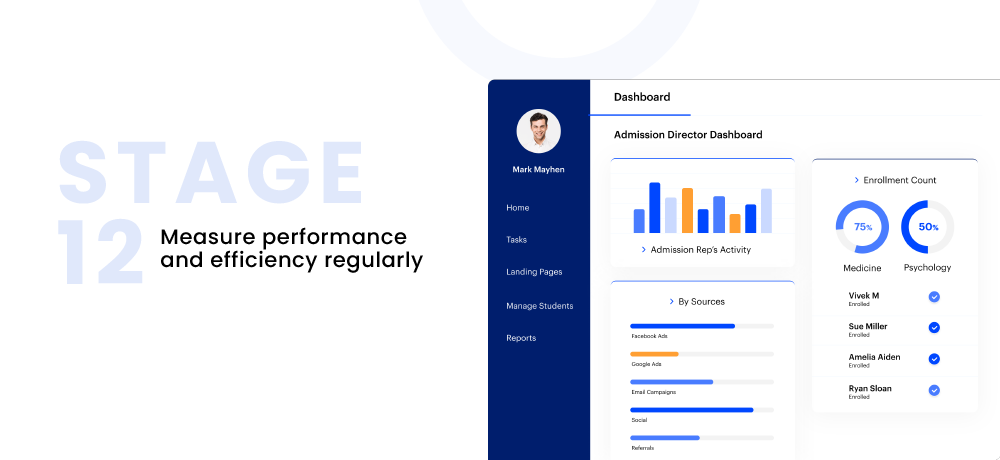
A detailed analysis of ongoing business activities in a decision-ready format is necessary to streamline admissions. Performance metrics on sources, campaigns, admissions teams (online and offline teams), counselors, call center agents, and more should be revisited in a timely format.
With reliable analytics, you can redefine your strategies and invest more in profitable sources. Thus, payment milestone reports, phone call metrics, student admission stage transition analysis, and complete reporting for all your processes, teams, courses, and campaigns can help boost admissions.
“It is necessary to track metrics while enabling a virtual ecosystem. Telecalling, counselling, campus tours, and staff interaction should be available to students and parents, hence technology is extremely important at this stage. Institutions should concentrate on their core areas such as placements and academics. Admission is just a phase, but reaching there requires several pre-requisites which need to be emphasized. The number of inquiries, admission forms, virtual and physical campus visits need
– Rahul Singhi, Director & Co-Founder, Poornima Universitysto be tracked. People are more informed now and shifting to a digital model has been effective as it provides a detailed outlook on ROIs.”
Managing student admissions has its own twists and turns. It requires attention to detail, identifying why students drop –off, and understanding whether our communication is working or not.
With the help of an enrollment CRM, educational institutions can manage and test the best strategies in the student enrollment process. Gaining visibility into the admissions funnel makes it easier to push inquiries to enrollments faster.
Ensure quicker student conversions with LeadSquared’s end-to-end enrollment CRM backing your admissions team.
Schools can improve their admissions funnel system by dividing and tracking students in various stages—top, middle, and bottom of the funnel. This will allow them to build personalized conversations at scale and improve enrollment rates.
Using LeadSquared Education CRM, you can analyze funnel reports to identify stages with the highest drop-offs or lowest conversion rates—such as inquiry to application, application to admission, or admission to enrollment. Real-time dashboards and conversion analytics help pinpoint bottlenecks, enabling you to take corrective actions like improving follow-ups, refining counseling strategies, or automating engagement at critical stages.
Choosing the right course and school for a student is stressful enough. With counselors sharing information catered personally to them, it is one less answer they need to hunt for. Using automation and activity-tracking, counselors can increase the chances of the student moving to the next stage by triggering personalized messages across multiple mediums.
To increase your application funnel, focus on generating high-quality inquiries through targeted digital campaigns, engaging prospects with personalized communication, optimizing your website and landing pages for conversions, and nurturing leads with timely follow-ups. Strengthening counselor outreach and leveraging automation can further move prospects efficiently from inquiry to application.
Once a student decides to enroll, your institution’s job has only just begun. Rolling out the red-carpet during orientation or onboarding can significantly impact how students experience university life—and whether they stick around.
Effective onboarding doesn’t just cover campus tours and class schedules. The most successful institutions treat orientation as the first chapter of a supportive relationship. This includes preparing students not just academically, but also for the personal, social, and logistical challenges of campus life—think of it as a “preparedness roadmap.” By anticipating needs like navigating public transport, finding local study spots, or understanding lab requirements, you help students settle in faster and with more confidence.
Why does this matter? Students who feel supported from day one are far more likely to thrive, both in and out of the classroom. The numbers don’t lie: robust onboarding correlates with higher engagement, improved academic results, and increased retention rates.
In short, orientation and onboarding aren’t just administrative checklists. They are crucial investments in long-term student success—building a sense of belonging and setting the tone for the years ahead.
An interesting trend has emerged in recent years: students are starting to explore university options much earlier than before. In the past, most students didn’t consider higher education possibilities until their later high school years—typically junior or senior year. However, recent insights reveal that nearly 40% of students now begin their search as early as eighth to tenth grade.
This earlier start means that students enter the admissions funnel at a younger age, giving higher education institutions a longer window to meaningfully engage with them. As students’ priorities and interests shift during these formative years, the admissions process must be more responsive. Admissions and marketing teams need to gather and analyze data from the outset to anticipate concerns, provide timely support, and tailor communication based on where each student is in their decision-making journey.
To reduce student drop-offs across the application journey, focus on speed, clarity, and personalization at every step:
Simplify the process: Break long applications into short, guided steps with progress indicators.
Respond instantly: Use LeadSquared to capture leads and trigger immediate follow-ups via email, WhatsApp, or calls.
Personalize communication: Send reminders, deadlines, and document requests based on each student’s stage using LeadSquared workflows.
Offer real-time support: Enable counselor callbacks, chatbots, or FAQs to resolve doubts quickly.
Track & optimize: Use LeadSquared analytics to identify drop-off points and improve forms, messaging, or turnaround time.
A fast, guided, and well-nurtured journey—powered by LeadSquared—keeps students engaged and moving forward.
Read further:

 8 min read 18 min read
  8 min read



 10 Patient Appointment Scheduling SMS Templates